
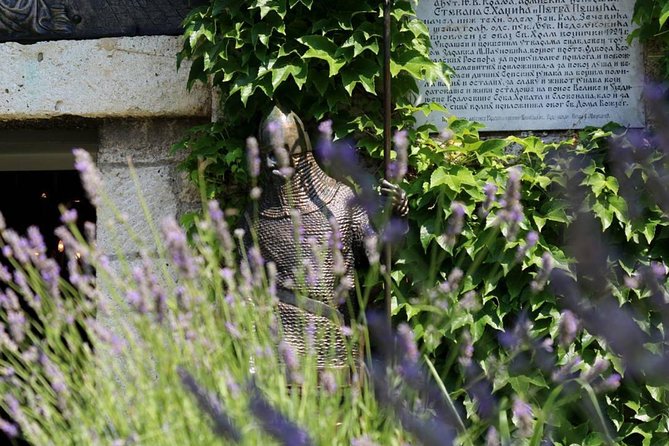
Reviewed · BELGRADE TOURS
Get Big Picture of Belgrade at its 2,000 years old Fortress
Belgrade Fortress is the best place to understand why this city has spent two thousand years at the meeting point of empires, armies, rivers, and trade routes. This private walk turns a pleasant park visit into a clear story about Romans, Ottomans, Habsburgs, Nazis, and the Cold War. The views do half the work, with the Sava and Danube joining below the walls.
I like the small-group format, which lets you ask questions and follow a guide such as Igor into the political arguments behind the monuments. I also like the unusual details, including the link between Belgrade and the noon bell heard in churches across Europe. The main consideration is pace: 90 minutes is enough for a strong overview, not every corner of this large fortress complex.
Key points at a glance
- A private walk for up to eight people: You get a focused tour rather than a large group following a flag.
- An art historian leads the story: Igor and Ksenija bring politics, architecture, war, and local memory into the walk.
- Roman foundations meet Cold War fears: The route connects ancient walls with Nazi bombing in 1941 and a Soviet invasion threat in the 1950s.
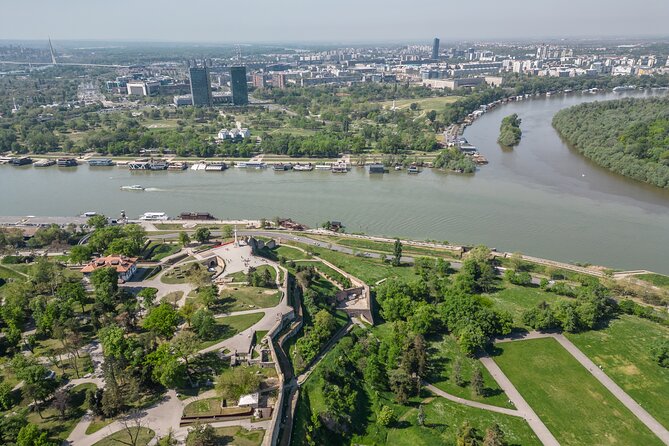
- The Sava and Danube views are a major reward: You look toward New Belgrade, Zemun, and the rivers’ confluence.
- Sunset changes the mood: Evening departures offer a natural ending over the rivers, with seasonal sunset times to consider.
- Good for a first look at Belgrade: The tour covers major landmarks in about an hour and a half, useful when your time is tight.
Why Belgrade Fortress explains the whole city
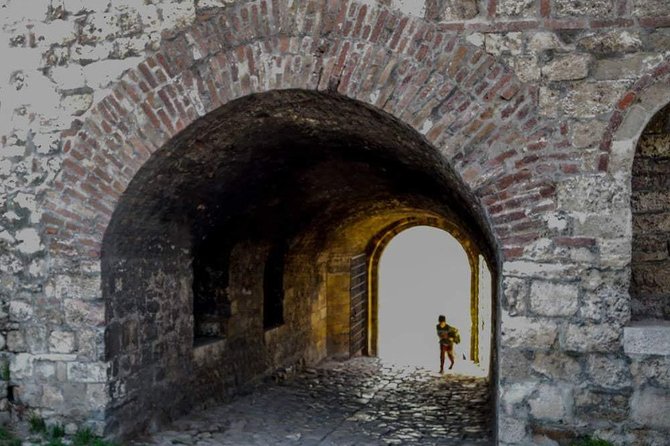
Belgrade Fortress is not one tidy medieval castle. It is a layered military site where each power built over, repaired, or fought across what came before. The tour begins with the ancient Romans and follows the long contest for this high ground above the Sava and Danube.
That setting explains much of Belgrade’s character. From the walls, you can see water, open approaches, and the broad plain beyond the rivers. Whoever controlled this position could watch movement along two major waterways and defend the settlement below.
The guide’s job here is not just to name dates. It is to connect the stones with the larger struggles that shaped Serbia and Europe. Roman rule gives way to later medieval powers. Ottoman and Habsburg forces contest the fortress. The story then moves into the twentieth century, including Nazi bombing and the Soviet threat after the Second World War.
I find that approach useful because Belgrade can seem scattered when you first arrive. The old city, New Belgrade, Zemun, the rivers, and the fortress all belong to different chapters. From Kalemegdan, those chapters line up in front of you.
The private format matters. With only your own group, you can pause to ask why a wall was built, how a political decision affected Belgrade, or what a monument means today. The experience is offered in English, and the group can include up to eight people.
A few more days out around Belgrade to weigh up
- Northern Serbia: Sremski Karlovci and Novi Sad Full-Day Tour from Belgrade
★ 5.0 · 425 reviews - Day Trip from Belgrade: Gems of Eastern Serbia
★ 5.0 · 424 reviews - Belgrade Nightlife Bar Pub Club Crawl with Drinks
★ 5.0 · 277 reviews
Starting at the Art Pavilion on Mali Kalemegdan
The walk begins at the Art Pavilion Cvijeta Zuzorić at Mali Kalemegdan 1. This is a practical starting point because Kalemegdan Park leads directly toward the fortress grounds, mixing lawns, paths, monuments, and old defensive structures.
Expect an outdoor walk rather than a formal museum visit. The park greenery softens the military character of the site, but the walls, gates, towers, and remains keep reminding you that this was a place built for control and defense.
The meeting point also places you close to public transportation, which is helpful if you are fitting the tour between other Belgrade stops. The route ends at the Embassy of France on Pariska 11, so you finish near the central city rather than returning to the first meeting point.
You should plan for moderate physical fitness. The experience takes place around a fortress and park, with walking between gates, walls, towers, and viewpoints. The supplied details do not specify the exact number of steps or the surface at every point, so sensible shoes are a good idea.
Roman walls, medieval remains, and military churches
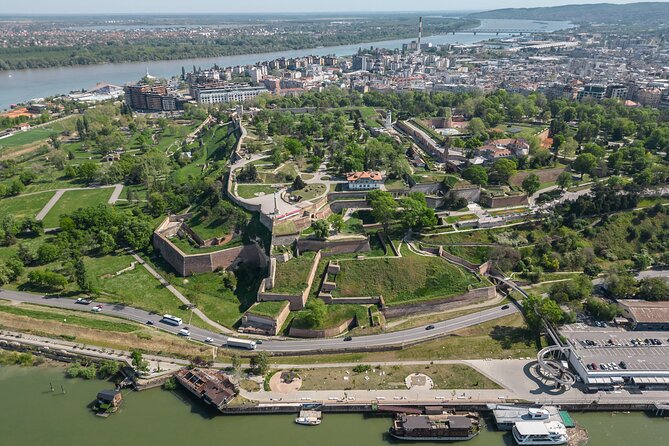
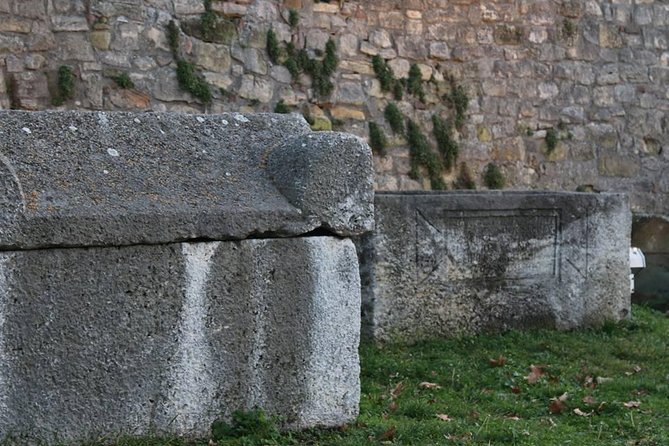
The opening portion sets up the fortress as a record of repeated rebuilding. You may see foundations linked with the medieval castle and remnants of the Roman wall, details that make the site feel older than its surviving stonework suggests.
The appeal is partly visual, but it is also intellectual. A wall is not just a wall here. It can mark a Roman settlement, a medieval defensive line, or a later military adaptation. The guide helps you read those changes rather than treating the fortress as one single monument.
One unusual feature is a church built from a former military magazine. That detail captures Belgrade’s habit of reusing structures shaped by war. A space designed to store military supplies later served a religious purpose, giving you a compact example of how the city changed as political conditions changed.
The route also includes stories of dungeons and towers. I would not expect a full archaeological excavation tour in 90 minutes, but the walk brings you past the places where confinement, defense, and daily military life took place. Each stop adds a human scale to the larger story of rulers and armies.
An art historian guide is particularly useful here. The architectural remains can be hard to read without help, especially when later construction has covered earlier layers. Guides Igor and Ksenija are identified with the experience, and Igor’s style, based on the supplied details, includes room for discussion and even a little debate about Serbia’s past.
That can be a strength if you like history with interpretation rather than a string of dates. It may be less suitable if you want a quick photo walk with only brief commentary.
Ottoman sultans and the fortress as a place of thought
The Ottoman and Habsburg chapters bring the fortress into the long struggle between empires. Belgrade was not a quiet border town in this period. Its position made it valuable, and that value brought repeated military pressure.
One story asks which sultan called the Belgrade Fortress his Contemplation Hill. It is the kind of detail that gives a ruler a personality instead of leaving him as a name in a textbook. The guide also explains the political setting around the fortress, so the site becomes a place where decisions, ambitions, and fears played out.
Another striking thread concerns the noon bell in churches across Europe and its connection to Belgrade. This is a memorable piece of history because it links a local event at the fortress to a sound heard far beyond Serbia. You come away with a better sense of how the city’s conflicts affected places well outside its walls.
The value of these stories is their scale. You can look at a gate or rampart and connect it to a decision made by an Ottoman sultan, a Habsburg force, or a European power reacting to events on this frontier. That is more satisfying than simply hearing that the fortress changed hands.
Same city, a completely different day out:
- Taxi to/from Belgrade Airport to/from Belgrade City Center
★ 5.0 · 241 reviews - Belgrade Big Tour: Top Attractions and Belgrade Neighborhoods
★ 5.0 · 232 reviews - Along the Danube: Golubac Fortress & Iron Gate Gorge day trip from Belgrade
★ 4.5 · 185 reviews - From Belgrade: Golubac Fortress & Iron Gate Danube Gorge
★ 4.8 · 185 reviews
Nazi bombing, Soviet fears, and Belgrade’s modern scars
The tour does not stop with ancient and imperial history. It also asks what happened when Nazi Germany bombed Belgrade in 1941 and how the city faced the threat of a Soviet invasion in the 1950s.
Those questions bring the fortress into the modern political story of Yugoslavia and Serbia. The Cold War section is especially useful because many visitors know the broad outline of the period but may not understand how Soviet pressure affected Belgrade.
The tour also includes a film connection involving a movie maker who felt inspired after going underground. The supplied details do not name the filmmaker, so you should treat this as a story to discover on the walk rather than a promised celebrity attraction.
Underground spaces add atmosphere, but the bigger value is the way they connect military planning with memory. A fortress is not only a scenic overlook. It can also hold spaces associated with fear, storage, confinement, and defense.
If you are interested in twentieth-century politics, this section may be the strongest part of the experience. The guide presents Belgrade as a city shaped not only by distant empires but also by the tense political world of the last century.
Kalemegdan Park and the river confluence
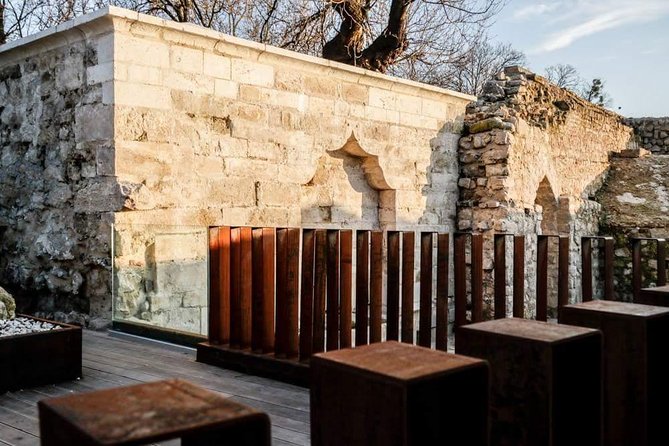
The final part of the walk brings you through Kalemegdan Park and toward the panoramic viewpoints. Here, the fortress opens into one of Belgrade’s most rewarding public spaces.
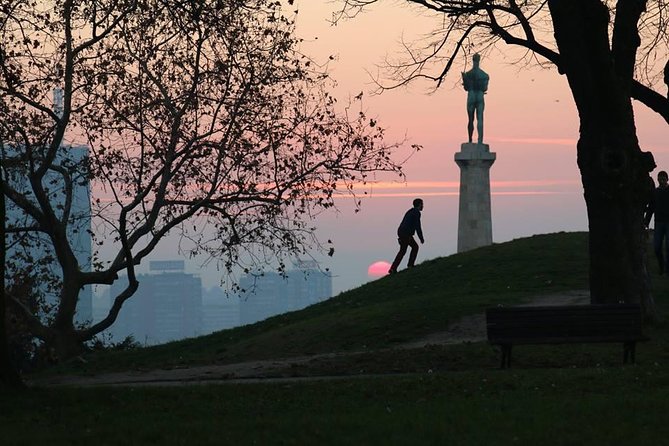
The view takes in the Sava and Danube, their confluence, New Belgrade, and Zemun. These are not interchangeable suburbs. New Belgrade was developed as the capital area of socialist Yugoslavia, while Zemun has a quieter Central European character. From the fortress, you can compare them at a glance.
This is where the tour’s political and geographical themes come together. The rivers explain the fortress’s military importance. New Belgrade shows the scale of Yugoslavia’s later ambitions. Zemun points to another historical and architectural tradition. You are looking at several versions of Belgrade from one elevated position.
The park greenery also makes the stop less severe than the walls and dungeons. You can move from war history to a broad city view without leaving the same complex. That mixture is one reason the fortress works so well as a first introduction to Belgrade.
For the most attractive light, schedule the tour around sunset. Belgrade’s sunset is about 5:30 p.m. in autumn, 4:30 p.m. in winter, around 6 p.m. in April and May, and after 7 p.m. in summer. Check the exact date before booking, since the timing changes quickly through the year.
Sunset is not automatically the best choice for everyone. In winter, the early hour may fit well, while summer evenings can be much later than your dinner plans. A morning tour gives you clear daylight and can be better if you want to continue exploring central Belgrade afterward.
What the $66.01 price means
The listed price is $66.01 per person, and the tour is private for your group. That makes the value depend heavily on group size.
For one or two people, it is a fairly substantial price for 90 minutes. You are paying for a private English-language guide, an art historian’s interpretation, and the freedom to ask questions without a larger group setting. If you care about history or have limited time, that focused attention may justify the cost.
For a family or group of friends, the calculation looks better because the experience can include up to eight people. At full capacity, the total would be $528.08, or the same listed per-person rate, but the private format becomes more useful as everyone shares one guide.
There are no extra admission charges listed, and the tour includes a professional art historian guide and private service. The supplied information lists no additional inclusions or exclusions, so the price is straightforward rather than a low headline cost followed by several add-ons.
I would choose this tour if I wanted context quickly and preferred conversation to a large scheduled group. I would skip it if I planned to spend several hours exploring every section independently and mainly wanted a free viewpoint.
Who will enjoy this private fortress walk
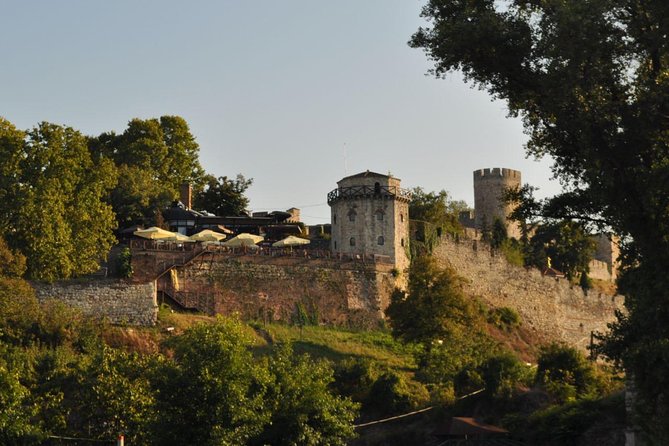
This experience suits families, couples, friends, and small private groups who want one guide’s attention. It is also a good fit for anyone who enjoys political history, military architecture, or the way local events connect with wider European affairs.
It works especially well early in a Belgrade visit. After 90 minutes, you should have a clearer mental map of Old Belgrade, the rivers, New Belgrade, and Zemun. You can then decide which area deserves more of your own time.
The tour is also built for a tight schedule. A 90-minute commitment leaves room for lunch, museums, or a longer walk through the city. The tradeoff is that the fortress is large, and the experience cannot cover every structure in detail.
Families should consider the storytelling style. The guide discusses war, political conflict, dungeons, and death as part of the fortress’s past. That may suit older children with an interest in history, while younger children may enjoy the walls and views more than the political explanation.
Anyone who needs a fully accessible route should ask for current details before booking. The available information says service animals are allowed and that moderate physical fitness is required, but it does not provide a detailed accessibility plan.
Practical timing, meeting point, and cancellation
The experience starts at the Art Pavilion Cvijeta Zuzorić, Mali Kalemegdan 1, and ends at the Embassy of France, Pariska 11. Since the start and finish differ, you should not plan on returning to the pavilion immediately afterward.
A mobile ticket is provided, confirmation arrives at booking, and the tour is offered in English. It is near public transportation, though exact transit directions are not supplied.
You can cancel for a full refund up to 24 hours before the local start time. Changes or cancellations made less than 24 hours before the experience are not accepted for a refund.
Should you book the Belgrade Fortress tour?
Book it if you want a fast, thoughtful introduction to Belgrade rather than a simple walk around old walls. The strongest reasons are the private format, the art historian guide, and the unusual range of subjects, from Roman defenses and Ottoman rulers to Nazi bombing and Cold War anxiety.
The views alone make the fortress worth visiting, but the stories give those views meaning. Book a sunset departure if the seasonal timing works for you, or choose the morning if you want brighter conditions and more flexibility afterward.
Skip it if you prefer to explore at your own pace, need a fully specified accessible route, or want a longer archaeological visit. For a small group with limited time and a genuine interest in Serbia’s complicated past, this is a well-targeted way to get your bearings.
FAQ
How long does the Belgrade Fortress tour last?
The tour lasts approximately 1 hour and 30 minutes.
Is the tour private?
Yes. Only your group participates, and the tour can be booked for up to eight people.
What language is the tour offered in?
The tour is offered in English.
Who leads the experience?
A professional art historian leads the walk. The guides identified for the experience include Igor and Ksenija.
Where does the tour begin and end?
It begins at the Art Pavilion Cvijeta Zuzorić, Mali Kalemegdan 1, and ends at the Embassy of France, Pariska 11, Belgrade.
What can I see from Belgrade Fortress?
You can see the Sava and Danube rivers, their confluence, New Belgrade, and Zemun. The route also includes fortress gates, walls, towers, dungeons, park areas, and historical monuments.
Can I cancel for a refund?
Yes. You can cancel at least 24 hours before the local start time for a full refund. Cancellations or changes made less than 24 hours before the start time are not accepted for a refund.
Just added around Belgrade
- Private Walking Tour of Belgrade and Old Zemun★ 5.0 · 3 reviews
- From Belgrade: Danube Day Trip with Wine and Brandy Tasting★ 5.0 · 3 reviews
- Feel Belgrade Welcome tour★ 4.5 · 3 reviews
- Private Half Day Serbia Tour Novi Sad and Petrovaradin Fortress★ 5.0 · 3 reviews
- Private Wine Tasting by Party in Belgrade★ 5.0 · 3 reviews
- Belgrade: The White Emigration in Serbia in the Wake of the Russian Revolution★ 5.0 · 3 reviews
- Zica and Studenica monastery From Belgrade★ 5.0 · 3 reviews
- E-Scooter Serbian Food Tour★ 5.0 · 3 reviews
Belgrade Tours, compared.

Northern Serbia: Sremski Karlovci and Novi Sad Full-Day Tour from Belgrade
Read our review →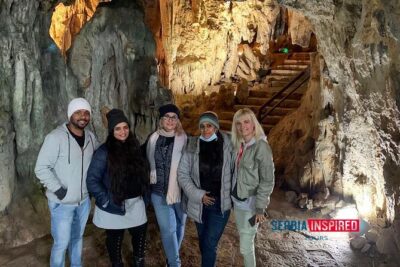
Day Trip from Belgrade: Gems of Eastern Serbia
Read our review →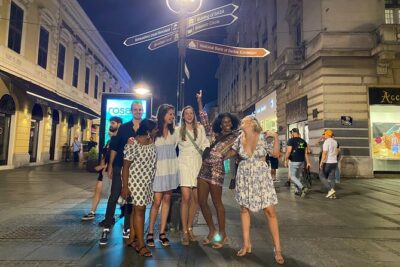
Belgrade Nightlife Bar Pub Club Crawl with Drinks
Read our review →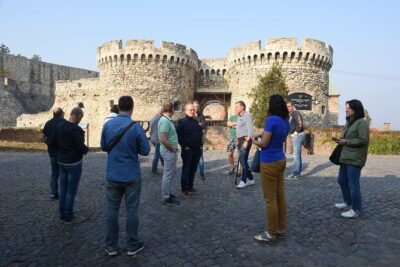
Belgrade Big Tour: Top Attractions and Belgrade Neighborhoods
Read our review →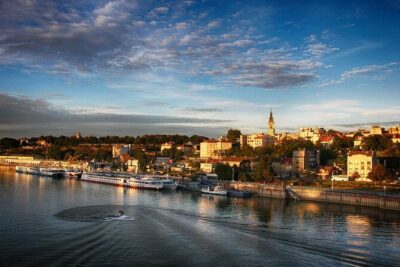
Along the Danube: Golubac Fortress & Iron Gate Gorge day trip from Belgrade
Read our review →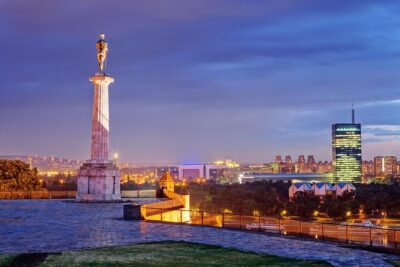
Belgrade Underground Tour w/ Sparkling Wine Along the River
Read our review →Browse the lists this tour appears in