
Reviewed · BELGRADE TOURS
Private 4 Hours Space Architecture Tour in Belgrade
Belgrade’s architecture tells the story of a country that tried to build a new society in concrete, glass, and bold geometric forms. This private tour links the city’s far-flung landmarks, from Avala Tower on the city’s tallest mountain to the futuristic Genex Tower, while your guide explains how Yugoslavia’s ideals shaped its buildings. I especially like the door-to-door pickup and the chance to reach places that are awkward to connect by public transport.
I also like the mix of viewpoints, bridges, government buildings, and residential towers. You get both broad views over Belgrade and close looks at socialist modernism. The main drawback is that four hours includes a lot of driving, with most stops lasting only 15 to 45 minutes, so this suits you better if you want a well-organized introduction than a slow architectural study.
Key points to know
- Six very different landmarks: The route covers a mountain tower, brutalist housing, a major bridge, a conference center, a government palace, and a skyscraper complex.
- Private touring for up to three people: Your group travels alone, making it easier to ask questions or adjust the conversation around architecture and Yugoslav history.
- Pickup and drop-off at your address: Transportation time is part of the four-hour duration, which matters because the sites are spread across Belgrade.
- Avala Tower admission is included: The observation deck provides a high view over Belgrade and the surrounding area.
- English-speaking guides bring historical context: Guides named Stefan, Novica, Nemanja, Mihailo, and Milos have led this experience, though the assigned guide can vary.
- Best for curious architecture fans: The tour is particularly useful if you want socialist-era buildings that are difficult to visit efficiently on your own.
Why this Belgrade tour is really about Yugoslavia
The word architecture in the tour title can undersell what you are getting. This is not simply a drive past unusual buildings. The route is a compact lesson in how Yugoslavia presented itself through public works, housing projects, bridges, conference halls, and monumental offices.
Belgrade’s postwar building program reflected the country’s political position. Yugoslavia was socialist, but it did not follow the exact Soviet model. Its architects often had room to experiment, and the results could be grand, severe, playful, or all three at once.
That context helps you read the buildings. The Palace of Serbia is not just a large government office. The Eastern City Gate is not merely a cluster of tall apartment blocks. Each place shows something about power, progress, collective life, or the desire to present Belgrade as a modern international capital.
Your guide may be one of several experienced hosts, including Stefan, Novica, Nemanja, Mihailo, or Milos. The strongest guide style described for this tour combines architectural explanation with Serbian and Yugoslav political history. That is important because the buildings can look forbidding if you see them without context.
A few more days out around Belgrade to weigh up
- Northern Serbia: Sremski Karlovci and Novi Sad Full-Day Tour from Belgrade
★ 5.0 · 425 reviews - Day Trip from Belgrade: Gems of Eastern Serbia
★ 5.0 · 424 reviews - Belgrade Nightlife Bar Pub Club Crawl with Drinks
★ 5.0 · 277 reviews
Avala Tower and the first big view
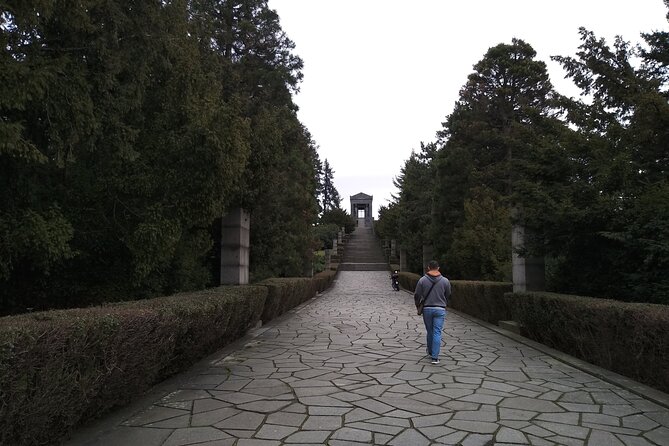
The tour begins with a drive of roughly 30 to 45 minutes from central Belgrade to Avala Tower. The tower sits on Avala, the city’s tallest mountain, and the trip gives you a quick change from urban streets to a higher, more open setting.
The observation deck is the main reason to come. From above, you can look back toward Belgrade and get a sense of the city’s broad form before spending the rest of the tour among its buildings. I like this opening because it gives you orientation, not just another isolated photo stop.
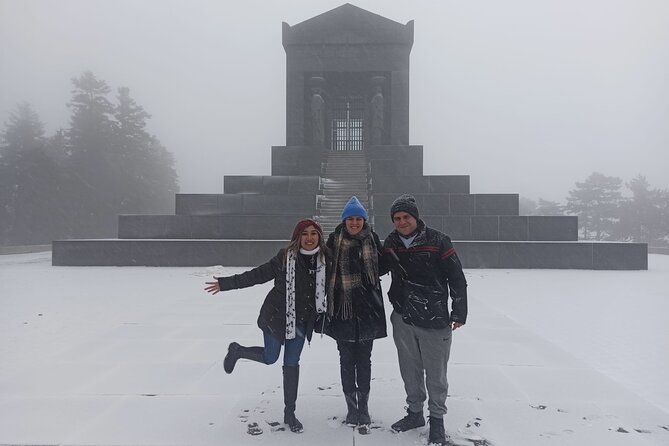
Avala Tower also carries a difficult part of Serbia’s recent story. NATO bombing destroyed the original tower in 1999. The structure was rebuilt and reopened in 2010, so the present tower is both a communications landmark and a reminder of the country’s turbulent late 20th century.
You have about 45 minutes here, the longest stop on the route. Admission is included, so there is no extra ticket decision to make on the day. If the weather is poor, the view may be less rewarding, but the tower still gives the tour a strong start.
The Eastern City Gate and Yugoslav brutalism
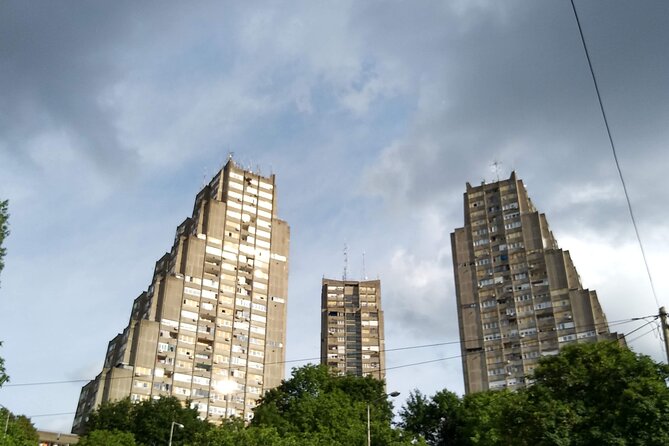
From Avala Tower, allow another 30 to 45 minutes in the vehicle before reaching the Eastern City Gate. The complex is officially called Rudo and consists of three residential buildings, each rising about 85 meters.
These towers are a clear example of brutalist design. Their size and repeated forms make them feel more like a planned urban statement than ordinary apartment buildings. They were intended for daily life, yet their scale gives them a monumental quality.
This stop lasts about 20 minutes and has no admission charge. That short visit is enough to take in the arrangement of the buildings and hear the story behind them, but it is not enough for an extended architectural survey. You will spend more time looking and listening than entering the buildings.
The Eastern City Gate is especially useful for understanding how socialist cities used housing to express a sense of collective modern life. It is also one of the tour’s more difficult stops to connect with on your own because the sites are widely separated.
Ada Bridge above the Sava
The ride from the Eastern City Gate to Ada Bridge takes around 10 to 15 minutes. Here, the experience shifts from housing and city planning to infrastructure.
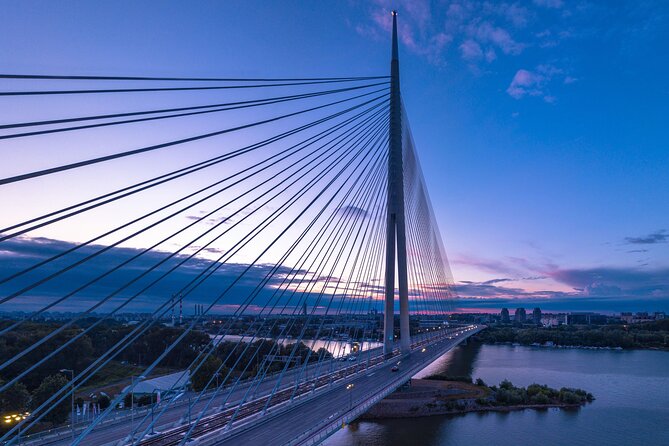
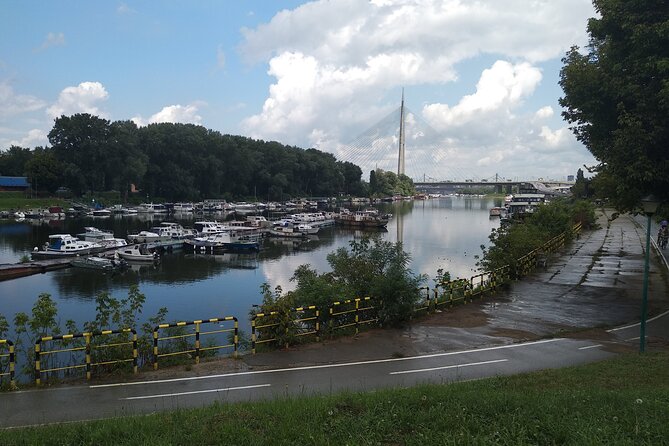
You cross the Sava River on Ada Bridge, a striking single-pylon bridge whose construction was featured on the Discovery Channel. The bridge is described as the highest single-pylon bridge in Europe, giving the stop a clear engineering angle as well as a visual one.
The visit lasts about 20 minutes. You are not signing up for a bridge engineering inspection, but your guide can help you notice the pylon, the cable arrangement, and the bridge’s place in Belgrade’s newer development.
I like this part because it breaks up the heavy concrete of the earlier buildings. It also shows that the tour is not limited to classic Yugoslav-era architecture. You see how a modern bridge fits into a city shaped by the Sava and Danube rivers.
Same city, a completely different day out:
- Taxi to/from Belgrade Airport to/from Belgrade City Center
★ 5.0 · 241 reviews - Belgrade Big Tour: Top Attractions and Belgrade Neighborhoods
★ 5.0 · 232 reviews - Along the Danube: Golubac Fortress & Iron Gate Gorge day trip from Belgrade
★ 4.5 · 185 reviews - From Belgrade: Golubac Fortress & Iron Gate Danube Gorge
★ 4.8 · 185 reviews
Sava Center and the architecture of diplomacy
After about 10 minutes in the car, you reach Sava Center. The complex was built for the Conference on European Security and Cooperation held in Belgrade in 1977.
At the time, Sava Center was the first and largest conference center in former Yugoslavia. Its unusual polyhedral buildings were designed for a major international meeting, so the complex had to communicate both practical purpose and national ambition.
You have roughly 15 minutes here. That may sound brief, but the exterior structure provides plenty to discuss. Look for the way the buildings break away from simple rectangular blocks. The forms are large and angular, making the complex feel purpose-built for a major public event rather than adapted from an older building.
This is a good stop if you are interested in the connection between architecture and politics. Belgrade was presenting itself as a place where international powers could meet, and Sava Center gave that ambition a physical address.
Palace of Serbia and late modernist power
The next transfer is only about five minutes, taking you to the Palace of Serbia. This building was formerly known as the Federal Executive Council and was the first major New Belgrade project after World War II.
The Palace is a powerful example of late modernism. It is enormous, but the description of it as elegant is fair. Its size reflects the authority of the state, while its careful design tries to make that authority appear ordered and modern rather than merely imposing.
Your stop lasts about 15 minutes. You will stand outside and examine the structure, its scale, and its role in the creation of New Belgrade. This is not a palace in the old European sense, with royal rooms and historic interiors. Its importance comes from the political system it represented.
For me, this is where the tour’s central idea becomes clearest: design can express ruling ideology. The building was made for a federal government, so its scale was part of the message. Your guide’s historical explanation adds much more than a list of dates or architectural labels.
Genex Tower, Belgrade’s Western Gate
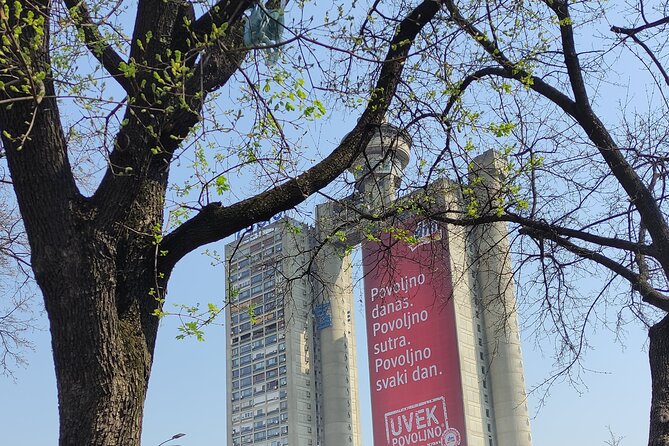
A drive of around 10 minutes brings you to the Western City Gate, usually called Genex Tower. Designed in 1977 by Mihajlo Mitrović, the complex is a 36-story skyscraper in the brutalist style.
It is formed by two towers connected by a two-story bridge. That unusual composition gives the building a strong visual identity, and it is one of the clearest examples on the route of architecture being used to shape a city’s image.
The 15-minute stop is mainly about seeing the form from outside and hearing how the complex fits into Belgrade’s development. The two towers do not read like a standard office block. Their connection creates a gate-like effect, which explains the name Western City Gate.
This final stop is a fitting close because it brings together several themes from the day: scale, concrete, movement, and the attempt to make a modern city look distinctive. If brutalism is your main interest, this may be the building you remember most.
What the four-hour schedule feels like
The tour is advertised as approximately four hours, and transportation time is included. The listed drives add up to a substantial part of the day: up to 45 minutes each way to Avala Tower, then shorter transfers between the central and New Belgrade sites.
That means the route is efficient, but not leisurely. You will see six places across a wide area without spending hours at any single one. The schedule works because the guide talks during the drives, turning the vehicle into part of the presentation rather than treating transfers as dead time.
You should expect about 45 minutes at Avala Tower, 20 minutes at the Eastern City Gate, 20 minutes at Ada Bridge, and about 15 minutes each at Sava Center, the Palace of Serbia, and Genex Tower. Those short urban stops favor overview, explanation, and photographs.
If you are an architect who wants time to sketch facades or inspect details, you may want a longer custom program. If you want to cover a lot of Belgrade in one morning or afternoon, the pace is a strength.
Why a private vehicle adds real value
The price is $175.14 per group of up to three people. With three people, that works out to about $58.38 each. With two people, it is about $87.57 per person, while a solo booking carries the full group price.
That pricing makes most sense for a small group that values a private guide and door-to-door transport. You are not paying only for entry to Avala Tower. You are also paying to connect sites that are scattered around Belgrade, including places that are hard to combine without a car.
Pickup and drop-off are included at your accommodation, along with an air-conditioned vehicle, entrance fees, and a professional guide. Personal expenses are not included, but the supplied details do not identify any required extra costs beyond that.
The private format has another advantage: you can focus the conversation on brutalism, socialist planning, Serbian history, or the practical details of the buildings. The tour is for your group only, with a maximum of three people, so questions do not have to compete with a large crowd.
The guides and the quality of explanation
The guide assigned to you may vary, but several names are connected with this experience. Stefan is described as holding degrees in history and explaining the architecture alongside Serbian society and culture. Novica is noted for an entertaining presentation and for continuing the tour even when snow covered the ground at Avala.
Nemanja has led a program shaped around a guest’s interest in Yugoslav socialist architecture and spomeniks. Mihailo is known for giving information from the moment the group enters the vehicle, while Milos has also contributed historical detail during the driving sections.
Those individual styles matter because this tour depends heavily on interpretation. The buildings do not come with long visitor panels, and some are best understood from the outside. A strong guide gives you the political and social setting that makes the forms meaningful.
You can also contact Belgrade Walking Tours before the day of the experience to discuss particular interests. A guest with a strong focus on socialist architectural heritage received a tailored program, so it is worth stating your priorities early rather than assuming every guide will spend equal time on every subject.
Who should book this architecture tour
I would recommend this tour to you if you:
- Want to see Belgrade beyond the central historic district
- Have a serious interest in brutalism, modernism, or socialist city planning
- Prefer a guide who connects buildings with politics and society
- Are traveling as a couple or a small group of up to three
- Want private transport to distant or awkward-to-reach sites
- Have only half a day for a broad look at Belgrade’s modern architecture
It is less suitable if you want extensive interior access, long walking visits, or a relaxed pace. The schedule is built around exterior viewing and transfers, with Avala Tower providing the main ticketed observation experience.
The tour can also work for people who are not architecture specialists. You do not need to know the difference between brutalism and late modernism before you begin. The guide’s job is to show you what to look for and explain why these structures mattered.
Practical details before you reserve
The experience is offered in English and runs Monday through Sunday from 9:00 AM to 5:00 PM during the stated operating period. Pickup is from your address, and confirmation is received at booking.
Service animals are allowed, and most people can participate. The supplied information does not give detailed building-access notes for every stop, so if you have specific mobility needs, ask the operator before booking.
Free cancellation is available if you cancel at least 24 hours before the local start time. Changes or cancellations made inside that 24-hour window are not accepted for a refund.
Should you book it?
Book this if you want a compact, private introduction to Belgrade’s socialist and modern architecture, especially if you would struggle to link these distant sites by yourself. The combination of Avala Tower, the Eastern City Gate, Sava Center, the Palace of Serbia, Ada Bridge, and Genex Tower gives you a much broader picture than a standard old-town walk.
The strongest reason to choose it is the guide-led context. You get concrete and steel, but also an explanation of Yugoslavia’s ambitions, Serbia’s recent past, and the way political ideas shaped New Belgrade.
Skip it if you want slow, detailed study of each building or a tour centered on interiors. For everyone else, especially a small group willing to share the $175.14 cost, this is an efficient and unusual way to see a side of Belgrade that is easy to miss.
FAQ
Where does the tour take place?
The tour takes place in Belgrade, Serbia, with a visit to Avala Tower outside the central city and several stops across Belgrade.
How long does the experience last?
The experience lasts approximately four hours. Transportation time between stops is already included in that total.
How many people can join the private tour?
The price covers one private group of up to three people. Only your group participates.
Is hotel or accommodation pickup available?
Yes. Pickup and drop-off are offered from your accommodation address.
Is the tour offered in English?
Yes. The experience is offered in English.
Is admission to Avala Tower included?
Yes. The entrance fee for Avala Tower is included in the tour price.
Which places are visited?
The route includes Avala Tower, the Eastern City Gate of Belgrade, Ada Bridge, Sava Center, the Palace of Serbia, and Belgrade’s Western Gate, also known as Genex Tower.
Are personal expenses included?
No. Personal expenses are not included. The tour does include the vehicle, guide, pickup and drop-off, and stated entrance fees.
Can I cancel for a full refund?
Yes, if you cancel at least 24 hours before the experience start time. Cancellations made less than 24 hours before the start are not refunded.
Just added around Belgrade
- Private Walking Tour of Belgrade and Old Zemun★ 5.0 · 3 reviews
- Feel Belgrade Welcome tour★ 4.5 · 3 reviews
- From Belgrade: Danube Day Trip with Wine and Brandy Tasting★ 5.0 · 3 reviews
- Private Half Day Serbia Tour Novi Sad and Petrovaradin Fortress★ 5.0 · 3 reviews
- Belgrade: The White Emigration in Serbia in the Wake of the Russian Revolution★ 5.0 · 3 reviews
- Private Wine Tasting by Party in Belgrade★ 5.0 · 3 reviews
- Zica and Studenica monastery From Belgrade★ 5.0 · 3 reviews
- Belgrade Fashion and Design Tour – Discover Local Designers★ 5.0 · 4 reviews
Belgrade Tours, compared.
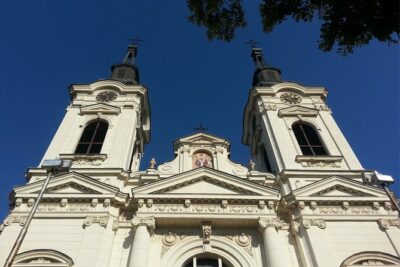
Northern Serbia: Sremski Karlovci and Novi Sad Full-Day Tour from Belgrade
Read our review →
Day Trip from Belgrade: Gems of Eastern Serbia
Read our review →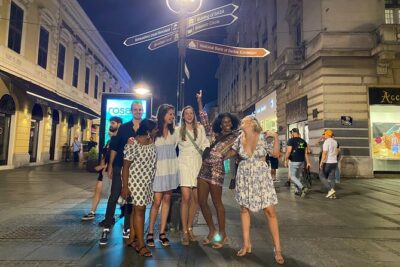
Belgrade Nightlife Bar Pub Club Crawl with Drinks
Read our review →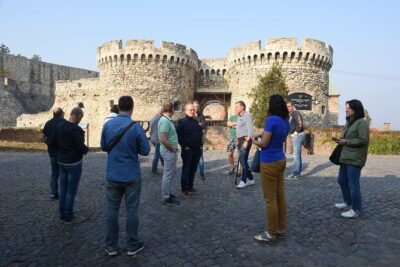
Belgrade Big Tour: Top Attractions and Belgrade Neighborhoods
Read our review →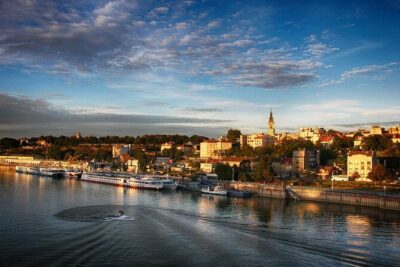
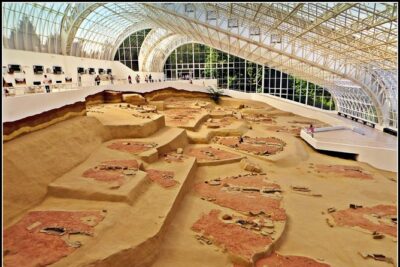
Along the Danube: Golubac Fortress & Iron Gate Gorge day trip from Belgrade
Read our review →
Belgrade Underground Tour w/ Sparkling Wine Along the River
Read our review →Browse the lists this tour appears in