
Reviewed · BELGRADE TOURS
Belgrade Big Tour: Top Attractions and Belgrade Neighborhoods
Belgrade’s story comes into focus when you see its Ottoman-era fortress, Austro-Hungarian Zemun, socialist New Belgrade, royal Dedinje, and grand Saint Sava Temple in one long day. This tour is built for first-time visitors who want the city’s main pieces without sorting out buses, taxis, and scattered neighborhoods.
I like the wide range of districts and the included ride between them. I also like the free time in Zemun, where you can choose fish, burek, or ćevapčići instead of being marched straight from one sight to the next. The main drawback is the pace: you will walk on hills, steps, and cobblestones, while some vehicle stops offer only a quick look.
Key points at a glance
- Kalemegdan and Belgrade Fortress: See Roman, medieval, and Ottoman-era layers around the meeting point of the Sava and Danube.
- Zemun lunch break: Walk the Danube promenade and Gardos Hill, then choose your own meal in the old town.
- New Belgrade contrast: Ride past striking socialist concrete buildings, the Genex Tower, Sava Center, and Belgrade Arena.
- Saint Sava Temple: Spend about 45 minutes inside one of the world’s largest Orthodox churches, with admission included.
- Small-group format: Shared tours allow up to 16 people, though one unhappy report described a group of 12 after expecting no more than eight.
- Useful first-day overview: Hotel pickup is included, but the tour ends at the National Assembly rather than returning you to your hotel.
Why this full-day route works
At $72.59 per person, this is not the cheapest way to see Belgrade. Still, the price covers a 7 to 8-hour outing, hotel pickup within the stated area, an English-speaking guide, transport in an air-conditioned van or minibus, and Saint Sava Temple admission.
The value comes from the geography. Belgrade’s main sights are spread across the old center, the river districts, Zemun, Dedinje, and Vračar. You could visit them independently, but you would spend time working out connections and deciding what deserves attention. Here, the vehicle handles the long jumps while your guide supplies the background.
The format also suits a short stay. If you have only a weekend, this tour gives you a useful map of the city before you return to the places you liked best. I would book it early if your dates are fixed, since it is often reserved about 40 days ahead.
The strongest part of the experience is the guiding. Names praised in the supplied feedback include Aleksandar, Milan, Isidora, Dragana, Kristina, Jelenca, and Maritza. The repeated pattern is clear: a good guide turns a long list of stops into a readable story about Serbia, Belgrade, and the changes brought by the 20th century.
That quality is not guaranteed on every departure. One poor experience described a guide who walked ahead, gave unclear departure times, and left a group member behind at one stop. Another complaint concerned a late start, crowded pickup arrangements, and poor visibility through small, cloudy van windows. Those reports are important because this tour depends heavily on good organization and clear communication.
A few more days out around Belgrade to weigh up
- Northern Serbia: Sremski Karlovci and Novi Sad Full-Day Tour from Belgrade
★ 5.0 · 425 reviews - Day Trip from Belgrade: Gems of Eastern Serbia
★ 5.0 · 424 reviews - Belgrade Nightlife Bar Pub Club Crawl with Drinks
★ 5.0 · 277 reviews
Kalemegdan Park and the fortress above two rivers
Your day begins with pickup from a hotel, Airbnb, or pension within 5 kilometers of Republic Square. Shared-tour pickup is usually 15 to 30 minutes before the 9:30 a.m. start, with exact details sent by email one day before the trip, after 6 p.m.
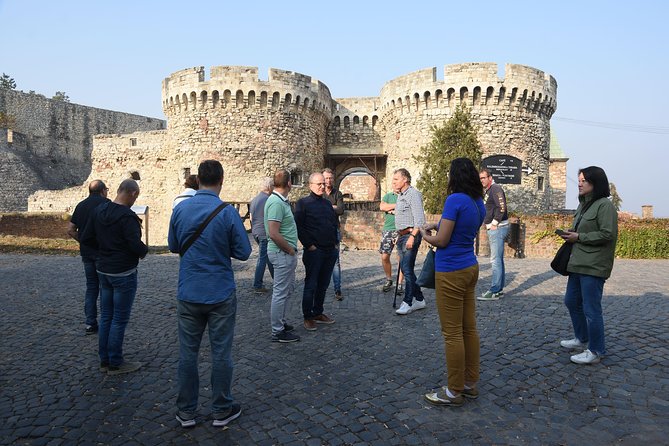
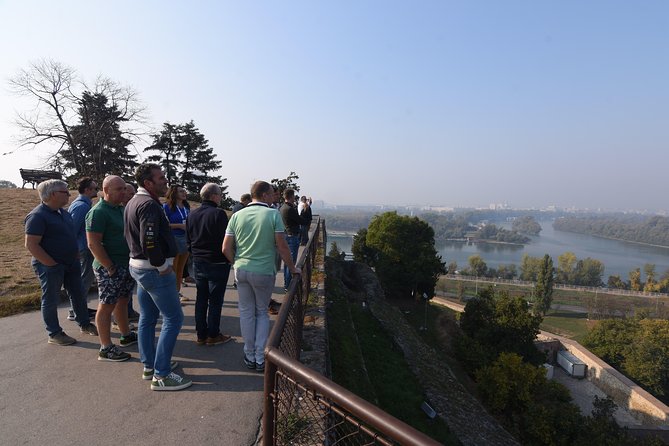
The first stop is Kalemegdan, Belgrade’s oldest and largest central park, followed by Belgrade Fortress. This is the right place to begin because the city’s location makes sense from here. The fortress sits above the confluence of the Sava and Danube, giving you the view that explains Belgrade’s military importance.
The walk begins around Leopold’s Gate and passes the remains of Singidunum, the Roman settlement that occupied this high ground. Later walls were built over and around those foundations. You will see Zindan Gate, Despot’s Gate, and Jakšića Tower, with several structures dating from the 15th century.
Two small Orthodox churches add a quieter note: the Chapel of St. Petka and Ružica Church, also called the Church of the Virgin Mary. The first fortress walk is listed at about 45 minutes, so expect an introduction rather than a long museum visit.
Wear shoes with a firm sole. The route includes uneven ground and historic stone surfaces, and the day contains more walking than the vehicle-heavy outline might suggest.
Pobednik and the Upper Town’s river view
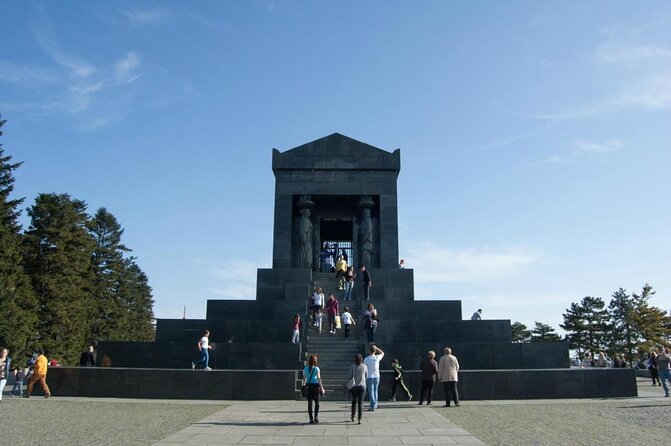
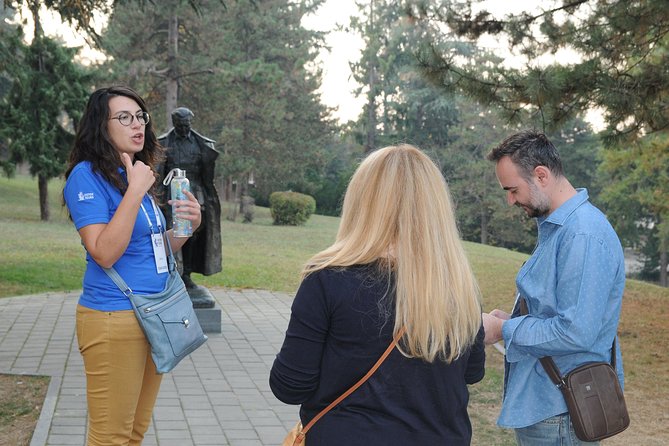
The walk continues through the Upper Town, or Gornji grad. Your guide will point out the Victor monument, known locally as Pobednik, created by Ivan Meštrović. It has become one of Belgrade’s best-known symbols, with the figure looking out over the rivers and the city.
Other sights include the Roman Well, King’s Gate, the Sava promenade, the Damat Ali Pasha Tomb, Clock Gate, and Clock Tower. You will also pass the Military Museum and Istanbul Gate before returning through the park.
This section lasts about 30 minutes. It is a good example of how the tour works: several sights are grouped into one walk, and the guide connects them while you move. You will not have time to study every gate or building at leisure, but you will leave with a sense of how many eras occupy this hill.
The Monument of Gratitude to France and busts of notable Serbian writers appear in Kalemegdan before you return to the vehicle. If you want detailed time at the Military Museum or fortress exhibits, plan a separate visit later.
New Belgrade’s concrete scale and modern skyline
The route then shifts across the river to New Belgrade, a very different part of town. Developed after the Second World War under socialist Yugoslavia, it is known for large planned blocks and bold concrete buildings.
You will pass the former Central Committee of the Communist Party, the Federal Executive Council, now called the Palace of Federation, and the Genex Tower, also known as the Western Gate of Belgrade. The route also includes Sava Center and Belgrade Arena, a major sports venue.
This is not a district to approach only for pretty streets. Its appeal is scale, planning, and political history. New Belgrade shows how a capital tried to express a new state through broad spaces and monumental buildings. The area received international attention through a Museum of Modern Art exhibition titled Toward a Concrete Utopia, which placed its architecture in a wider design story.
You will mostly see New Belgrade from the vehicle. That makes the air-conditioned transport useful, especially on a hot day, but it also means you cannot linger at each building. If modern architecture interests you, note the names and return independently.
The route also passes the Novak restaurant, associated with tennis player Novak Đoković’s family. Treat this as a passing point rather than a scheduled meal stop.
Same city, a completely different day out:
- Taxi to/from Belgrade Airport to/from Belgrade City Center
★ 5.0 · 241 reviews - Along the Danube: Golubac Fortress & Iron Gate Gorge day trip from Belgrade
★ 4.5 · 185 reviews - From Belgrade: Golubac Fortress & Iron Gate Danube Gorge
★ 4.8 · 185 reviews - Belgrade: 3-Hour Small Group Walking Tour
★ 5.0 · 180 reviews
Zemun’s cobbles, Danube promenade, and Gardos Hill
Zemun gives the day a strong change of mood. Once a separate town north of Belgrade, it has a Central European feel, with older buildings, narrow streets, cobblestones, and restaurants along the Danube.
The vehicle passes Avijatičarski Trg, where the old town begins. The square includes a large monument to Second World War heroes, Zemun’s oldest elementary school building, and the former Air Force Ministry, an important example of pre-war Yugoslav modernism.
Gospodska Street brings a closer look at local architecture. The Post Office, Hotel Central, Town Museum, and House with a Sundial are among the buildings your guide will identify. This first ride through Zemun is brief, about 15 minutes, but it helps you recognize the main street before the walking portion.
The vehicle then stops by the Danube. You walk along the Zemun Promenade under old plane trees, passing fish restaurants and the 17th-century Orthodox Church of St. Nicholas. The route turns uphill toward Gardos, the old town’s central hill.
The climb is short but not flat. Curving cobblestone lanes and small houses make this one of the most atmospheric parts of the day, yet the surfaces can be awkward for anyone unsteady on steps or slopes. One report specifically warned that the van had no step to help with getting in and out, so consider your mobility before booking.
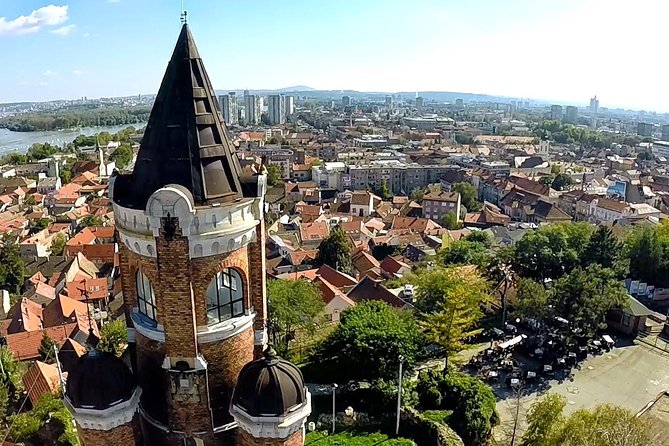
At the top, the Millenary Monument, also called the Millennium Tower, rises from the remains of the Zemun citadel. Built in the late 19th century in a mix of historic styles, it marked the southernmost point of the Austro-Hungarian Empire.
Admission to the tower is not included. The payoff, if you go up, is the view over Zemun, the two rivers, and Belgrade Fortress across the water. Even from the hill itself, the setting is excellent for photographs.
Lunch in Zemun, with room to choose
The walking route descends to the Main City Square, where a daily market operates. Around it are the Bishop’s Office and the 18th-century Roman Catholic Church of the Blessed Virgin.
You get about 1 hour and 15 minutes of free time here. That is a welcome break in a day filled with commentary and scheduled movement. You can eat beside the Danube, order freshly prepared river fish, try burek, or choose ćevapčići, small seasoned meat rolls.
Food and drinks are not included, so bring a card or local cash. The free time is also useful if you prefer coffee and a short walk instead of a full meal. Since the tour ends in central Belgrade, lunch in Zemun may be your only relaxed meal opportunity during the outing.
Keep an eye on the meeting time. The tour’s long-day format leaves little room for a late return to the vehicle. One poor account described confusion over free time and a group departure, so ask your guide exactly where and when to regroup before setting off.
Dedinje, football rivalry, and royal Belgrade
After Zemun, the vehicle crosses the Gazela Bridge toward Dedinje, one of Belgrade’s most affluent residential districts. The area is known for large homes and greenery on Topčider Hill, and your guide will explain how some properties were tied to Serbia’s turbulent 20th-century political story.
You will also pass Rajko Mitić Stadium, home of Red Star Belgrade, and Partizan Belgrade’s stadium across the hill. Their rivalry has lasted more than 70 years. Red Star’s European record gives the stop extra interest: it was the last club from Eastern or Southern Europe to win the Champions League.
This portion is mainly viewed from the vehicle. It is best for context rather than close inspection. You get a look at how sports, politics, wealth, and national identity overlap in Belgrade, without spending a large portion of the day inside stadiums or residential streets.
Saint Sava Temple and the city center’s grand avenues
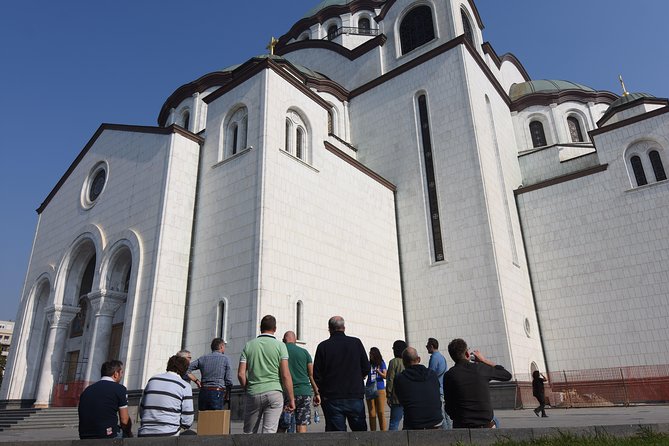
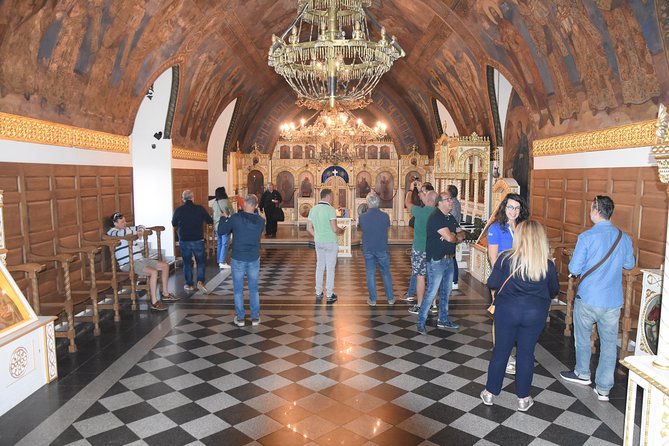
The major indoor stop is Saint Sava Temple in the Vračar district. Admission is included, and the visit lasts about 45 minutes.
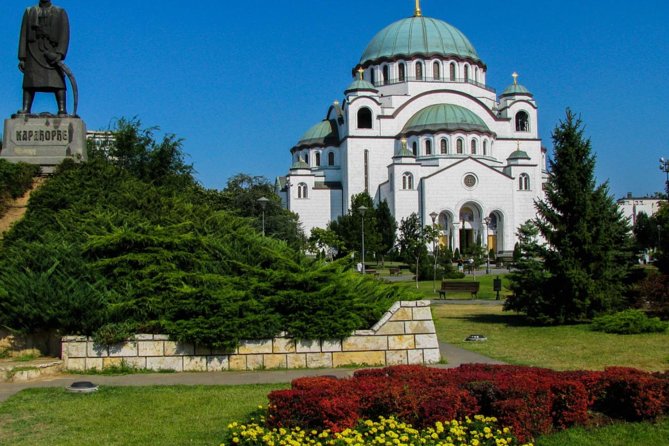
The church is one of the largest Orthodox churches in the world. Its dome reaches 70 meters, while the central gilded cross adds another 12 meters, bringing the total height to 82 meters. The building follows a Serbian-Byzantine design and occupies about 3,500 square meters at ground level, with another 1,500 square meters in three upper galleries.
The site carries special meaning in Serbia. Construction began in the 1930s where Ottoman forces burned the relics of Saint Sava, the founder and first archbishop of the independent Serbian Orthodox Church. The scale is impressive from outside, but the interior is the part worth protecting time for. One visitor described the interior as the high point of the day.
The temple is also where a small practical confusion has appeared. Admission is listed as included, yet one account says a guide requested 400 Serbian dinars despite the writer understanding the church to be free to the public. If anyone asks you for a separate charge, clarify whether it is an official fee or an optional contribution before paying.
After the temple, the vehicle passes Slavija Square and Nemanjina Street. This avenue gathers major government buildings, including the Government Building, Ministry of Foreign Affairs, General Staff of the Serbian Army, Ministry of Railways, Ministry of Finance, and State Court.
You then reach Republic Square, the center of Belgrade’s cultural life. The National Museum, National Theatre, and Opera buildings surround the square, along with the equestrian statue of Prince Mihailo, a major ruler in Serbia’s 19th-century development.
The route continues through Terazije Square, where you will see the white stone fountain and Hotel Moskva, one of the city’s most recognizable buildings. It then passes Nikola Pasic Square and ends near the Parliament Building.
Parliament, royal palaces, and the final stop
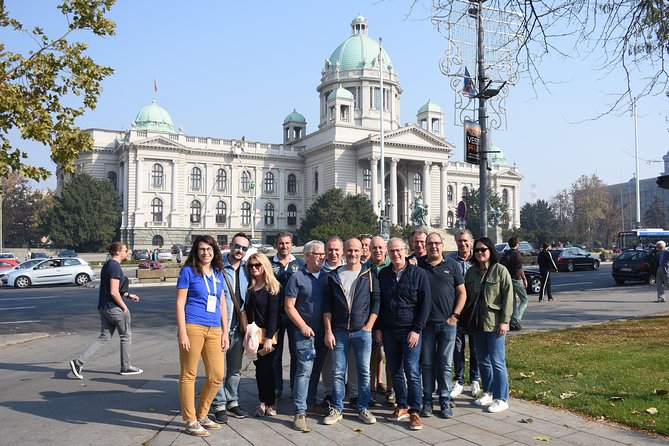
The final stop is the House of the National Assembly of the Republic of Serbia. You have about 15 minutes for photographs and a final explanation of the surrounding buildings.
From here, you can see the Old and New Royal Palaces and hear about the two dynasties that ruled Serbia during the 19th and 20th centuries. The tour ends in front of the National Assembly, in the city center, and your guide offers ideas for the rest of your afternoon.
There is no hotel drop-off. That is easy to manage if you plan to continue around central Belgrade, but it matters if you have luggage, limited mobility, or an evening departure. Arrange your onward plans before the morning begins.
Group size, comfort, and walking demands
The shared tour has a maximum of 16 people and needs at least three participants to operate. Transport depends on group size, with an air-conditioned van or minibus used for the day.
Small groups can make this route much easier. Several strong accounts describe groups of three to five, with guides who explained clearly and adjusted the pace for mixed ages. One family with a nine-year-old and older relatives found the movement between stops well timed.
The experience is not ideal for anyone who wants a gentle, mostly seated sightseeing ride. You will walk through a fortress, along Zemun’s riverfront, up Gardos Hill, and through central squares. There are stairs, slopes, and cobbles, plus repeated climbs into and out of a high vehicle.
Pickup is available from hotels, Airbnbs, or pensions within 5 kilometers of Republic Square. Depending on traffic and the number of pickups, you might be asked to walk 7 or 8 minutes to a nearby meeting point. That is a minor issue for most people, but allow extra time in the morning.
Who should book this Belgrade tour?
I would choose this tour if you are visiting Belgrade for the first time, have only one or two full days, or prefer a guide to explain Serbia’s complicated past as you move through the city.
It is also a good fit if you want both old and modern Belgrade. The fortress, Zemun, royal neighborhoods, socialist architecture, and Saint Sava Temple do not naturally fall into one simple walking route. The transport saves your energy for the places where walking matters.
I would hesitate if you want long museum visits, quiet photography time, or a flexible food-focused day. The schedule covers a lot, but most stops are introductions. You should also think twice if getting into a high van or walking hills is difficult.
The 97 percent recommendation rate and 4.8 rating from 232 ratings point to a strong overall experience, especially when the guide is one of the more engaging leaders such as Aleksandar, Milan, or Isidora. Still, the negative accounts show why you should confirm pickup details, group expectations, and meeting times.
At $72.59, I consider it a fair buy for a short stay, provided you value context and convenience more than independence. Book it early, wear sturdy shoes, keep lunch money handy, and treat the day as a well-planned orientation to Belgrade rather than a series of deep visits.
FAQ
How long does the Belgrade Big Tour last?
The experience lasts approximately 7 to 8 hours and begins around 9:30 a.m.
Is hotel pickup included?
Yes. Pickup is offered from hotels, Airbnbs, and pensions within a 5-kilometer radius of Republic Square. You might be asked to walk 7 or 8 minutes to a nearby pickup point because of traffic or the day’s pickup arrangements.
Is transportation included?
Yes. Transport is provided in an air-conditioned van or minibus, depending on the number of people on the tour.
Is Saint Sava Temple admission included?
Yes. The stated inclusions cover admission to Saint Sava Temple. The Millenary Monument in Zemun is not included.
Does the tour include lunch?
No. Food and drinks are optional and are not included. You have about 1 hour and 15 minutes of free time in Zemun to choose lunch, coffee, burek, ćevapčići, or another option.
Where does the tour end?
The tour ends in front of the National Assembly in central Belgrade. Hotel drop-off is not included.
How many people can join the shared tour?
The tour can have up to 16 travelers, and at least three participants are needed for a shared departure to operate. If the minimum is not met, you will be offered another date or experience, or a full refund.
Just added around Belgrade
- Private Walking Tour of Belgrade and Old Zemun★ 5.0 · 3 reviews
- From Belgrade: Danube Day Trip with Wine and Brandy Tasting★ 5.0 · 3 reviews
- Feel Belgrade Welcome tour★ 4.5 · 3 reviews
- Private Half Day Serbia Tour Novi Sad and Petrovaradin Fortress★ 5.0 · 3 reviews
- Private Wine Tasting by Party in Belgrade★ 5.0 · 3 reviews
- Belgrade: The White Emigration in Serbia in the Wake of the Russian Revolution★ 5.0 · 3 reviews
- Zica and Studenica monastery From Belgrade★ 5.0 · 3 reviews
- E-Scooter Serbian Food Tour★ 5.0 · 3 reviews
Belgrade Tours, compared.
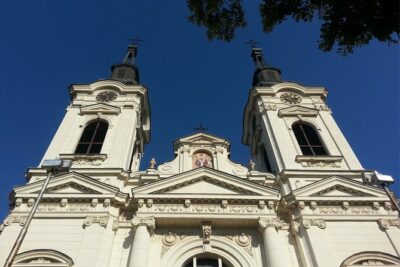
Northern Serbia: Sremski Karlovci and Novi Sad Full-Day Tour from Belgrade
Read our review →
Day Trip from Belgrade: Gems of Eastern Serbia
Read our review →
Belgrade Nightlife Bar Pub Club Crawl with Drinks
Read our review →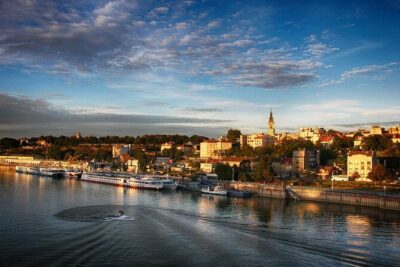
Along the Danube: Golubac Fortress & Iron Gate Gorge day trip from Belgrade
Read our review →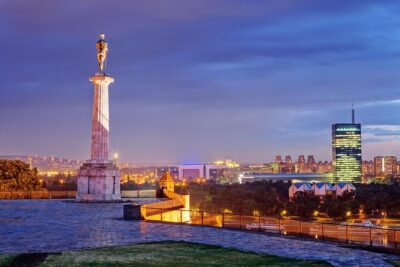
Belgrade Underground Tour w/ Sparkling Wine Along the River
Read our review →
Iron Gate NP Tour with 1-hour speedboat ride + 2 viewpoints
Read our review →Browse the lists this tour appears in