
Reviewed · BELGRADE TOURS
Communist Tour in Belgrade
Belgrade’s communist past is not locked in a single museum. It is spread across grand squares, government buildings, bomb-damaged concrete, trolleybus routes, and Tito’s former memorial complex. This three-hour tour gives you a useful way to connect those pieces, from Republic Square to the Museum of Yugoslavia.
I especially like the small maximum group of 15 and the way the tour mixes street-level explanation with an hour inside the Museum of Yugoslavia. I also like that the guides tackle difficult subjects such as Tito, the Non-Aligned Movement, the 1990s conflicts, and the 1999 NATO bombing rather than offering a tidy, postcard version of Serbia.
The main drawback is the pace. You cover six stops in about three hours, and most city stops last only 15 to 20 minutes. The trolleybus ride is part of the plan, but it also means this is a guided overview, not a leisurely architectural walk.
Key points to know before booking
- Tito’s story is the thread: The tour explains Tito, the Youth Relay Baton, Yugoslavia’s political system, and the country’s international role.
- The route ends at the Museum of Yugoslavia: Museum admission and the trolleybus ticket are included in the $24.03 price.
- Generalštab gives the tour its strongest visual moment: The damaged former Yugoslav Ministry of Defence building still shows the marks of the 1999 NATO bombing.
- English-speaking guides lead the walk: Stefan, Michael, and Milan are among the guides praised for clear, balanced explanations and strong command of the subject.
- Expect a compact afternoon program: It begins at 3 p.m. at Republic Square and finishes at the Museum of Yugoslavia.
- Free cancellation is available: You can cancel up to 24 hours before the start for a full refund.
Why this tour matters in Belgrade
If you only visit Belgrade’s fortress, pedestrian center, and riverside, you can miss the political story that shaped modern Serbia. This tour puts that story in front of you through buildings and public spaces that still serve everyday purposes.
The tour does not treat communism as a sealed-off period that ended neatly. It links the postwar socialist state to Tito’s public image, Yugoslavia’s attempt to remain independent of both the Soviet bloc and the West, the breakup of the country, the conflicts of the 1990s, and Serbia’s democratic changes after 2000.
That range is useful because Yugoslavia is easy to misunderstand. It was not simply the same as the Soviet Union, and Serbia’s experience cannot be reduced to one political label. A good guide needs to explain the differences without turning the walk into a lecture. The strongest feedback points to Stefan, Michael, and Milan doing exactly that in different ways, with an emphasis on facts, context, and a balanced presentation.
You should still expect a serious subject. This is not a light sightseeing stroll with a few old slogans added for color. The tour discusses conflict, political change, and the NATO bombing of Serbia and Montenegro in 1999. That makes it valuable, but you should choose it because you want context, not just pretty buildings.
A few more days out around Belgrade to weigh up
- Northern Serbia: Sremski Karlovci and Novi Sad Full-Day Tour from Belgrade
★ 5.0 · 425 reviews - Day Trip from Belgrade: Gems of Eastern Serbia
★ 5.0 · 424 reviews - Belgrade Nightlife Bar Pub Club Crawl with Drinks
★ 5.0 · 277 reviews
Republic Square: starting with Tito and the twentieth century
The tour starts at Trg Republike, or Republic Square, one of central Belgrade’s main public spaces. It is a sensible place to begin because the square sits in the middle of modern city life while opening the door to the country’s recent political story.
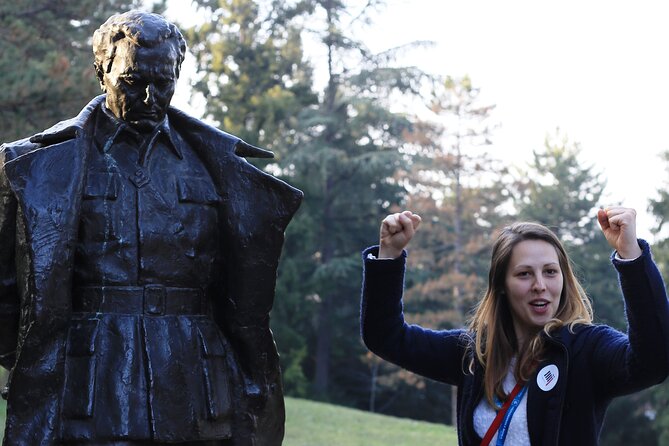
Here, the guide introduces Josip Broz Tito and the phenomenon of his public image. You also hear about the Youth Relay Baton, a highly staged socialist tradition tied to Tito’s birthday and youth organizations. These details help explain how political leadership was presented to ordinary citizens, not only how government worked behind closed doors.
The discussion also covers the Non-Aligned Movement. This is one of the most useful parts for anyone with limited knowledge of Yugoslavia. Tito’s Yugoslavia did not simply follow Moscow, and its position between major power blocs gave the country a distinct international role. The tour uses that subject to show why Yugoslavia’s political identity was different from the simplified idea of an Eastern European communist state.
The stop lasts about 15 minutes, so you will not get every detail. Think of it as the framework for the rest of the afternoon. If you want a full examination of Tito’s career or Yugoslav foreign policy, you will need a book or museum visit beyond this tour.
Mts Dvorana and the look of socialist Belgrade
From Republic Square, the tour moves to mts Dvorana, formerly known as Dom Sindikata, or Trade Union Hall. The building was designed by Branko Petričić, with construction beginning in 1947, and it reflects the style known as Socialist realism.
The building gives the guide a concrete way to explain how architecture supported the new political order after the Second World War. Rather than looking only at monuments to political leaders, you see a large public building connected with organized labor, mass gatherings, and the civic life of socialist Yugoslavia.
You spend about 15 minutes here, and there is no separate admission charge. The short stop works well if your guide points out the building’s form and explains its role. It may feel brief if architecture is your main interest, since the tour does not include an extended interior visit.
I like this stop because it makes the period feel practical. Communism was not only party speeches and portraits of Tito. It also shaped public halls, workplaces, cultural events, and the way people gathered in the city.
The National Assembly and the changing seat of power
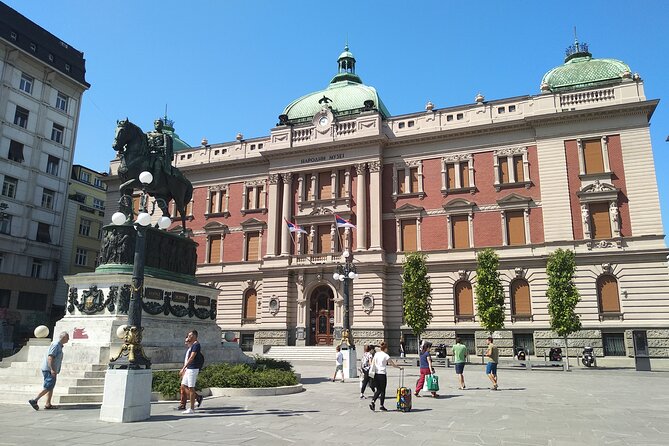
The next stop is the House of the National Assembly of the Republic of Serbia on Nikola Pašić Square. The building was completed in 1936, before the socialist period, but it later served as the seat of the Parliament of Yugoslavia and the Parliament of Serbia and Montenegro.
That timeline matters. Belgrade’s political buildings often outlive the governments that commissioned or occupied them. A parliament can remain in the same place while the state around it changes from monarchy to socialist federation, then to a different federal arrangement and finally to the modern Serbian state.
The visit lasts about 15 minutes and is viewed from the city route. The guide uses the building to connect architecture with government and the changing meaning of national power. You will not tour the parliamentary interior as part of the experience, so the value comes from the explanation and the setting.
This is also a helpful reminder that the communist period did not begin with a blank sheet. Socialist Yugoslavia inherited institutions, streets, and buildings from earlier Serbia and the Kingdom of Yugoslavia, then gave them new political uses.
Same city, a completely different day out:
- Taxi to/from Belgrade Airport to/from Belgrade City Center
★ 5.0 · 241 reviews - Belgrade Big Tour: Top Attractions and Belgrade Neighborhoods
★ 5.0 · 232 reviews - Along the Danube: Golubac Fortress & Iron Gate Gorge day trip from Belgrade
★ 4.5 · 185 reviews - From Belgrade: Golubac Fortress & Iron Gate Danube Gorge
★ 4.8 · 185 reviews
Kneza Miloša Street and the working city
Kneza Miloša Street takes about 20 minutes, making it the longest city stop before the tour reaches Generalštab. The street was once a major city promenade, or korzo, and is now an important traffic artery lined with national institutions and a large number of embassies.
This is a good place to think about Belgrade as a working capital rather than a display of isolated monuments. Government offices, diplomatic missions, traffic, and public life all share the same corridor. The guide can use the street to explain how political power was arranged in the city and how Belgrade’s role changed across different states.
The street may not offer the immediate drama of the bomb-damaged Generalštab building. Its value is quieter. You are looking at a functioning part of Belgrade, not a preserved socialist-era set. The short walk between stops also gives you a chance to absorb the city without being talked at every second.
Wear comfortable shoes. The route covers several central locations on foot before the public transport section, and the afternoon schedule leaves little room for a long pause.
Generalštab: architecture marked by the 1999 bombing
Generalštab is likely to be the most striking stop for many people. The former Yugoslav Ministry of Defence and General Staff complex is considered a major work of postwar architecture. It was heavily damaged during the NATO bombing of Yugoslavia in 1999.
The ruined sections are not just an architectural curiosity. They connect the country’s socialist and federal past with the conflicts of the 1990s and the military intervention that followed. The building gives the guide a direct place to explain what changed after Yugoslavia began to break apart and why the events of 1999 remain important in Serbia.
You spend about 15 minutes here. That is enough to hear the main story and examine the damaged structure, but not enough for a long architectural study. If you are interested in modernist buildings, you may wish you had more time to consider the design before the bombing and the question of what should happen to the site now.
I value this stop because it avoids turning the past into decoration. The damage is visible, present, and difficult to ignore. It also calls for careful explanation. A balanced guide can describe the Serbian view of the bombing while placing it within the wider conflicts of the decade.
The trolleybus ride to the Museum of Yugoslavia
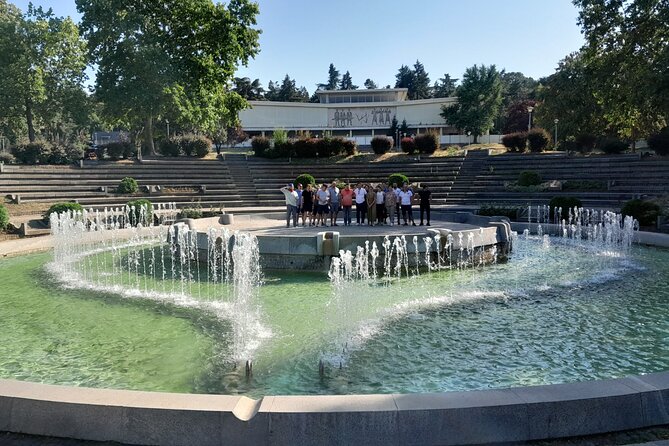
After Generalštab, the group takes a trolleybus to the Museum of Yugoslavia. The ride takes about 15 minutes, and the ticket is included in the tour price.
This change of transport is more than a way to get from one stop to the next. You move from the central government district toward the museum in the same public city that the tour has been discussing. The trolleybus also breaks up the walking and gives you a short rest before the museum visit.
One guide praised for this part of the experience, Michael, was noted for his grasp of the transit system. That matters because public transport can be confusing when you are unfamiliar with a city, especially when a tour depends on reaching a final stop on time.
The route does not promise a private vehicle or door-to-door service. You are using public transport with the group, so you should be ready to follow the guide and keep the party together. The arrangement keeps the price down and makes the transfer part of ordinary Belgrade life.
One hour at the Museum of Yugoslavia
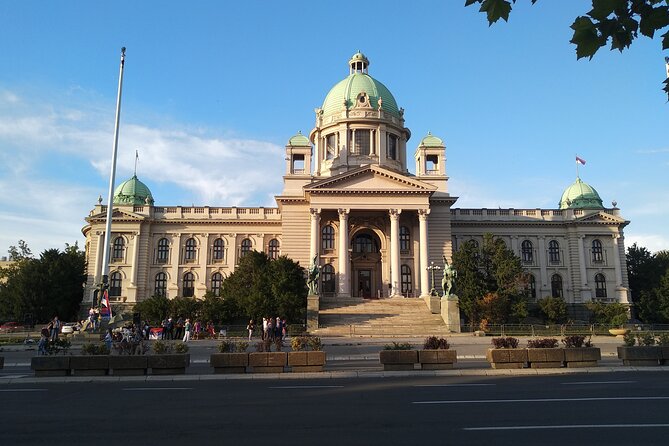
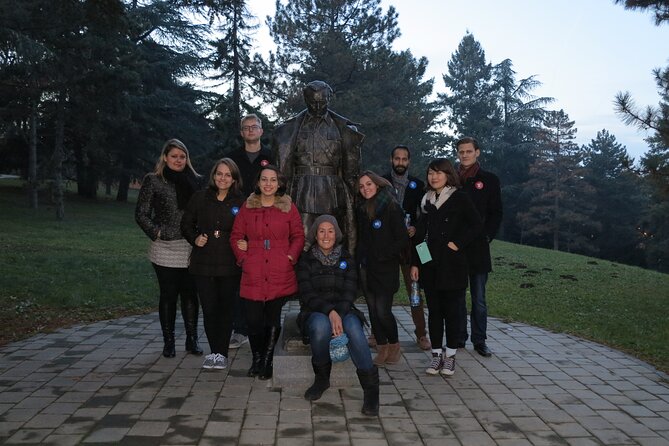
The Museum of Yugoslavia is the main indoor portion of the tour. It covers the Kingdom of Yugoslavia, Socialist Yugoslavia, and the life of Josip Broz Tito. Tito’s grave is in the House of Flowers, one of the museum buildings.
You have about an hour inside, and admission is included. That is a good value at a total price of $24.03 per person, particularly because you are also paying for a professional English-speaking guide and the trolleybus ticket. The museum gives you objects and displays to support the ideas introduced outdoors, though an hour is still a focused visit rather than a full museum day.
The House of Flowers is especially important for understanding the continuing weight of Tito in the former Yugoslav space. His grave is not just another exhibit. It reflects the way his memory has remained part of public discussion, family memories, political arguments, and the country’s relationship with its former shared state.
If you arrive with little background on Yugoslavia, the museum portion should help organize the earlier stops. If you already know the political story well, you may find the outdoor architecture and Generalštab more rewarding than the basic museum overview. The tour works best when you treat the museum as a final piece in a larger explanation rather than the only reason to book.
The tour ends outside the Museum of Yugoslavia at Mihaila Mike Jankovića 6. You are not brought back to Republic Square, so plan your afternoon around finishing in that part of Belgrade.
The guides and the value of their approach
Guide quality matters more than usual on a tour about political conflict. The subject includes Tito’s legacy, nationalism, the breakup of Yugoslavia, the 1990s wars, NATO action, and democratic change. A guide who reduces those issues to slogans can leave you with more confusion than understanding.
The strongest guide feedback singles out Stefan for fact-based explanations, broad historical command, and impressive English. He also provided book and documentary suggestions when asked, which is useful if the tour prompts you to keep studying after the afternoon ends.
Michael is praised for bringing the subject to life and for handling the public transport portion well. Milan is noted for an objective presentation of both distant and recent events. Names and guides can change by departure, so you should not assume one specific person will lead your booking, but these examples show the standard you should hope for.
I would ask questions during the tour. This is the kind of experience that improves when you clarify terms, dates, and competing interpretations. The small group size, capped at 15, should make that easier than on a large coach tour.
Price, timing, and who gets the most from it
At $24.03, the tour offers good value if you want a guided introduction rather than a self-guided route. The price includes the Museum of Yugoslavia entrance, trolleybus ticket, and guide. The free outdoor stops also mean you are paying mainly for interpretation, organization, transport, and museum access.
The tour begins at 3 p.m. and lasts about three hours. That timing leaves your morning open for Belgrade’s fortress, the old town, or another museum. It also gives you a useful afternoon plan, though you should not book something tightly scheduled immediately afterward.
The tour is best for:
- You with little or moderate knowledge of Yugoslavia
- You interested in Tito and socialist political culture
- You who want help understanding the 1990s conflicts
- You interested in postwar architecture and visible wartime damage
- You who prefer a small group and an English-speaking guide
- You who want museum entry included without arranging a separate visit
It may be less suitable if you want a relaxed photo walk, an interior tour of government buildings, or a purely architectural experience. The political material is central, and the pace is purposeful.
Most people can take part, and the route is near public transportation. Still, the experience includes city walking and a trolleybus transfer, so plan for movement between stops rather than a seated sightseeing program.
Should you book the Communist Tour in Belgrade?
Book it if you want to understand why Belgrade looks and feels the way it does today. The combination of Republic Square, socialist architecture, parliament, embassy-lined Kneza Miloša Street, bomb-damaged Generalštab, and the Museum of Yugoslavia creates a useful chain of evidence.
I would especially recommend it early in a Belgrade visit if Yugoslavia is new to you. The guide can give you a frame for later museum visits and conversations, and the museum stop supplies a solid ending point.
Skip it if your priority is old Belgrade, Ottoman-era sights, nightlife, or a slow walk with long stops. For a short, serious introduction to Tito’s Yugoslavia and Serbia’s twentieth-century political story, though, the $24.03 price is fair. The small group and strong guide reports make it a practical choice, provided you are ready for a brisk route and difficult subject matter.
FAQ
Where does the tour begin?
The tour begins at Trg Republike, Republic Square, in Belgrade.
What time does the tour start?
The scheduled start time is 3 p.m.
Where does the tour finish?
The tour ends in front of the Museum of Yugoslavia at Mihaila Mike Jankovića 6, Belgrade 11000.
How long does the tour last?
The experience lasts approximately three hours.
Is museum admission included?
Yes. Entrance to the Museum of Yugoslavia is included in the tour price.
Is public transport included?
Yes. The trolleybus ticket from Generalštab to the Museum of Yugoslavia is included.
How large is the group?
The tour has a maximum of 15 participants.
Just added around Belgrade
- Private Walking Tour of Belgrade and Old Zemun★ 5.0 · 3 reviews
- From Belgrade: Danube Day Trip with Wine and Brandy Tasting★ 5.0 · 3 reviews
- Feel Belgrade Welcome tour★ 4.5 · 3 reviews
- Private Half Day Serbia Tour Novi Sad and Petrovaradin Fortress★ 5.0 · 3 reviews
- Private Wine Tasting by Party in Belgrade★ 5.0 · 3 reviews
- Belgrade: The White Emigration in Serbia in the Wake of the Russian Revolution★ 5.0 · 3 reviews
- Zica and Studenica monastery From Belgrade★ 5.0 · 3 reviews
- Belgrade Fashion and Design Tour – Discover Local Designers★ 5.0 · 4 reviews
Belgrade Tours, compared.
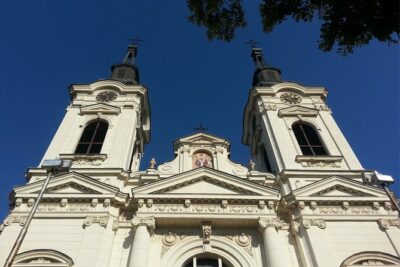
Northern Serbia: Sremski Karlovci and Novi Sad Full-Day Tour from Belgrade
Read our review →
Day Trip from Belgrade: Gems of Eastern Serbia
Read our review →
Belgrade Nightlife Bar Pub Club Crawl with Drinks
Read our review →
Belgrade Big Tour: Top Attractions and Belgrade Neighborhoods
Read our review →
Along the Danube: Golubac Fortress & Iron Gate Gorge day trip from Belgrade
Read our review →
Belgrade Underground Tour w/ Sparkling Wine Along the River
Read our review →Browse the lists this tour appears in