
Reviewed · BELGRADE TOURS
From Belgrade: Private Day Trip to Romania
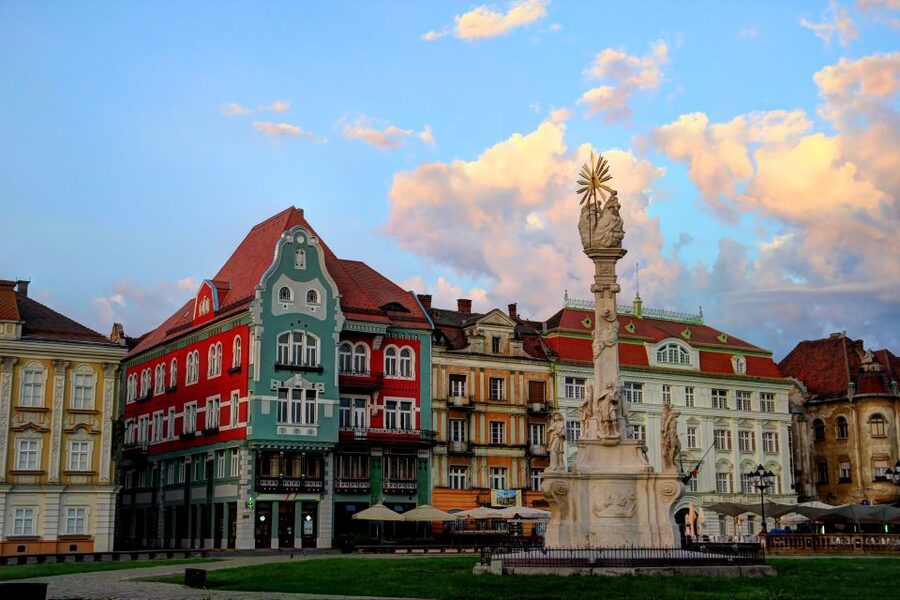
Timișoara makes a fine first taste of Romania: a handsome old center shaped by the Austrian Empire, a mix of Romanian, Hungarian, German, Serbian, and other influences, and a clear connection to the 1989 uprising. The trip is especially appealing because a private guide handles the border crossing, transport, and city walk, leaving you free to watch the Serbian countryside go by.
I like the long block of free time in the afternoon. You can follow your guide’s lunch advice, stop for coffee, revisit a square, or simply wander without being hurried. I also like the focus on ordinary city life and recent political history, not just grand buildings. The main drawback is the long day: about 11 hours, with roughly five hours of driving and border formalities. You need a valid passport and must check your own visa requirements before booking.
Key points to know before booking
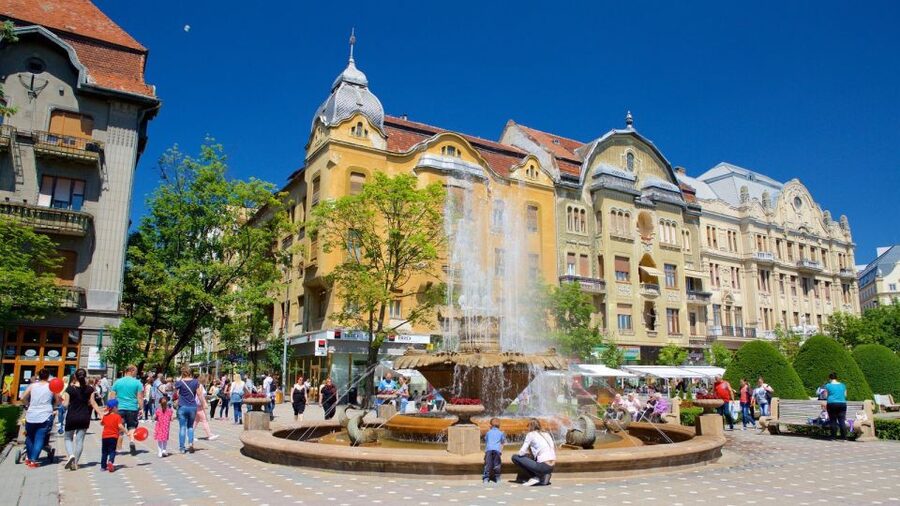
- Timișoara is the star of the day: You visit the historic Cetate district, with Baroque and Art Nouveau buildings gathered around large squares.
- The route includes a local guide: Your English-speaking guide leads the inner-city tour and offers advice for lunch and free time.
- The 1989 Revolution gets proper attention: Entrance to the Memorialul Revolutiei is included, giving the city’s modern history a place in the day.
- You travel privately: One to three people ride in a private sedan, while groups of four to seven use an air-conditioned minivan.
- You get several hours on your own: After the guided walk, you have time for food, coffee, shopping, and further exploring at your own pace.
- The border requires planning: Bring your current passport and confirm Romanian entry rules before setting out from Serbia.
Why Timișoara makes a worthwhile day trip from Belgrade
Belgrade is a strong base for exploring the region, but its nearby international day trips are not all alike. Timișoara gives you a change of country, architecture, language, and historical setting without requiring an overnight stay.
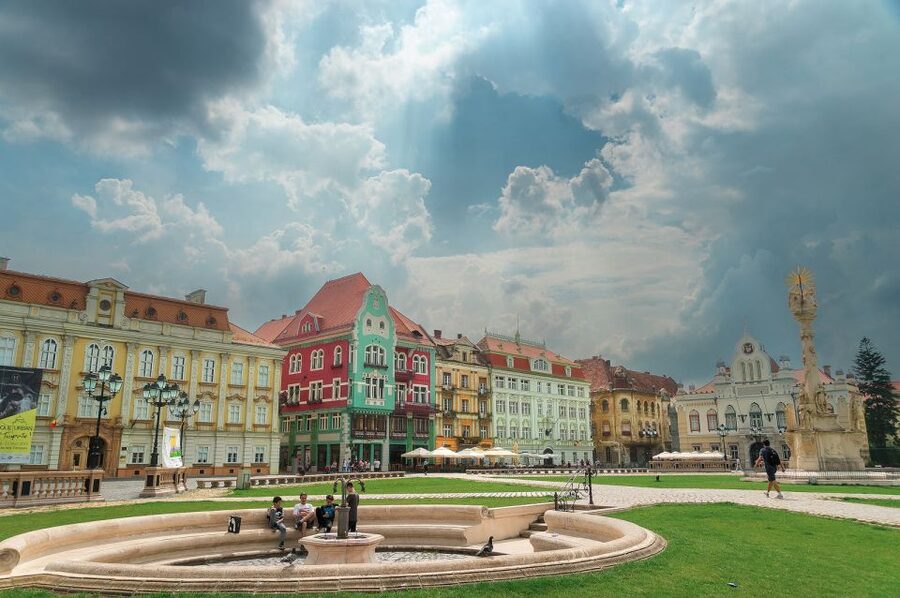
The city’s central Cetate district is compact enough for a walking tour, yet varied enough to fill a full day. You’ll see grand public squares, churches, civic buildings, remains of a fortress, and reminders of the Communist period. The city also has a useful place in European urban history: it was the first city in Europe to use horse-drawn trams and later electric street lighting.
That combination makes this more than a quick border hop. You get a readable introduction to Timișoara, with a guide to explain what you are seeing, then enough free time to form your own impression.
A few more days out around Belgrade to weigh up
- Day Trip from Belgrade: Gems of Eastern Serbia
★ 5.0 · 424 reviews - Along the Danube: Golubac Fortress & Iron Gate Gorge day trip from Belgrade
★ 4.5 · 185 reviews - Šargan Eight Railway, Wooden Town & House on Drina river day trip from Belgrade
★ 5.0 · 107 reviews
Leaving Belgrade for the Romanian border
Pickup is provided from your accommodation in Belgrade. The journey to Timișoara takes about 2.5 hours, though the actual timing can depend on the border crossing. Transport is in an air-conditioned private sedan for one to three people or a private minivan for four to seven.
I like the private setup here because the drive is a substantial part of the day. You are not gathering strangers at several pickup points, and the pace can feel calmer than a large coach excursion. Fuel, parking, and road tolls are covered, and each person receives a bottle of water.
The drive also gives you a look at the Serbian countryside before the city portion begins. Still, keep your expectations sensible. This is not a short outing. With the return drive and border crossing included, you should treat it as a full-day commitment rather than a casual half-day trip.
Bring a current valid passport. You are responsible for checking visa requirements for Romania and for making sure your documents cover the border crossing. This matters especially if your nationality has separate rules for entry into Romania or reentry into Serbia.
Walking through Cetate, Timișoara’s historic center
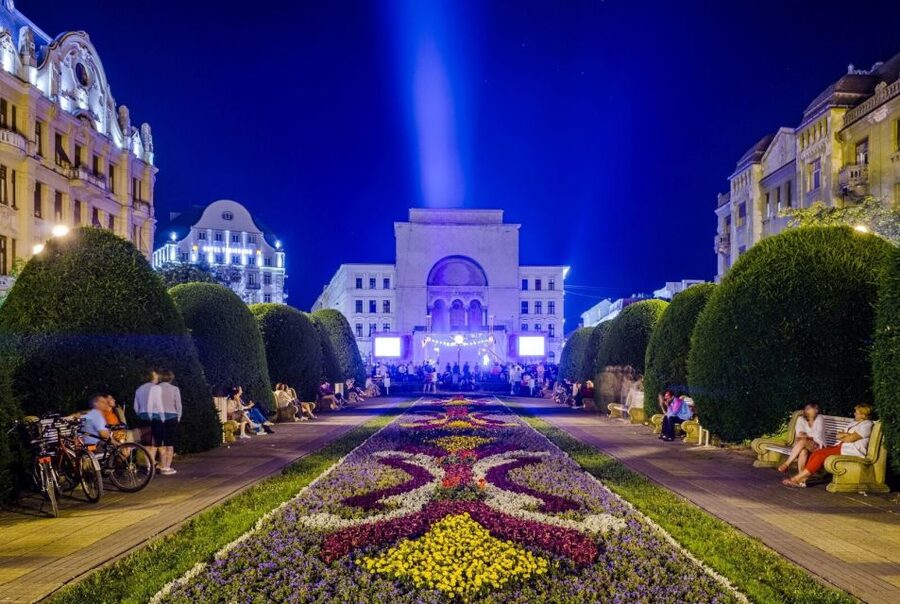
On arrival, you meet the local guide for a roughly 2.5-hour tour of the old inner city, known as Cetate. The walking portion is the heart of the experience, so wear comfortable shoes and expect to spend much of the morning on foot.
The guide introduces the city through its buildings and public spaces. The Austrian Empire left Timișoara with a strong Central European character, and the central streets show that influence in their Baroque and Art Nouveau facades. The architectural mix is not limited to one religious or ethnic tradition, which helps explain why the city feels different from Belgrade.
You’ll visit several major sights:
- The Timișoara Orthodox Cathedral, a large and prominent landmark in the city center.
- The Romanian Opera House, another major civic building and an important reference point for the central district.
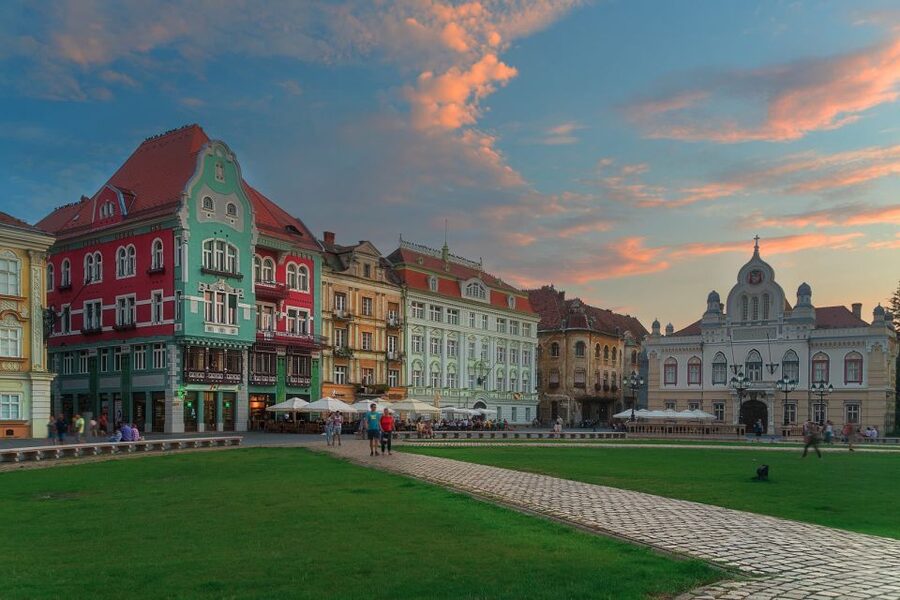
- Liberty Square, where the Old City Hall reflects the city’s mixture of cultures and religions.
- Union Square, dominated by St. George’s Cathedral and surrounded by historic buildings.
- The remains of the old fortress, including the defensive walls of the Theresia Bastion.
These stops work well together because they show different sides of the city. The cathedral and Opera House give you scale. The squares show how public life was organized. The fortress remains explain why the city developed in its particular shape.
The route is structured, but not overloaded. You are not racing between distant attractions. Instead, you spend time in a small central area, where the details of facades, churches, old walls, and public spaces can be understood as part of one city story.
The squares reveal a city of many cultures
Liberty Square and Union Square are likely to be the most memorable parts of the walking tour. Their open spaces make it easier to appreciate the city plan, while the surrounding buildings show how many communities have shaped Timișoara.
At Liberty Square, the Old City Hall is a useful stop because it represents the city’s mixed cultural and religious character. Rather than treating Timișoara as a single-story Romanian city, the guide can explain the layers that formed its identity.
Union Square brings a different mood, with St. George’s Cathedral as the dominant feature. The square also gives you a natural place to pause and take in the architecture before continuing toward the old fortress remains.
I would not book this trip expecting a long list of interior visits. The supplied schedule centers on a guided city walk, outdoor sights, and the Revolution Memorial. If you prefer streets, squares, and historical explanation to a museum-heavy program, that balance should suit you.
Same city, a completely different day out:
- Northern Serbia: Sremski Karlovci and Novi Sad Full-Day Tour from Belgrade
★ 5.0 · 425 reviews - Belgrade Nightlife Bar Pub Club Crawl with Drinks
★ 5.0 · 277 reviews - Taxi to/from Belgrade Airport to/from Belgrade City Center
★ 5.0 · 241 reviews - Belgrade Big Tour: Top Attractions and Belgrade Neighborhoods
★ 5.0 · 232 reviews
Theresia Bastion and the city’s military past
The old fortress ruins and Theresia Bastion add a practical layer to the tour. They show that Timișoara was not only a city of churches, civic buildings, and public squares. It was also a defended settlement with walls that shaped movement and expansion.
The bastion is useful context because it connects the historic center to the city’s earlier military role. You can see how the old defensive system survives within the modern city rather than being isolated far outside it.
This part of the tour also gives the walking route some variety. After ornate facades and formal squares, the fortress remains offer a more physical sense of the past. Your guide can tie the pieces together, which is one of the main reasons to choose a guided visit instead of simply taking a train or bus and walking around alone.
Lunch, local food, and time to set your own pace
Lunch is not included, so plan to pay directly at the restaurant. Your guide recommends a local place and can point you toward traditional regional food. That is a useful arrangement: you are not locked into a set menu, and you can choose how much time and money to spend.
The schedule allows about 2.5 hours for coffee, lunch, and walking, followed by roughly three hours of free time in the afternoon. The exact division may vary, but the important point is that the middle and later part of the day is not filled with nonstop commentary.
I like this flexibility. You can have a proper meal instead of eating from a rushed stop, then decide how to use the afternoon. You might return to a square for photographs, look for a café, browse the center, or walk through places that caught your attention during the guided tour.
The tradeoff is that the free-time plan depends on your own choices. The tour does not promise a long list of additional attractions or included museum visits. If you want a tightly managed sightseeing schedule from morning until departure, this may feel too open. If you like having room to make your own discoveries, it is a real advantage.
The Memorialul Revolutiei and the story of 1989
The tour includes admission to the Memorialul Revolutiei, the Revolution Memorial. This gives the day a strong modern-history component and helps explain Timișoara’s role in the 1989 uprising against Romania’s Communist regime.
That subject matters because the city’s attractive squares can otherwise make the visit feel focused only on imperial architecture. The memorial shifts the story forward, showing that Timișoara is also connected to one of the major political turning points in recent European history.
You should expect the guide to tell stories about the revolution as part of the city tour. The included entrance fee means you do not need to budget separately for this stop. The material may be serious, so it is best approached as a historical visit rather than a light sightseeing photo stop.
The tour’s strongest feature is this range. In one day, you move from Austrian-era buildings to fortress walls, from religious landmarks to the Communist period, and then into the city’s present-day streets.
What the guide adds to the experience
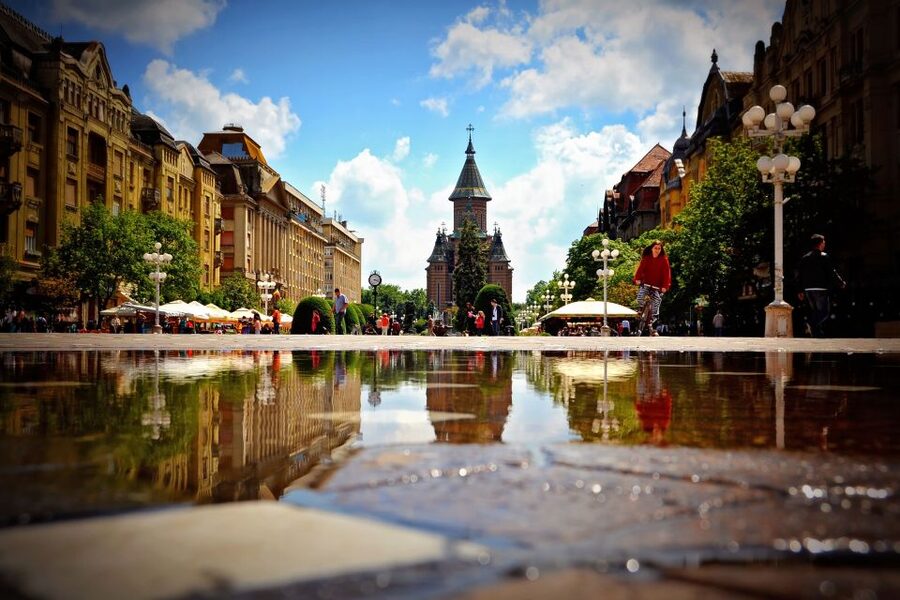
The English-speaking guide is important here. Timișoara’s buildings are attractive on their own, but the names, political changes, religious mix, and 1989 events are easier to follow when someone explains how they connect.
A guide named Konstantin has led this route and was described as handling questions and practical needs well. You may not have Konstantin on your departure, but his example points to the kind of service this private format is designed to provide: an informative walk, help with local food choices, and a relaxed approach during a long day.
The available feedback is notably strong, with a 4.7 rating from 23 bookings. The most consistent praise centers on friendly guiding, clear historical explanation, and a calm experience. One booking described the day as a short getaway to Romania, while another singled out the guide and the amount learned. Those points match the design of the trip: it is educational, but not rushed or formal.
Because this is a private group, you can ask for clarification and set a comfortable pace within the planned schedule. That is more useful than it may sound. Historic city walks often become frustrating when the guide must keep a large group together or move on before everyone has understood the point.
Is $222 per person good value?
At $222 per person, the price is not a bargain if you compare it with public transport alone. But this is a private cross-border excursion, and the cost includes hotel pickup and drop-off, private transport, fuel, tolls, parking, an English-speaking guide, the Revolution Memorial entrance, water, and tour support.
The value improves for people who want convenience. You do not need to work out cross-border transport from Belgrade, arrange a local guide in Timișoara, find the historic center, or solve the return journey. You also avoid paying separate parking and road costs.
The price makes the most sense for one to three people using the private sedan, or for a small group that can share the minivan cost. Solo visitors should compare the price against their own priorities. If you value a private vehicle, a guided walk, and a simple door-to-door plan, the premium may be justified. If you are happy with public transport and self-guided sightseeing, this will feel expensive.
Lunch is extra, so add your meal and any personal spending to the total. The flexible cancellation policy allows a full refund when you cancel at least 24 hours ahead, and the reserve-now, pay-later option can help if your schedule is still changing.
Who will get the most from this day
I would recommend this tour to you if you are staying in Belgrade and want to add Romania without changing hotels. It suits first-time visitors who prefer a guide to explain the city, couples or friends who want a private pace, and history-minded visitors interested in both the Austrian Empire and the 1989 revolution.
It is also a good fit for anyone who values an afternoon without a fixed program. The free time lets you adjust the day to your energy level, which matters after the early drive and walking tour.
I would be more cautious if you dislike long road days, border crossings, or guided walking. The total duration is about 11 hours, and the driving alone takes about five hours in both directions. You should also check the border rules carefully before paying, since visa responsibility belongs to you.
Should you book the Timișoara day trip?
Book it if you want the easiest private route from Belgrade to Timișoara, appreciate clear historical context, and like having both a guided introduction and several hours to explore independently. The combination of Cetate, Union Square, Theresia Bastion, local lunch advice, and the Revolution Memorial gives the day more substance than a quick city photo stop.
Skip it if the $222 price feels high for a day trip or if you would rather spend 11 hours exploring Belgrade and nearby Serbia. The long drive is unavoidable, and lunch is not included.
For most people making a first visit to Timișoara from Belgrade, the tour offers a practical balance: private transport, a strong city introduction, and enough free time to make the afternoon your own.
FAQ
How long does the trip from Belgrade to Timișoara take?
The full experience lasts about 11 hours. The drive from Belgrade to Timișoara takes about 2.5 hours each way, with the remaining time used for the guided tour, lunch, coffee, and independent exploring.
Where does pickup take place?
Pickup and drop-off are provided at your accommodation in Belgrade.
Is the tour private?
Yes. It is offered as a private group experience. One to three people travel in a private sedan, while groups of four to seven use an air-conditioned minivan.
What language does the guide speak?
The live guide speaks English.
Do I need a passport?
Yes. You must bring a current valid passport on the day of travel.
Do I need to check visa requirements?
Yes. You must confirm and obtain any visa required for crossing the border. Visa requirements are the traveler’s responsibility.
Is lunch included in the price?
No. Lunch is at your own expense. The guide can recommend a local restaurant serving traditional food.
What is included in the tour price?
The price includes hotel pickup and drop-off, private air-conditioned transport, an English-speaking guide, fuel, parking, road tolls, entrance to the Memorialul Revolutiei, a bottle of water per person, and tour organization with 24/7 assistance.
Can I cancel the booking?
You can cancel up to 24 hours in advance for a full refund. You can also reserve now and pay later, which keeps your plans flexible.
Just added around Belgrade
- Private Walking Tour of Belgrade and Old Zemun★ 5.0 · 3 reviews
- From Belgrade: Danube Day Trip with Wine and Brandy Tasting★ 5.0 · 3 reviews
- Feel Belgrade Welcome tour★ 4.5 · 3 reviews
- Private Half Day Serbia Tour Novi Sad and Petrovaradin Fortress★ 5.0 · 3 reviews
- Private Wine Tasting by Party in Belgrade★ 5.0 · 3 reviews
- Belgrade: The White Emigration in Serbia in the Wake of the Russian Revolution★ 5.0 · 3 reviews
- Zica and Studenica monastery From Belgrade★ 5.0 · 3 reviews
- E-Scooter Serbian Food Tour★ 5.0 · 3 reviews
Belgrade Tours, compared.
Northern Serbia: Sremski Karlovci and Novi Sad Full-Day Tour from Belgrade
Read our review →
Day Trip from Belgrade: Gems of Eastern Serbia
Read our review →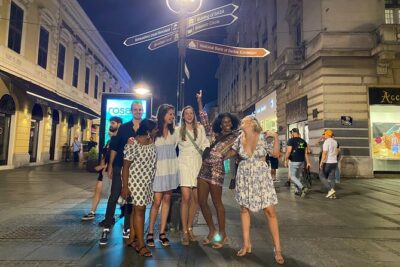
Belgrade Nightlife Bar Pub Club Crawl with Drinks
Read our review →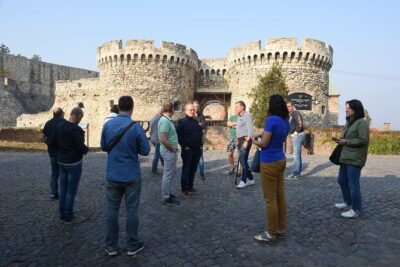
Belgrade Big Tour: Top Attractions and Belgrade Neighborhoods
Read our review →
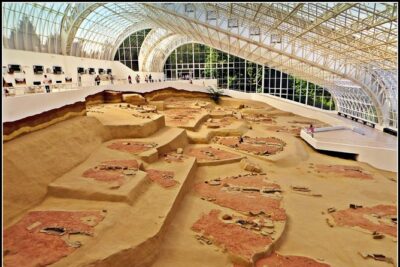
Along the Danube: Golubac Fortress & Iron Gate Gorge day trip from Belgrade
Read our review →
Belgrade Underground Tour w/ Sparkling Wine Along the River
Read our review →Browse the lists this tour appears in