
Reviewed · HISTORICAL TOURS
NATO Bombing of Belgrade Historical Tour
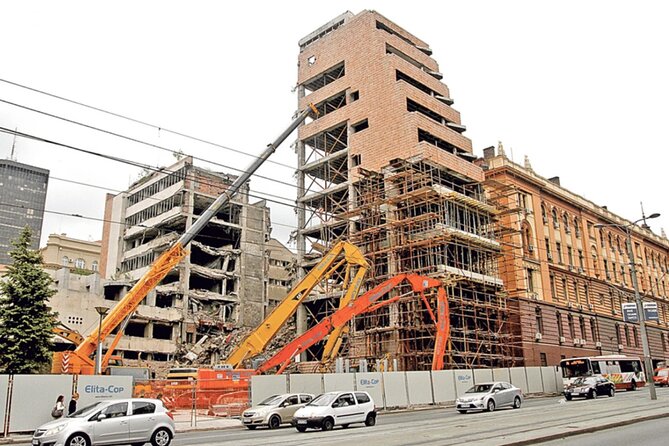
Belgrade’s NATO Bombing of Belgrade Historical Tour gives you something many standard city tours skip: Serbia’s own perspective on the 1999 bombing and the Yugoslav wars. You’ll see damaged military buildings, memorials, government landmarks, and places tied to Serbia’s royal and national story.
I like the private vehicle and pickup, which make it easier to cover scattered sites in just two hours. I also like the mix of solemn places and broader Serbian history, from the children’s memorial in Tašmajdan Park to the monument to Tsar Nicholas II.
The main drawback is pace. Two hours is short, and several stops last only 5 to 10 minutes. The tour suits you best if you want an introduction to the subject, not a slow, highly detailed examination of every site.
Key points to know before booking
- The focus is Serbia’s point of view: Expect history shaped around the bombing, the Yugoslav wars, and the effect of NATO attacks on Belgrade.
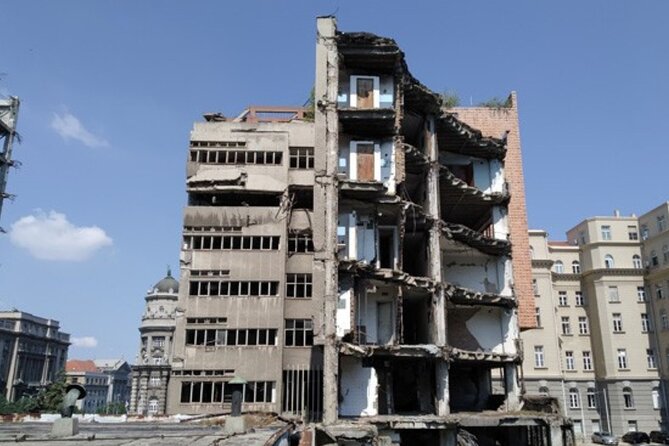
- Generalštab is the central visual stop: The ruined former military headquarters remains one of the city’s clearest reminders of the bombing.
- Tašmajdan Park adds a human story: A memorial there honors children who died during the NATO bombing.
- You travel privately: Only your group takes part, with an air-conditioned vehicle, WiFi, guide, and pickup included.
- The schedule is brisk: Most stops last 10 to 20 minutes, with one monument receiving about five minutes.
- The $69.99 price buys convenience: It is easier to justify for a private tour with transport than for a simple walking route through mostly public sites.
What this Belgrade war-history tour actually offers
This is not a museum-heavy experience. It is a moving tour through central Belgrade, using buildings, parks, monuments, and damaged structures to explain what happened during the NATO bombing.
You’ll hear a Serbian interpretation of a painful and politically sensitive period. That matters because the same events can be described very differently in Serbia than in Western news coverage. If you want to understand how the bombing is remembered locally, this tour gives you a direct starting point.
The experience lasts about two hours and is offered in English. Since it is private, you are not placed in a large group with strangers. That gives you a better chance to ask questions, though the limited time means you should decide in advance which subjects matter most to you.
The tour is also broader than its title suggests. Along with bombing-related sites, it includes the Serbian Parliament, an important church, a former royal palace, a railway museum site, and a monument to the Russian tsar Nicholas II. You get a quick outline of Belgrade’s political and national history alongside the wartime story.
More history walks in Belgrade:
- A Crash Course through Serbian History
★ 5.0 · 58 reviews - History and Culture in my Belgrade
★ 5.0 · 41 reviews - Football tour: Red Star and Partizan Ultras History
★ 5.0 · 14 reviews
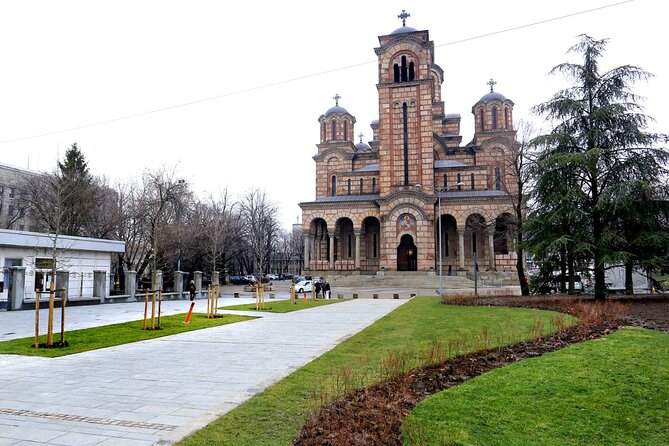
Crkva Svetog Marka begins with Serbian identity
The first stop is Crkva Svetog Marka, or St. Mark’s Church, one of Belgrade’s most important churches. You have about 20 minutes here, the longest scheduled stop on the tour, and admission is included.
That extra time is useful. Rather than rushing straight into military ruins, the tour begins with a place tied to Serbian religious and national life. The church helps frame the city as more than a wartime headline. It is a living capital with layers of faith, politics, monarchy, and conflict.
You should not expect a full architectural lecture unless your guide chooses to provide one. The supplied details do not promise a long interior visit or a specialist church tour. Still, this is a sensible opening because it gives the rest of the route a wider setting.
If you enjoy historic churches, ask your guide how St. Mark’s fits into Belgrade’s story. Since the tour is private, you can use the stop to set the tone for the rest of the morning.
Tašmajdan Park brings the human cost into focus
Tašmajdan Park is one of the most important stops emotionally. The park contains a statue honoring children who died during the NATO bombing. You have about 20 minutes, and there is no admission charge.
This is where the tour moves from buildings and institutions to individual lives. A memorial to children changes the scale of the story. Instead of thinking only about military targets and political decisions, you are asked to consider the civilians who suffered.
The park itself is public, so there is no ticket value here. That is one reason some people may question the tour price if they are comfortable reaching the sites independently. You are paying for the guide’s explanation, the private vehicle, and the way the stops are connected.
Take your time at the memorial. The schedule allows more breathing room here than at several later stops, but the overall tour remains quick. If this is the part of the subject you most want to understand, tell the guide early so you do not lose the chance to ask questions.
The National Assembly shows the political setting
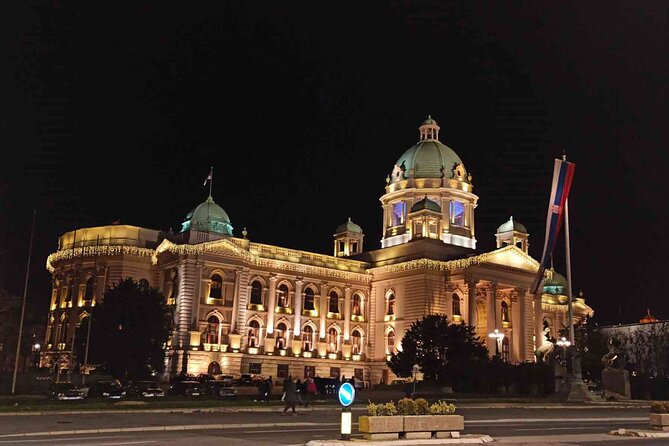
The House of the National Assembly of the Republic of Serbia receives about 10 minutes. This is the Serbian Parliament, a major government building and an important part of the country’s political story.
The stop helps connect the bombing to the institutions and decisions that shaped Serbia during the Yugoslav wars. You are not simply looking at a damaged structure. You are also seeing the seat of a state whose politics remain central to how the conflict is remembered.
Admission is free, and the tour details do not promise an interior visit. Treat this as an exterior orientation stop. Your guide’s explanation is likely to matter more than the time spent looking at the building itself.
Because the visit is short, keep your expectations in check. You will gain context, but you will not receive a full lesson in Serbian government or modern Balkan politics in ten minutes.
A few more days out around Belgrade to weigh up
- Northern Serbia: Sremski Karlovci and Novi Sad Full-Day Tour from Belgrade
★ 5.0 · 425 reviews - Day Trip from Belgrade: Gems of Eastern Serbia
★ 5.0 · 424 reviews - Belgrade Nightlife Bar Pub Club Crawl with Drinks
★ 5.0 · 277 reviews - Taxi to/from Belgrade Airport to/from Belgrade City Center
★ 5.0 · 241 reviews
Generalštab is the tour’s strongest visual reminder
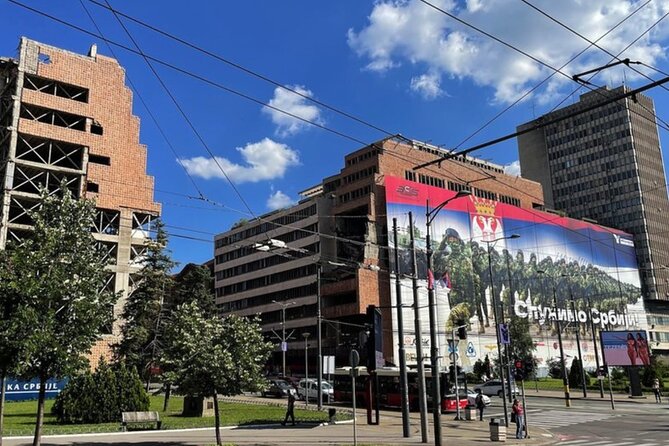
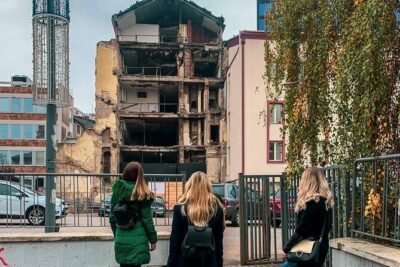
Generalštab is one of the symbols of the bombing. The former military headquarters is a key stop because the damage is visible and difficult to misunderstand. You have about 10 minutes here.
This is likely the point where the tour feels most directly tied to its title. The remains of the building make the bombing tangible in a way that a spoken account alone cannot. You can see the physical result of the attacks rather than hearing only dates and political explanations.
The stop is still brief. If you want detailed information about the building’s architecture, military role, or future, the tour may leave you wanting more. The available details identify Generalštab as a symbol of the bombing, but do not promise entry or an extended examination.
I would pay close attention to how your guide explains the site, especially if you want a local account rather than a general wartime summary. This is also a good place to ask for clarification if the historical timeline becomes hard to follow.
The old railway station adds another layer
The Railway Museum stop takes about 10 minutes and centers on the old railway station. This shifts the route away from military and government sites and toward transport history.
The old station gives the tour a physical link to Belgrade’s past as a regional capital and transport center. It also helps break up the subject matter. A route made only of damaged buildings and memorials could feel heavy and repetitive, while the railway setting adds another piece of the city’s story.
The stop is not described as a long museum visit, and admission details are not provided. You should therefore expect a short orientation rather than a full museum program. If railway history is a major interest, ask whether there is enough time to see more than the exterior or immediate area.
The old king palace widens the historical frame
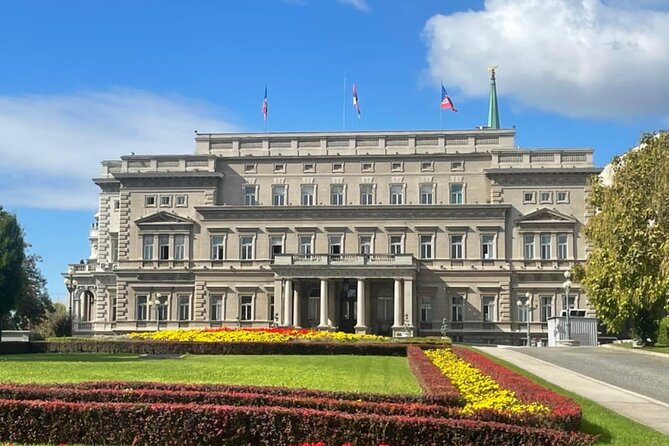
The route also includes a stop at the old king palace. The timing and admission information are not specified, so you should ask the guide at the beginning how this stop fits into the two-hour schedule.
Its purpose seems to be broader historical context. The palace brings Serbia’s royal past into a tour otherwise dominated by twentieth-century conflict. That contrast is useful. Belgrade’s story did not begin with the NATO bombing, and the city’s political identity has been shaped by monarchy, parliament, religion, war, and foreign influence.
Because the supplied schedule does not give a stop number, visit length, or admission policy for the palace, do not build your plans around an extended visit inside. Consider it an additional landmark on a tightly timed route.
Tsar Nicholas II connects Serbia with Russia
The monument to Tsar Nicholas II Romanov receives about five minutes. That is the shortest clearly timed stop, so expect a quick look and explanation rather than a long discussion.
The monument points to the historic connection between Serbia and Russia. It also gives the guide a chance to explain how national memory can include both local figures and outside allies.
Five minutes can be enough for a photograph and a concise explanation, but not much more. If Russian-Serbian relations interest you, prepare a question before reaching the monument. The private format gives you a better chance to get an answer than a large coach tour would.
This stop also shows why the experience is not purely a bomb-site route. It is a compact tour about how Belgrade remembers war, statehood, religion, monarchy, and international relationships.
The private vehicle makes a short route workable
Pickup is offered, and private transportation is included. You also get an air-conditioned vehicle and WiFi on board. These details matter because the sites are spread across the city and the tour has only about two hours.
A private car avoids the wasted time that can come with organizing several separate taxi rides or working out public transport between stops. You can also stay with the same guide and ask follow-up questions as the route develops.
The vehicle is especially useful if the weather is poor or you prefer not to walk between every location. The tour still requires a moderate level of physical fitness, though the information provided does not give an exact walking distance or list any accessibility features.
Pickup details are arranged at booking, while the start time is 11:00 a.m. Be ready on time. With stops lasting as little as five minutes, a late start could reduce your time at the final locations.
What the $69.99 price means in practice
At $69.99 per person, this is not the cheapest way to see public monuments. Several stops are free, and the route contains no listed lunch or paid museum admission beyond the included church ticket.
The value comes from the private setup. You are paying for transportation, an English-language guide, pickup, air conditioning, and a route built around a difficult subject. If you are traveling alone or as a couple, the per-person price may feel high compared with a self-guided walk. For a small group that would otherwise need several taxis and research time, it becomes easier to justify.
I would book it for the explanation and local framing, not for admission tickets. You are buying access to a Serbian interpretation of the bombing and a practical way to connect sites that may not make much sense on their own.
The 4.8 rating from 17 published ratings, along with a 100 percent recommendation figure, suggests strong overall satisfaction. Still, the small number of ratings means I would read the score as encouraging rather than final proof that every guide and departure will be identical.
The guide matters more than the monuments
The subject is sensitive, and the quality of the explanation will shape your experience. The guide is described as friendly and well informed, but one English-language account found some parts difficult to understand. That is worth keeping in mind.
This does not mean you should avoid the tour. It means you should ask clear questions and confirm names, dates, and places when needed. Political and military history can become confusing quickly, especially when the tour moves between the Yugoslav wars, NATO action, Serbian institutions, and older national history.
The private format helps. You can ask the guide to slow down, repeat a point, or explain a term. Before the vehicle leaves, tell the guide whether you want more focus on the bombing, civilian experiences, Serbian politics, or the city’s older history.
Who should book this experience
I would recommend this tour to you if you:
- Want a Serbian perspective on the NATO bombing and Yugoslav wars.
- Prefer a private route over a large group outing.
- Have only a short time in Belgrade.
- Want transport between several central landmarks.
- Are comfortable with a serious subject and a fast schedule.
- Like combining modern conflict history with churches, monuments, government buildings, and royal sites.
I would be more cautious if you want long visits, extensive museum time, or a detailed military-history seminar. The tour is designed as a compact introduction. It does not give each site enough time for a full investigation.
It may also be less suitable if you want a neutral presentation that avoids national viewpoints. The main appeal is precisely the chance to hear how the events are understood in Serbia. That perspective is valuable, but you should listen critically and leave room for other accounts.
Practical advice for making the two hours count
Start by deciding what you most want from the tour. If Generalštab and the children’s memorial are your priorities, tell the guide. If you care more about Serbia’s royal and religious past, ask for more context at St. Mark’s Church, the old palace, and the monument to Nicholas II.
Use the drive between stops well. The short visits mean much of the explanation may happen in the vehicle. Keep your questions focused, and do not wait until the final stop to ask about the bombing itself.
Wear comfortable shoes and expect some walking, even though the vehicle handles the transfers. A moderate physical fitness level is required, but the supplied details do not promise step-free access or a precise walking route.
There is no lunch included, and the tour is only about two hours, so food is not the main concern. Plan your meal before or after the experience rather than expecting a break during it.
Free cancellation is available if you cancel at least 24 hours before the 11:00 a.m. start time. Changes or cancellations made within 24 hours are not accepted for a refund, so check your plans before that deadline.
Should you book the NATO Bombing of Belgrade Historical Tour?
Book it if you want a short, private introduction to Belgrade’s wartime memory and prefer to hear a Serbian point of view from a guide while moving between significant sites. The private vehicle, pickup, and focused route make the experience practical, especially when your time in the city is limited.
Skip it if you want to spend an hour at one museum, study military architecture in detail, or explore each monument at your own pace. The $69.99 price is best seen as payment for transport, interpretation, and convenience, not for a long list of admissions.
For the right visitor, the tour’s value is its directness. In two hours, you see the memorial to children, the damaged Generalštab complex, Serbia’s Parliament, the old railway station, and reminders of the country’s religious, royal, and Russian connections. It is brief, serious, and most useful when you arrive ready to listen, ask questions, and think beyond a single version of the past.
FAQ
How long is the NATO Bombing of Belgrade Historical Tour?
The tour lasts approximately two hours.
What time does the tour start?
The stated start time is 11:00 a.m.
Is pickup included?
Yes. Pickup is offered, and private transportation is included.
Is the tour private?
Yes. Only your group participates in the activity.
What language is the tour offered in?
The tour is offered in English.
What is included in the price?
Private transportation, an air-conditioned vehicle, WiFi on board, a guide, and pickup are included. Admission to Crkva Svetog Marka is included.
Is lunch included?
No. Lunch is not included.
Can I cancel for a full refund?
Yes, if you cancel at least 24 hours before the experience start time. Cancellations or changes made less than 24 hours before the start are not accepted for a refund.
Just added around Belgrade
- Private Walking Tour of Belgrade and Old Zemun★ 5.0 · 3 reviews
- From Belgrade: Danube Day Trip with Wine and Brandy Tasting★ 5.0 · 3 reviews
- Feel Belgrade Welcome tour★ 4.5 · 3 reviews
- Private Half Day Serbia Tour Novi Sad and Petrovaradin Fortress★ 5.0 · 3 reviews
- Private Wine Tasting by Party in Belgrade★ 5.0 · 3 reviews
- Belgrade: The White Emigration in Serbia in the Wake of the Russian Revolution★ 5.0 · 3 reviews
- Zica and Studenica monastery From Belgrade★ 5.0 · 3 reviews
- E-Scooter Serbian Food Tour★ 5.0 · 3 reviews
Historical Tours, compared.
Football tour: Red Star and Partizan Ultras History
Read our review →

Full-Day Private Royal Heritage Tour to Oplenac With a Winery Visit
Read our review →Browse the lists this tour appears in