
Reviewed · HISTORICAL TOURS
Football tour: Red Star and Partizan Ultras History
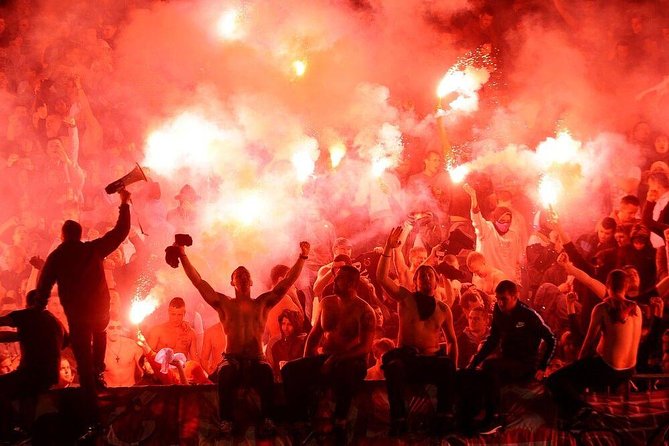
Belgrade’s football rivalry comes alive in its streets, not just on match day. This tour takes you through Partizan’s Dorcol and Red Star’s Senjak, then into both clubs’ stadiums, where football, politics, neighborhood identity, and fan culture meet.
I like the mix of murals, local streets, and serious club history. I also like the chance to see Red Star’s 1991 European Cup trophy and walk onto the pitch at Partizan Stadium. The main thing to consider is the price, $84.21, which is fair for a several-hour private-feeling sports experience but less attractive if you only want a quick stadium visit.
Key points
- Two rival fan districts: See Partizan murals in Dorcol and Red Star graffiti in Senjak.
- Red Star’s Marakana museum: View trophies, flags, club documents, and the 1991 Champions League trophy.
- Partizan pitch access: Walk down the field at one of Europe’s last remaining ghetto-style stadiums.
- Strong local guides: Andrija and Tihomir are praised for their football knowledge and warm Serbian hospitality.
- A useful city walk: The tour links football identity with bars, pubs, streets, and neighborhoods.
- Simple morning timing: Meet at Student Park at 10 a.m. and return there after roughly 3 to 4 hours.
Why Belgrade football is best understood on foot
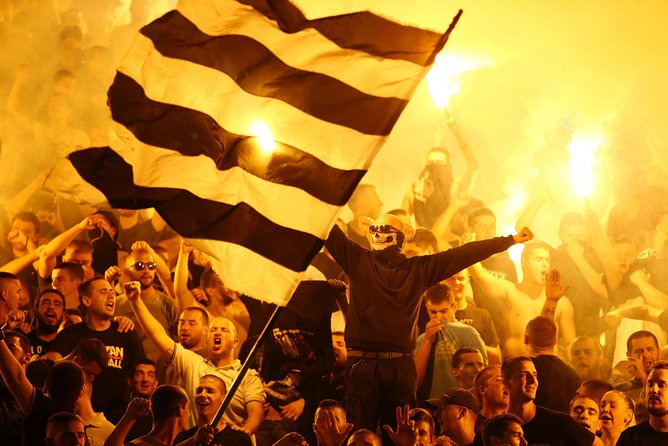
This is not simply a stadium tour with a few old shirts behind glass. You begin in the neighborhoods where the rivalry is painted on walls, shop shutters, and building fronts. That makes the football story feel local and personal.
Red Star Belgrade and Partizan are Serbia’s two biggest football clubs. Their rivalry is fierce, and their supporter groups have shaped parts of Belgrade’s public identity for decades. The tour uses that rivalry as a way to explain the city. You are not only looking at football grounds. You are seeing how allegiance marks a neighborhood.
I especially like this approach for a first visit to Belgrade. The walk gives you a reason to notice streets you might otherwise pass without a second glance. Dorcol, in particular, combines supporter graffiti with bars, pubs, and an easygoing city feel. Senjak offers a different atmosphere, tied closely to Red Star supporters and older fan markings.
The subject can touch on hooligan culture and political history, so this is not a polished, family-style sports museum outing. It is better suited to adults and older teenagers who want the full story, including the rough edges.
More history walks in Belgrade:
- A Crash Course through Serbian History
★ 5.0 · 58 reviews - History and Culture in my Belgrade
★ 5.0 · 41 reviews - NATO Bombing of Belgrade Historical Tour
★ 5.0 · 17 reviews
Dorcol: Partizan murals and a neighborhood with two faces
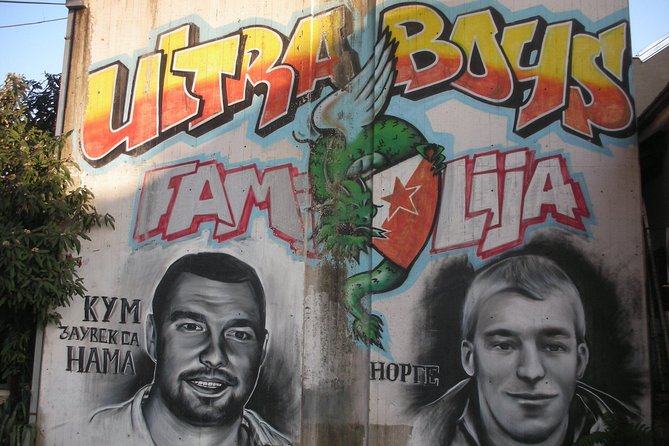
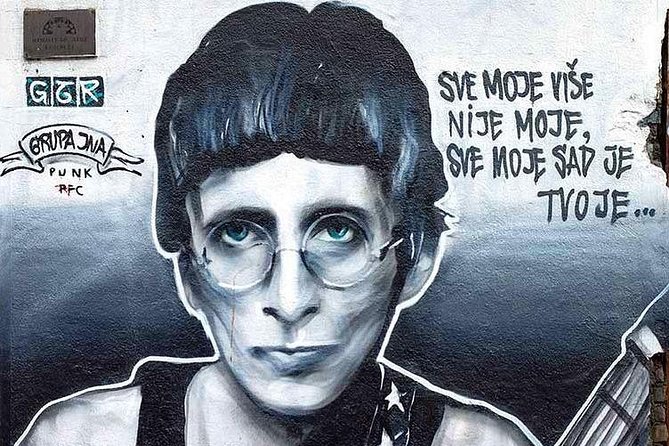
The first stop is Dorcol, known here as a Partizan supporters’ district. You spend about an hour walking through the area and looking at graffiti connected to famous supporters and football figures.
The appeal is the setting. Dorcol is not presented as a sealed-off football attraction. It is a real Belgrade neighborhood with pubs, bars, and attractive streets. You get a sense of how supporter culture sits alongside ordinary city life.
Your guide is important here. A mural can look like a simple painted wall if you do not know who is shown, what group commissioned it, or why it matters. Guides such as Andrija and Tihomir provide the context that turns the walk into a story about club loyalty and Serbian football.
I would give this section your full attention even if you are mainly excited about the stadiums. The street art is the most distinctive part of the experience, and it cannot be understood as well from a bus window or a standard city walk.
There is no admission charge for this stop, but you should expect to walk for about an hour. Wear comfortable shoes, and keep in mind that the tour is outdoors. The activity requires good weather, and rain can lead to a changed date or a full refund.
Senjak: Red Star’s older supporter marks
The tour then moves to Senjak, described as a Red Star fan district. This section lasts about 20 minutes, so it is shorter than the Dorcol walk, but it has one especially notable feature: old Red Star graffiti dating from the 1990s.
The graffiti is said to be watched by supporters around the clock. That detail tells you something about the importance of these markings. They are not treated as disposable decoration. They carry a sense of ownership and memory for the people connected to the club.
You will not spend as long here as in Dorcol, so this stop works more as a focused look at Red Star identity than as a full neighborhood tour. That balance is sensible. The day has several major stops, and too much time in each fan district could make the stadium visits feel rushed.
The subject is also worth handling with some care. Ultras culture can involve loyalty, rivalry, intimidation, and violence. The value of this tour is that it gives you a way to examine that culture in its own setting without reducing it to a tourist spectacle. Ask questions, listen closely, and remember that graffiti and supporter symbols can have meaning beyond football.
Red Star’s Marakana and the 1991 trophy
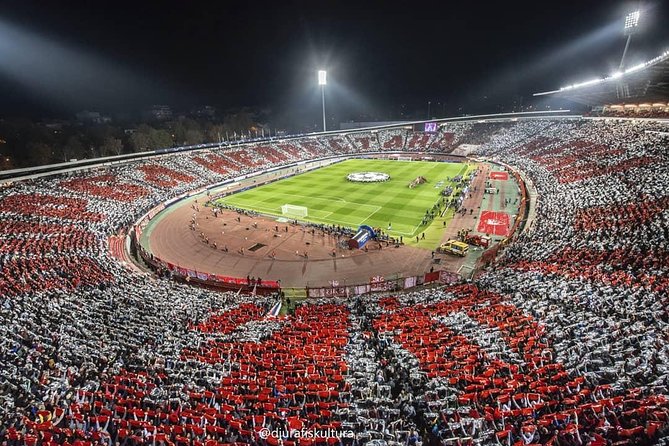
The largest part of the tour is the visit to Red Star Stadium, widely known as Marakana. Plan on roughly two hours here, including the stadium and museum.
The museum contains trophies, flags, important club documents, and a major piece of European football history: Red Star’s 1991 Champions League trophy. The club is described as one of only two Eastern European clubs, alongside Steaua Bucharest, to have this trophy in its collection.
That trophy gives the visit a clear focus. Red Star’s European success was not just a domestic achievement. It placed the club at the top of European football at a time when clubs from Eastern Europe had far fewer chances to receive the same attention as teams from richer western leagues.
For you, the museum is likely to be more rewarding if you already follow European football, but you do not need to know every Serbian player in advance. Flags and documents help make the club’s story more concrete, while the stadium itself gives scale to the rivalry.
The supplied schedule lists admission as free at the first three stops, including the Red Star Stadium and museum, while Partizan Stadium is marked as included. That wording suggests the tour price covers the planned visit, but I would still check the current booking terms if a museum ticket detail matters to you.
A beer inside one team’s stadium is also part of the experience highlights. It is a small detail, but a useful one. You are not only passing through a ground for photographs. You get a moment to sit with the atmosphere and talk football with your guide.
One review describes a customized visit that included access to the pitch and conference rooms. That is encouraging, but you should not assume those extras are guaranteed. Ask before booking if those areas are important to you.
A few more days out around Belgrade to weigh up
- Northern Serbia: Sremski Karlovci and Novi Sad Full-Day Tour from Belgrade
★ 5.0 · 425 reviews - Day Trip from Belgrade: Gems of Eastern Serbia
★ 5.0 · 424 reviews - Belgrade Nightlife Bar Pub Club Crawl with Drinks
★ 5.0 · 277 reviews - Taxi to/from Belgrade Airport to/from Belgrade City Center
★ 5.0 · 241 reviews
Partizan Stadium and the walk onto the pitch
The final stadium stop is Partizan Stadium, with about 30 minutes set aside for the visit. The key feature is the chance to walk down the pitch and see what is described as one of the last remaining ghetto-style stadiums in Europe.
That phrase points to a rougher, less polished football setting than the modern arenas built for corporate hospitality. If you prefer stadiums with sleek seating, large retail shops, and glossy displays, Partizan may feel plain. If you want a ground with character and visible age, that is precisely the attraction.
The shorter visit also means you should manage expectations. This is not a full museum program at Partizan, and the experience may center on the pitch, views, and stadium atmosphere. The point is to feel the physical space where the rivalry plays out.
One review highlights especially good views of Belgrade from the Partizan ground. Take time to look beyond the field. A stadium visit can tell you a lot about the city when you see how the ground sits within its urban surroundings.
Guides make the difference
The guide can make or break a tour about murals and supporter groups. Names specifically associated with this experience include Andrija and Tihomir.
Andrija is praised for explaining Serbian football, identifying murals, and showing the two stadiums with warmth and energy. One particularly positive account describes him helping with a Red Star match later that day and joining the same person for a basketball game the next day. That kind of personal help is a bonus, not something I would treat as part of the formal package, but it shows how the right guide can connect football sightseeing with the wider sports life of Belgrade.
Tihomir is described as professional and deeply familiar with ultras history. If your main interest is supporter culture and its effect on Serbian society, his subject knowledge sounds especially useful.
The tour is offered in English. At up to 99 people, the maximum group size listed is fairly large, although the exact group you join may be smaller. A large group can make it harder to hear during street explanations, so stay close to the guide and ask questions when the group stops.
The walking format helps. You can pause in front of a mural, look at details, and ask why a particular symbol matters. That is far better than receiving the same information while being driven past the neighborhood.
Is $84.21 good value?
At $84.21 per person, this is not the cheapest way to see a football stadium in Belgrade. Its value depends on what you want from the visit.
If you only want to enter Marakana, take a few photos, and leave, the price may feel high. You are paying for far more than admission, though. The tour lasts about 3 to 4 hours, includes two supporter neighborhoods, two stadiums, museum access at Red Star, a guided walk, and the chance to see football culture through local eyes.
I think the price works best for three types of people:
- European football fans who want more than a standard stadium tour.
- Visitors interested in Serbian society, including the role of organized supporters.
- Sports-focused visitors who would like help finding a match or understanding the local football scene.
The value is also stronger if you would struggle to arrange both stadium visits alone. The neighborhoods are easy enough to visit in theory, but the murals and fan history mean little without explanation. A guide gives the route a clear purpose.
Group discounts are available, which could improve the price for friends or families traveling together. The tour is booked, on average, 41 days ahead, so I would reserve early if your Belgrade dates are fixed.
Meeting point, timing, and practical details
The tour starts at 10 a.m. from Student Park, at Studentski trg 16 in Belgrade. It ends at the same meeting point.
That central start makes the morning straightforward, and the tour is near public transportation. Still, give yourself enough time to find Student Park. A 10 a.m. start leaves the afternoon open for a match, a museum, or another part of the city.
The schedule is listed as approximately 3 to 4 hours. Allow for the longer end of that range, especially if the group stops often or the guide spends extra time answering questions.
You will be walking outdoors in Dorcol and Senjak, then visiting stadium facilities. Comfortable shoes are the sensible choice. Service animals are allowed, and most people can take part, but the outdoor walking and stadium access may not suit anyone who has difficulty walking for several hours.
Confirmation is provided when you book. You can cancel for a full refund up to 24 hours before the start time. Changes or cancellations inside that 24-hour window are not accepted, and poor weather can lead to another date or a full refund.
Who should book this football tour?
I would choose this experience over a normal stadium visit if you care about the people and places behind the clubs. The murals, neighborhood identity, and ultras story give you a much fuller picture of Belgrade football.
It is also a good pick if you are traveling alone and want a guide who can make the city’s sports culture easier to enter. The warm response to Andrija suggests that the human side of the tour can be as memorable as the stadiums.
I would think twice if your interest is limited to modern architecture, polished museums, or a quiet sightseeing walk. Some of the material deals with fierce supporter groups, and the atmosphere may feel intense rather than comfortable.
Should you book it?
Book it if football is one of your reasons for visiting Belgrade. The combination of Dorcol, Senjak, Marakana, and Partizan Stadium offers access to places and stories you would miss on a simple city tour.
The strongest reasons are the 1991 trophy at Red Star, the older Red Star graffiti in Senjak, the Partizan murals in Dorcol, and the chance to walk onto the Partizan pitch. Add a guide such as Andrija or Tihomir, and the $84.21 price becomes easier to justify.
Book at least 24 hours ahead if you want the refund option, and confirm any hoped-for extras such as conference-room or additional pitch access. For football fans, this is one of the more personal ways to understand Belgrade’s sporting identity.
FAQ
Where does the football tour start and end?
It starts at 10 a.m. at Student Park, Studentski trg 16, Belgrade. The tour ends back at the same meeting point.
How long does the tour last?
The experience lasts approximately 3 to 4 hours.
How much does the tour cost?
The listed price is $84.21 per person. Group discounts are available.
Is the tour offered in English?
Yes. The tour is offered in English.
What stadiums and neighborhoods are included?
The route includes Dorcol, a Partizan supporters’ district, Senjak, a Red Star supporters’ district, Red Star Stadium, also known as Marakana, and Partizan Stadium.
Can I cancel for a full refund?
Yes. You must cancel at least 24 hours before the local start time for a full refund. If poor weather causes the activity to be canceled, you will be offered another date or a full refund.
Just added around Belgrade
- Private Walking Tour of Belgrade and Old Zemun★ 5.0 · 3 reviews
- From Belgrade: Danube Day Trip with Wine and Brandy Tasting★ 5.0 · 3 reviews
- Feel Belgrade Welcome tour★ 4.5 · 3 reviews
- Private Half Day Serbia Tour Novi Sad and Petrovaradin Fortress★ 5.0 · 3 reviews
- Private Wine Tasting by Party in Belgrade★ 5.0 · 3 reviews
- Belgrade: The White Emigration in Serbia in the Wake of the Russian Revolution★ 5.0 · 3 reviews
- Zica and Studenica monastery From Belgrade★ 5.0 · 3 reviews
- E-Scooter Serbian Food Tour★ 5.0 · 3 reviews
Historical Tours, compared.

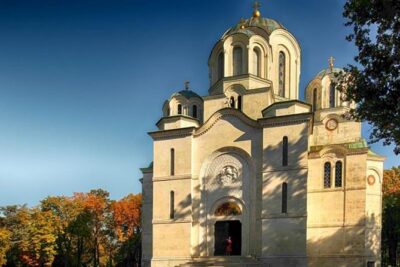
Full-Day Private Royal Heritage Tour to Oplenac With a Winery Visit
Read our review →Browse the lists this tour appears in