
Reviewed · CYCLING TOURS
Cycling the parks, ride through the ages
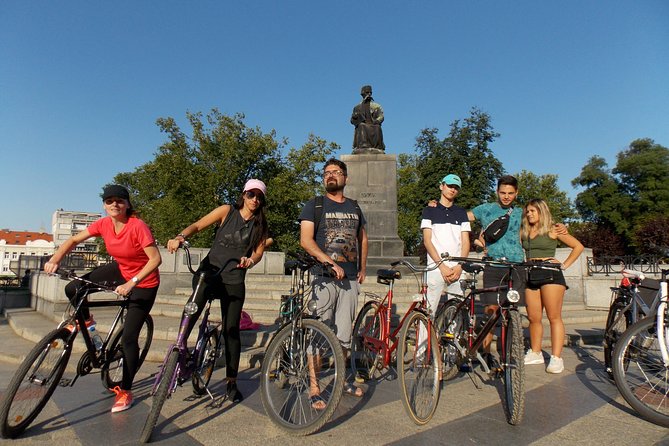
Belgrade reveals itself nicely from a bicycle, especially on a route that links quiet parks with royal palaces, war memorials, student squares, and old city streets. Guide Slobodan keeps the focus on stories that explain how Serbia’s capital grew and changed, not just on ticking off famous sights.
I like the maximum group of four, which gives the tour a personal feel and makes it easier to ask questions. I also like the mix of places: Jevremovac Botanical Garden offers a calm pause, while Karađorđev Park and the Liberators of Belgrade Memorial bring serious historical weight. The main consideration is physical effort, since the ride includes some steep streets and calls for moderate fitness.
Key points before you book
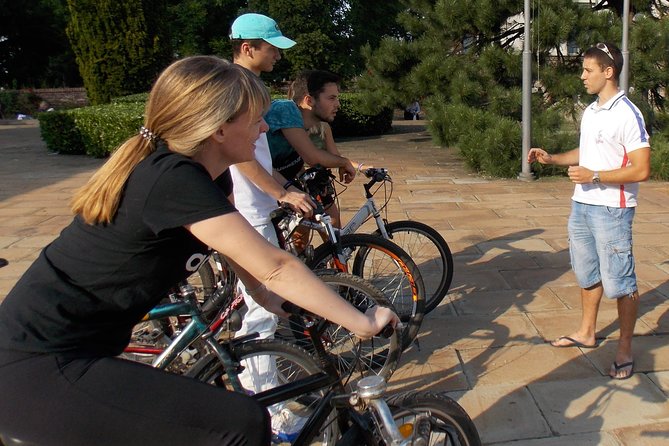
- Smallest possible group: The tour accepts no more than four people, and it may run even with only one person booked.
- Seven central Belgrade stops: You visit memorials, parks, a botanical garden, royal palaces, and historically important city spaces.
- Stories beyond standard sightseeing: Slobodan connects parks, buildings, Serbian figures, and major events in a way that gives the route meaning.
- A drink break in Tašmajdan Park: The tour includes a chance to try a traditional Serbian beverage.
- Good bikes, but some hills: The bicycles are described as sporty and well maintained, though a few streets climb.
- Easy-to-understand timing: Meet at 4:00 pm for about three and a half hours, then return to the same address.
Belgrade’s parks become a history lesson on two wheels
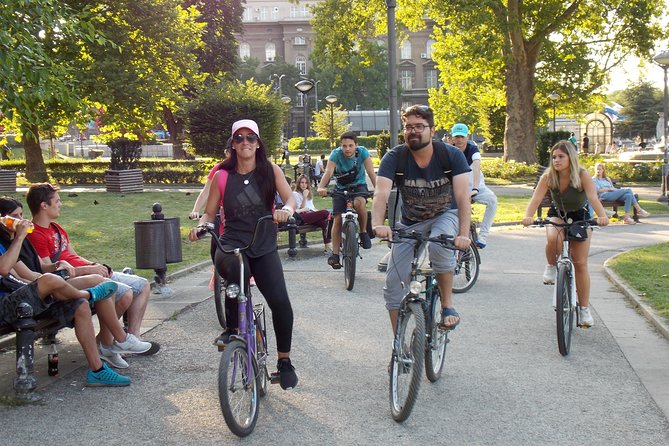
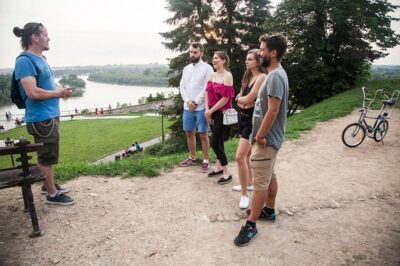
This is not a speed-focused cycling excursion. It is a guided city ride with regular stops, short walks, and time to listen. Each stop lasts about 15 minutes, so you are not expected to pedal continuously for three and a half hours.
That rhythm matters in Belgrade. The city’s past is spread across ordinary-looking parks and streets, and the best part of the route is often the explanation of what happened there. Slobodan’s approach, based on the information available about his tours, is interactive and personal. He has a way of tying Serbian historical figures and local places to wider Serbian culture.
The tour is offered in English and costs $45 per person. For that price, you get the bicycle experience, a small group, a guide, the drink stop, and several hours of local context. I see the price as fair if you value explanation and conversation rather than simply renting a bike and riding alone.
The pace should suit a first look at Belgrade. You get a broad introduction rather than a specialist study of one palace, war, or neighborhood. If you want to cover a lot of ground without joining a large group, this format makes sense.
A few more days out around Belgrade to weigh up
- Belgrade E-Bike Tour: Power Glide!
★ 4.5 · 112 reviews - Fruška Gora Bike Tour
★ 5.0 · 16 reviews - Belgrade Bike Tour: Be a local in the hood of Belgrade!
★ 5.0 · 5 reviews
Starting at Cvijićeva 134 at 4:00 pm
The ride begins at Cvijićeva 134 in Belgrade at 4:00 pm. The activity ends back at the meeting point, which makes the practical side simple. You do not need to work out how to return from a distant final stop.
The tour is near public transportation, another useful detail if you are staying elsewhere in the city. Confirmation is sent within 48 hours of booking, subject to availability, so leave enough time for that before building the ride into a tight schedule.
The late afternoon start gives the route a pleasant shape. You spend the first part visiting memorials and central parks, then continue through several places connected to royal and national history. Since the duration is approximately three hours and 30 minutes, plan for the tour to occupy much of your late afternoon and early evening.
The Liberators of Belgrade Memorial sets the tone
The first stop is the Liberators of Belgrade Memorial, located in a park dedicated to soldiers who died in the battles that freed Belgrade during World War II. The admission is free, and the planned stop lasts about 15 minutes.
This is a strong opening because it places the city’s recent wartime past at the front of the tour. You are not simply looking at a monument. You are hearing why the park exists and how the liberation of Belgrade fits into the country’s modern story.
I would pay attention here to the setting as much as the memorial itself. Parks often look peaceful now, but this stop asks you to picture the violence and upheaval behind that calm. It also gives Slobodan a natural starting point for explaining the layers of Belgrade’s past.
Jevremovac Botanical Garden offers a quieter pause
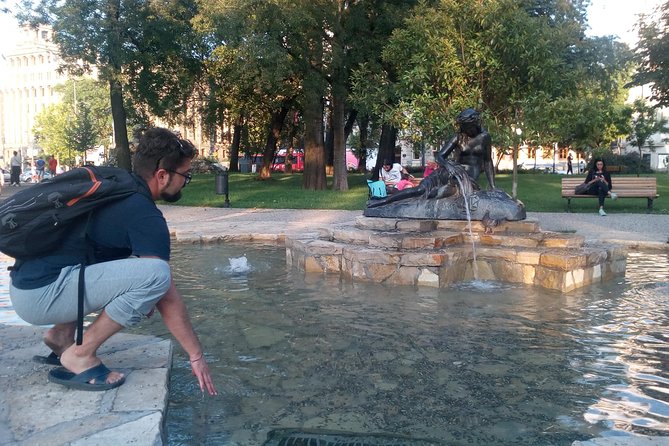
The second stop takes you to Jevremovac Botanical Garden, described as the only botanical garden in Belgrade. You walk around for about 15 minutes, with admission included.
After the weight of the memorial, this change of mood is welcome. The garden gives you a chance to slow down, look around, and hear stories tied specifically to the site. It is not presented as a long botanical visit, so keep your expectations realistic. You are getting a compact walk and local context, not an extended garden tour.
This stop also helps show why the tour is called Cycling the Parks. The parks are not filler between major monuments. Each one carries a different role in the city, from memorial ground to cultivated garden to royal setting.
Same city, a completely different day out:
- Northern Serbia: Sremski Karlovci and Novi Sad Full-Day Tour from Belgrade
★ 5.0 · 425 reviews - Day Trip from Belgrade: Gems of Eastern Serbia
★ 5.0 · 424 reviews - Belgrade Nightlife Bar Pub Club Crawl with Drinks
★ 5.0 · 277 reviews - Taxi to/from Belgrade Airport to/from Belgrade City Center
★ 5.0 · 241 reviews
Studentski Park and Kolarac bring student life and culture into view
The third stop is the area around Kolarac and Studentski Park. The stop lasts about 15 minutes and is free.
Studentski Park is surrounded by important buildings, and the guide uses the area to explain their history. Kolarac adds a cultural angle to the route, giving you a sense that Belgrade’s story is not only about wars and rulers. The city’s academic and public life also matters.
This is the kind of stop where a local guide earns the fee. Buildings can be easy to pass without a second thought, especially when you are moving through a busy city. With context, the square becomes a place connected to institutions, people, and changing ideas.
Do not expect a long interior visit at Kolarac. The listed timing points to an outdoor look at the area and its surrounding buildings. That keeps the bike tour moving, but it also means the experience is strongest for people who enjoy short explanations and broad city orientation.
Pionirski Park places Belgrade’s royal past beside modern streets
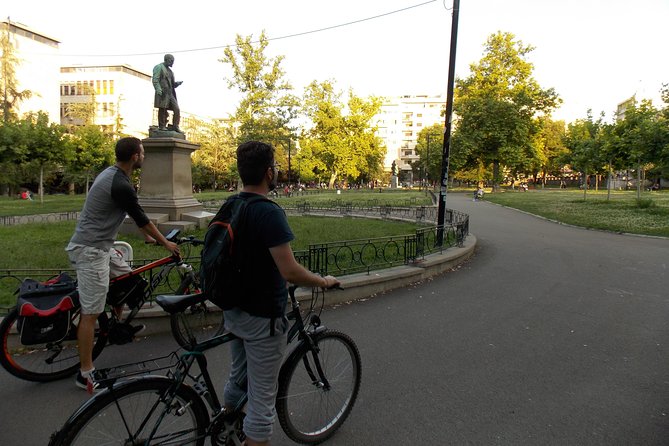
The fourth stop is Pionirski Park, where the Old and New Royal Palaces are located. The stop is free and lasts around 15 minutes.
This is one of the clearest chances to connect Belgrade with Serbia’s royal period. The two palaces give the park a sense of ceremony and power, while the surrounding city reminds you that these buildings now form part of everyday urban Belgrade.
The route does not promise an interior palace visit, so you should think of this as an exterior history stop. Slobodan’s stories are the key feature. A quick look at palace architecture becomes more useful when you understand who used the buildings and why the area mattered.
I like the contrast here. The ride moves from a memorial to a botanical garden, then a student district and a royal park. That range is what makes this more than a simple green-space outing.
Tašmajdan Park includes the tour’s drink break
The fifth stop is Tašmajdan Park, where you pause for drinks. The stop is listed as about 15 minutes, and the experience includes a traditional Serbian beverage.
This break is practical as well as cultural. After several stops and city riding, you get time to rest, have a drink, and talk with the guide. The beverage adds a small local touch that a standard sightseeing loop would likely miss.
The exact drink is not specified, so do not book this expecting a particular Serbian specialty. Think of it as a short tasting moment built into the ride. If you enjoy learning about a place through food and drink, this is a welcome extra.
Tašmajdan also gives the tour a chance to breathe. A three-and-a-half-hour city ride can feel long if every minute is spent moving. A planned pause makes the overall pace more manageable.
Manjež Park shows how much history can fit into a city-center green space
The next stop is Manjež Park, described as a pleasant central park with a great deal of history. It is another free, roughly 15-minute stop.
The value here lies in the guide’s interpretation. On your own, Manjež might seem like simply a place to cut through or sit for a while. Slobodan uses it to point out the people and events linked to the area, adding another layer to the city center.
This stop may appeal most to people who enjoy details that do not always appear in a standard guide. You are not only being taken to the biggest landmarks. You are also being shown why smaller public spaces matter.
Because the itinerary uses several parks, the ride feels connected rather than fragmented. You begin to notice how Belgrade’s open spaces organize the city and preserve pieces of its past.
Karađorđev Park connects the ride to the 1806 to 1807 siege
The final listed stop is Karađorđev Park, where Karađorđe established his headquarters during the siege of Belgrade in 1806 and 1807. The stop is free and planned for about 15 minutes.
This is a fitting historical finish. Karađorđe is one of the major figures in Serbian history, and the park gives you a direct place to discuss his role during the siege. If you have already heard Slobodan explain important Serbian figures elsewhere on the route, this stop helps bring those ideas together.
The name of the park is not just a label on a map. It points to a specific military episode and to the people who shaped Serbia’s struggle for independence and political identity. You get a stronger sense of that connection here than you would from a quick photograph and a sign.
After Karađorđev Park, the activity returns to the starting point. The route therefore works as a loop, with no need to arrange a taxi or public transport from the final stop.
What the cycling feels like in practice
The bicycles are described as good quality and sporty. That is helpful, but the route is still urban cycling, not a flat recreational path. Some streets are a little steep, so you should be comfortable riding in a city and handling modest climbs.
One person who was nervous about cars felt safe on the ride, but that is a personal experience rather than a guarantee. The tour is not described as being on car-free paths throughout. If you lack confidence on a bicycle, the associated walking tour may be a better choice.
The group limit of four is especially useful for cycling. A large group can create delays at crossings and make it hard to hear a guide. With only a few people, Slobodan can keep an eye on the pace and respond to questions without turning the ride into a production.
You should also allow for getting off the bike. The itinerary calls for walking around Jevremovac Botanical Garden, and the other stops involve standing or strolling near parks and buildings. Wear clothes suited to moderate activity and shoes that work for both pedaling and short walks.
Why Slobodan’s storytelling matters
The strongest feature here is not the number of parks. It is the way Slobodan connects them.
His tours are described as friendly, welcoming, engaging, and interactive. That combination matters in Belgrade, a city with a complex past and many names, rulers, wars, and political changes. A guide who can explain those layers in plain English gives you a much better starting point for exploring the rest of Serbia.
You also get stories that are not always found in a standard guidebook. That does not mean every stop reveals a secret. It means the experience adds human detail and local connections to places you might otherwise pass without noticing.
The personal scale helps too. You can ask about a building, a figure, or a historical event as it comes up. For a solo visitor, the small group can make the ride feel social without forcing you into a crowd. One repeat participant even chose this bike tour after taking Slobodan’s walking tour, which suggests the two experiences can work well together.
Who will get the most from this $45 tour?
I would recommend it most strongly to a first-time visitor who wants an introduction to Belgrade that combines movement, history, and public spaces. It covers enough ground to help you understand the city’s layout while still leaving plenty of time for other sightseeing later.
It also suits solo visitors, couples, and small groups who prefer conversation over a large organized outing. The four-person limit is a real advantage, especially at $45, because you are paying for access to a guide rather than being one face in a crowd.
The tour is less suitable if you want a relaxed, completely flat ride, a long palace visit, or a highly focused architectural tour. It is also not the best match if you are not comfortable cycling in city streets or if you have below-moderate fitness.
The weather rule matters. The activity requires good weather, and poor conditions can lead to a new date or a full refund. Free cancellation is available up to 24 hours before the start time, while cancellations or changes made less than 24 hours ahead are not refunded or accepted.
Should you book Cycling the Parks?
Book it if you want Belgrade explained through its parks, memorials, royal buildings, and lesser-known stories. The small group, English-language guiding, quality bikes, and traditional drink make $45 reasonable for an active three-and-a-half-hour introduction.
Skip it if you want a gentle sightseeing ride with no hills or if you are uneasy around urban traffic. In that case, choose a walking option instead. For everyone else, this is a smart early-in-your-stay activity: it gives you history, orientation, and a list of places worth revisiting on foot.
FAQ
How much does Cycling the Parks cost?
The price is $45 per person.
How long does the bike tour last?
The activity lasts approximately three hours and 30 minutes.
What time does the tour start?
The tour starts at 4:00 pm.
Where does the tour begin?
The meeting point is Cvijićeva 134, Beograd, Serbia.
Where does the activity end?
The tour ends back at the meeting point.
How many people can join the tour?
The maximum group size is four people.
Is the tour offered in English?
Yes. The experience is offered in English.
Do I need a certain level of fitness?
You should have a moderate level of physical fitness. Some streets may be steep, and the activity includes cycling as well as short walks and standing stops.
Just added around Belgrade
- Private Walking Tour of Belgrade and Old Zemun★ 5.0 · 3 reviews
- From Belgrade: Danube Day Trip with Wine and Brandy Tasting★ 5.0 · 3 reviews
- Feel Belgrade Welcome tour★ 4.5 · 3 reviews
- Private Half Day Serbia Tour Novi Sad and Petrovaradin Fortress★ 5.0 · 3 reviews
- Belgrade: The White Emigration in Serbia in the Wake of the Russian Revolution★ 5.0 · 3 reviews
- Private Wine Tasting by Party in Belgrade★ 5.0 · 3 reviews
- Zica and Studenica monastery From Belgrade★ 5.0 · 3 reviews
- Belgrade Fashion and Design Tour – Discover Local Designers★ 5.0 · 4 reviews
Cycling Tours, compared.
Belgrade Bike Tour: Be a local in the hood of Belgrade!
Read our review →
Browse the lists this tour appears in