
Reviewed · HISTORICAL TOURS
Tito and History Vintage Car Tour
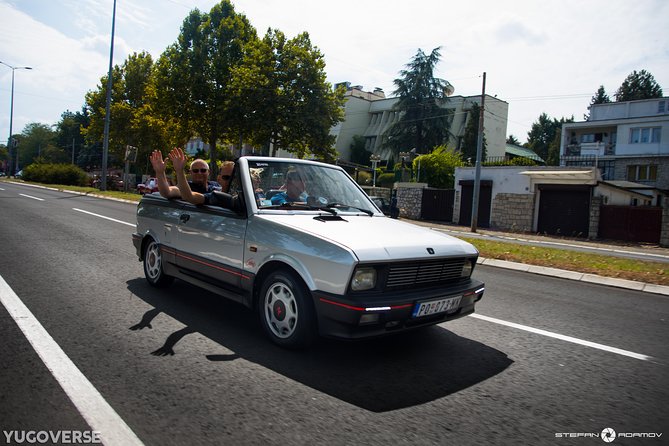
Belgrade’s Tito and History Vintage Car Tour uses an unusual key to the city: old Yugoslavian cars. You do not simply look at the Yugo as a punchline about bad engineering. You see how cars, architecture, Tito, and Yugoslavia’s place in the world fit together.
I like the private format, since your guide can match the pace and explain odd details without rushing a large group. I also like the practical extras: pickup can be requested, snacks and soda are provided, and the Museum of Yugoslavia admission is covered.
The main drawback is the fixed price of $144 for a 2 to 3 hour outing. That can be good value for a private group, but it is less attractive for one person. The tour also depends on good weather, so keep some flexibility in your schedule.
Key Points at a Glance
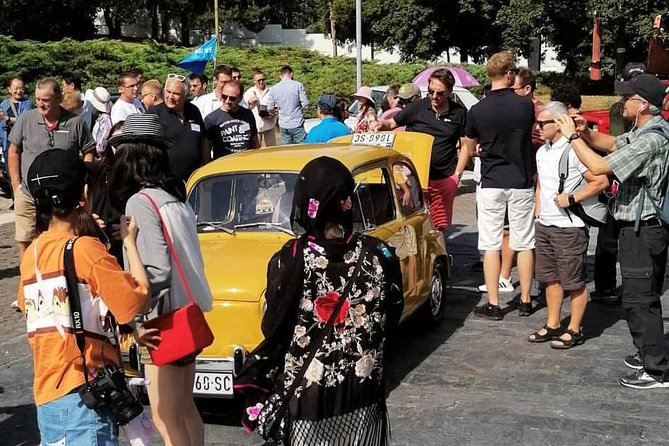
- Vintage cars with a story: Learn about the Yugo, including its unusual convertible version, instead of treating the car as a simple joke.
- A private Belgrade route: Visit central government buildings, Tito era sites, the Genex Tower, and the Museum of Yugoslavia with only your group.
- Jovana as a guide: The available review specifically praises Jovana’s strong command of the subject and clear enthusiasm for it.
- Brutalist architecture included: See the Western City Gate, also called the Genex Tower, a striking 36 storey structure from 1977.
- Simple all in pricing: Snacks, soda, admission fees, and the listed tour services are included, so you are not expected to pay at each stop.
- Flexible starting options: Begin at Dragoslava Jovanovića 14 in central Belgrade or request pickup.
Why Vintage Cars Make a Good Belgrade History Lesson
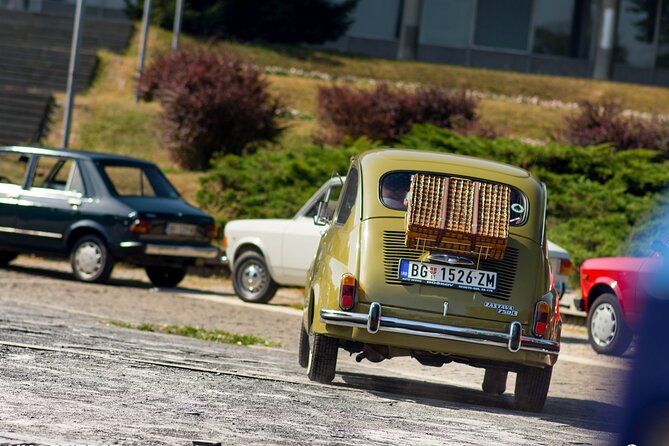
The Yugo is often called the worst car in the world, and this tour does not shy away from that reputation. The useful part is that you get more than a vehicle inspection. The car becomes a way to discuss daily life in socialist Yugoslavia, the country’s industries, and the way Tito’s government presented modern life.
You also learn about more than the standard Yugo model. The tour includes discussion of the Yugo convertible, a version that many people will not have seen before. That small detail gives the outing a playful side, but the wider subject is serious: Yugoslavia had its own car industry and wanted to present itself as modern, independent, and open to the world.
The vintage vehicle helps connect the stops. Belgrade’s grand government buildings and monumental parks can feel scattered if you see them only as separate photo stops. With the car and guide linking them, you get a clearer idea of the city’s socialist era and Tito’s political world.
This is also a good choice if you have already seen the usual pedestrian center. The route reaches areas that are not covered by a standard old town walk, including New Belgrade and the broad spaces around the Sava and Danube rivers. You spend less time figuring out transport and more time looking around.
More history walks in Belgrade:
- A Crash Course through Serbian History
★ 5.0 · 58 reviews - History and Culture in my Belgrade
★ 5.0 · 41 reviews - NATO Bombing of Belgrade Historical Tour
★ 5.0 · 17 reviews
Starting at the National Assembly Building
The tour begins at Dragoslava Jovanovića 14, near the House of the National Assembly of the Republic of Serbia. Pickup is offered, so confirm the arrangement when booking if you prefer not to make your own way to the meeting point.
The first stop lasts about 15 minutes and has no admission charge. The building has an interesting change of purpose. It was once the royal residence of the Obrenović dynasty and now houses the City Assembly of Belgrade.
That shift gives your guide a chance to explain how Serbian political power changed over time. You are not entering for a long interior visit, so think of this as an exterior orientation stop rather than a full palace tour. Fifteen minutes is enough for a look, some photographs, and a short explanation before moving on.
I like this as a starting point because it sets up the contrast between royal Serbia and the later Yugoslav state. The tour is not only about Tito, and this first building helps place the Yugoslav period within Belgrade’s longer political story.
Walking the Peace Alley in Friendship Park
Friendship Park, or Park Prijateljstva, is a large, symbolic place tied to the 1961 Belgrade Conference. That meeting became known as the First Summit of the Non Aligned Movement, bringing together countries that did not want to line up fully with either Cold War power bloc.
The park’s Peace Alley is a 180 meter path lined by two rows of trees. Heads of state planted trees during the summit as a sign of dedication to world peace. The list of people connected with the park includes Queen Elizabeth II, Margaret Thatcher, Robert Mugabe, Jimmy Carter, Indira Gandhi, Nicolae Ceausescu, and members of the Rolling Stones.
You have about 20 minutes here, with no admission charge. That is enough to walk a portion of the path and understand the idea, though not enough for a leisurely exploration of the whole park.
The park is worth seeing because it reveals how Belgrade served as a meeting point between major political blocs and newly independent countries. At the same time, the grand idea feels unfinished. The park was conceived on a noble scale but remains incomplete, which gives it a slightly sad and reflective quality. Your guide can help you read that gap between political ambition and what was actually built.
Seeing Palata Srbije From the Outside
Palata Srbije is one of Belgrade’s major modernist buildings and is described as the largest and most spectacular example of its kind in the city. The tour spends about 20 minutes here, with no public admission included because this is an exterior visit.
The building’s importance is not just its size. It was designed to express the confidence of the Yugoslav state, with formal spaces intended for government work and international diplomacy. You hear about the building’s past and see photographs of interiors that are closed to the public.
That last point matters. You should not expect an interior tour or access to rooms normally off limits. The value is in the explanation, the exterior design, and the chance to see a building that is difficult to understand without context.
This is one of the places where a private guide helps. A large façade can seem cold and remote when you view it alone. With a guide pointing out its purpose and showing interior images, the building becomes easier to place within Tito’s Yugoslavia.
A few more days out around Belgrade to weigh up
- Northern Serbia: Sremski Karlovci and Novi Sad Full-Day Tour from Belgrade
★ 5.0 · 425 reviews - Day Trip from Belgrade: Gems of Eastern Serbia
★ 5.0 · 424 reviews - Belgrade Nightlife Bar Pub Club Crawl with Drinks
★ 5.0 · 277 reviews - Taxi to/from Belgrade Airport to/from Belgrade City Center
★ 5.0 · 241 reviews
The Genex Tower and Belgrade’s Brutalist Edge
The Western City Gate, better known as the Genex Tower, is one of the most memorable sights on the route. Built in 1977, it is a 36 storey brutalist skyscraper formed from two towers joined by a two storey bridge. A revolving restaurant sits at the top.
The building was designed to greet people arriving from the west, and its scale makes that role clear. It is not delicate or conventionally pretty. It is a forceful piece of concrete architecture, with a shape that is easy to recognize and hard to ignore.
The provided route description does not give a precise time for this stop, so the length of the visit may depend on traffic, photographs, and the day’s schedule. You should treat it as a major exterior viewing point rather than an assured visit to the revolving restaurant.
I would especially recommend this tour to anyone interested in brutalist buildings. The Genex Tower is not an added extra squeezed into a city tour. It is one of the reasons to choose this particular route. You see how architecture was used to project confidence, movement, and a modern future.
The Museum of Yugoslavia and Tito’s Personal World
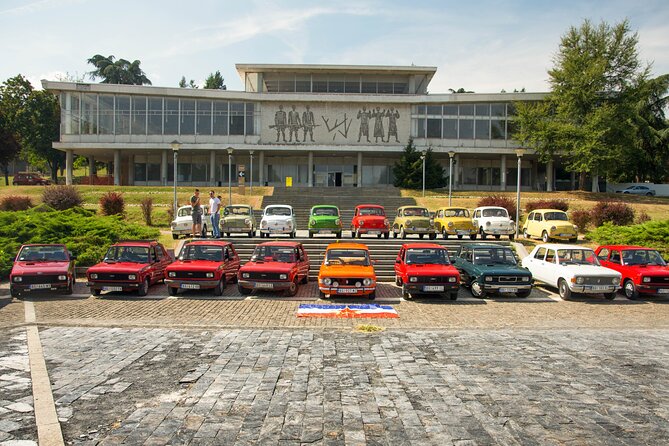
The Museum of Yugoslavia is the longest stop, at about 40 minutes, and admission is included. It was founded in 1962 to collect gifts presented to Tito by people in Yugoslavia and by world leaders. Over time, it became part of a larger museum complex that included the House of Flowers, Tito’s residence, the Pool House, the Hunting Lodge, the Old Museum, and Tito’s tomb.
The collection includes more than 200,000 objects arranged in 20 collections. You should not expect a standard national history museum with a simple beginning, middle, and end. Its focus on gifts, state memory, Tito’s life, and the organization of the museum gives it a different feel.
The House of Flowers is especially important within the complex because it contains Tito’s tomb. The supplied tour details do not promise a separate guided interior visit to every building, so ask your guide what is included on the day. The 40 minute stop is valuable, but it is not enough for a full study of every collection.
I like this part of the tour because it gives the cars and buildings a human center. A government palace tells you how a state wanted to look. Personal gifts and objects show how Tito was presented to the public and how foreign leaders interacted with Yugoslavia.
The museum can also raise questions rather than settle them. Tito remains a complicated figure, and Yugoslavia’s political story cannot be reduced to either praise or mockery. A good guide helps you notice the symbols and the gaps, allowing you to form your own view.
What the Private Format Adds
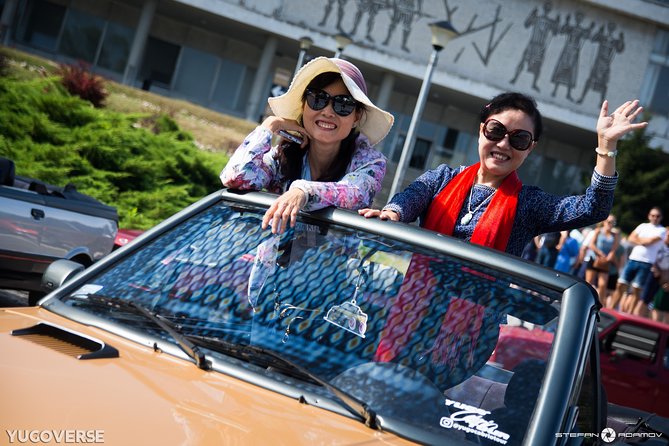
This is a private activity, so only your group takes part. That matters most at the Museum of Yugoslavia and during the car explanations. You can ask why the Yugo developed its reputation, what made the convertible unusual, or how the buildings relate to Tito’s government without waiting for a whole busload of people.
The tour is scheduled for approximately 2 to 3 hours. That is a useful length for a first look at the city’s Yugoslav period. You get several major stops without giving up an entire day, but the schedule is also tight enough that some visits will feel like introductions rather than thorough tours.
The guide makes a large difference. One published experience specifically names Jovana and describes her as passionate about the subject and very well informed. That is important here because the route crosses politics, cars, architecture, and modern Serbian history. You want someone who can connect those subjects instead of giving four unrelated mini talks.
The tour is available daily between 9:00 a.m. and 9:00 p.m., though your selected start time should be confirmed. Since weather can affect the experience, a morning or afternoon backup plan is sensible.
Is $144 Good Value?
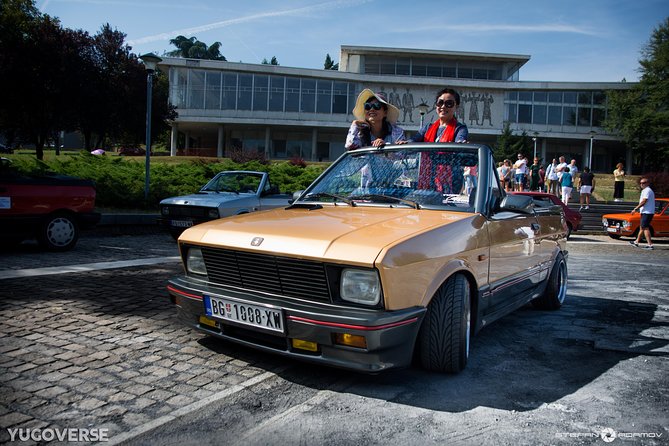
At $144, the tour is not a cheap way to see Belgrade. The value depends heavily on your group size. For one person, the cost is high for a 2 to 3 hour experience. For a couple, family, or small group sharing the private booking, the price becomes easier to justify.
You are paying for more than a ride. The package includes a private guide, vintage car transport, the listed admission fee for the Museum of Yugoslavia, snacks, soda, and the convenience of moving between central Belgrade, New Belgrade, and the museum area.
The included food and drink will not transform the economics, but they do make the outing easier. You do not need to stop for refreshments during a fairly compact schedule, and the promise that all fees are handled means fewer small payments along the way.
I would compare this with the price of separate taxis, museum admission, and a private guide. If you mainly want to see the Yugo for a few minutes, $144 may feel excessive. If you want a focused explanation of Tito era Belgrade with private transport and a distinctive vehicle, the price is more reasonable.
Who Should Book This Tour?
You are a good match for this experience if you enjoy cars, Cold War history, political architecture, or unusual city tours. It also suits anyone who has already seen central Belgrade and wants to understand the city’s later twentieth century rather than spend another afternoon around the main pedestrian streets.
Families may find the Yugo angle easier to engage with than a formal history lecture. The car gives younger participants something concrete to look at, while the buildings and museum add material for adults.
Architecture fans should pay close attention to the Genex Tower and Palata Srbije. People interested in international politics will get the most from Friendship Park and its Non Aligned Movement connection.
You may want a different activity if you prefer long museum visits, extensive walking, or a tour built around Serbia’s medieval churches and Ottoman period. This route is mainly about modern Belgrade, government power, Tito, and Yugoslav design.
The tour is also not ideal if your schedule cannot handle a weather related change. Poor weather can lead to a new date or a full refund, but you will need flexibility. Free cancellation is available up to 24 hours before the start time. Inside that window, the amount paid is not refunded, and changes are not accepted.
Should You Book the Tito and History Vintage Car Tour?
Book it if you want Belgrade explained through its Yugo, Tito era buildings, and modern political past. The private setup, included snacks and soda, covered museum admission, and the chance to see the Genex Tower give it a clear identity.
I would place special weight on the guide. Jovana’s praised approach suggests the experience works best when the person leading it can bring energy to a subject that includes concrete buildings, political symbols, and a famously flawed car.
Skip it if $144 is beyond your budget, if you are traveling alone and dislike paying for private tours, or if you want a broad survey of all Serbian history. For the right group, though, this is a smart way to see a side of Belgrade that ordinary sightseeing often misses.
FAQ
How long does the Tito and History Vintage Car Tour last?
The tour lasts approximately 2 to 3 hours.
Where does the tour start?
The listed meeting point is Dragoslava Jovanovića 14, Beograd 11000, Serbia. Pickup can also be requested.
Is this a private tour?
Yes. Only your group participates in the activity.
Are museum admission and refreshments included?
Admission to the Museum of Yugoslavia is included. Snacks and soda are also provided along the way.
Which major sights are included?
The route includes the National Assembly building, Friendship Park, Palata Srbije, the Western City Gate or Genex Tower, and the Museum of Yugoslavia.
Can I cancel for a full refund?
Yes, if you cancel at least 24 hours before the experience begins. Cancellations made less than 24 hours before the start time are not refunded. If poor weather or insufficient bookings cause the tour to be canceled, you are offered another date or a full refund.
Just added around Belgrade
- Private Walking Tour of Belgrade and Old Zemun★ 5.0 · 3 reviews
- Feel Belgrade Welcome tour★ 4.5 · 3 reviews
- From Belgrade: Danube Day Trip with Wine and Brandy Tasting★ 5.0 · 3 reviews
- Private Half Day Serbia Tour Novi Sad and Petrovaradin Fortress★ 5.0 · 3 reviews
- Private Wine Tasting by Party in Belgrade★ 5.0 · 3 reviews
- Belgrade: The White Emigration in Serbia in the Wake of the Russian Revolution★ 5.0 · 3 reviews
- Zica and Studenica monastery From Belgrade★ 5.0 · 3 reviews
- E-Scooter Serbian Food Tour★ 5.0 · 3 reviews
Historical Tours, compared.
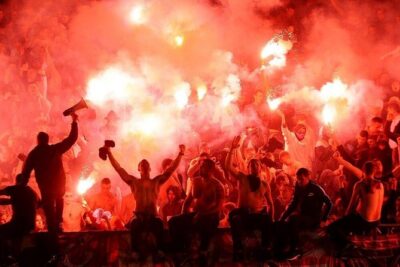
Football tour: Red Star and Partizan Ultras History
Read our review →
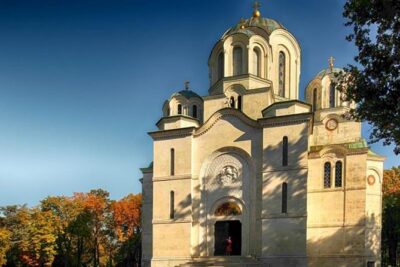
Full-Day Private Royal Heritage Tour to Oplenac With a Winery Visit
Read our review →Browse the lists this tour appears in