
Reviewed · NOVI SAD & FRUŠKA GORA DAY TRIPS
3 Hour Private Walking Tour in Novi Sad City
Novi Sad reveals itself best on foot, where a Catholic church, Orthodox palace, Jewish synagogue, old merchant homes, museums, and a Danube embankment all fit into one compact walk. This tour connects those sights to the people and events that shaped the city, rather than leaving you with a collection of pretty façades.
I like the private format for up to four people, which gives the guide room to adjust the pace and answer questions. I also like the mix of architecture and difficult history, from the city’s multinational roots to the 1942 Novi Sad massacre and the founding of Socialist Yugoslavia.
The main consideration is transport. The tour starts and ends in Novi Sad, not Belgrade, so you must arrange your own bus or train connection if you are staying in Belgrade. The advertised duration is about two and a half hours, with many short stops, so this is a brisk overview rather than a slow museum visit.
Key points at a glance
- Private tour for up to four people: The $57.82 price is for the group, not each participant.
- Vadim’s lively guiding style: He brings history and art together with humor and an adaptable approach.
- Fourteen urban sights: Churches, palaces, libraries, markets, galleries, monuments, and the National Theatre fill the route.
- Petrovaradin Fortress from across the Danube: You see the fortress and learn its role without adding a separate fortress visit.
- Coffee or lemonade included: The break takes place along Dunavska Street at a non-smoking café.
- No admission fees listed: The churches may be entered optionally, but the tour is primarily an exterior walking experience.
Why Novi Sad works so well as a walking tour
Novi Sad has a different feel from Belgrade. Its central streets bring together Central European façades, Serbian Orthodox landmarks, Catholic traditions, Jewish heritage, and memories of war and political change. You can photograph the buildings on your own, but the connections between them are harder to spot without someone explaining the city’s past.
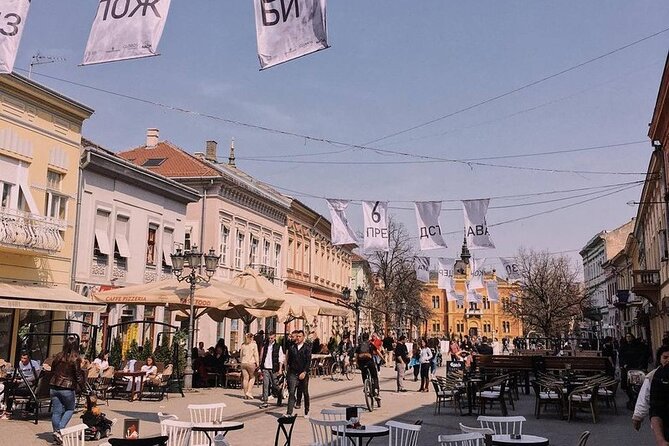
This tour begins at Trg slobode, the central square, and returns there at the end. That makes the route easy to understand and useful for your first few hours in town. You get your bearings, learn which streets matter, and finish close to where you started.
The price is strong for a private outing. At $57.82 per group of up to four, the cost works out well if you fill the group. You are paying for a guide’s time rather than a ticket bundle, and the stops do not carry separate admission charges. If you want long visits inside museums, this is not the right product. If you want a compact introduction with room for questions, it offers good value.
More Novi Sad and Fruska Gora days:
- Northern Serbia: Sremski Karlovci and Novi Sad Full-Day Tour from Belgrade
★ 5.0 · 425 reviews - From Belgrade: Novi Sad and Sremski Karlovci Tour
★ 4.5 · 101 reviews - Private transfer from Belgrade or Belgrade Airport to Novi Sad
★ 5.0 · 38 reviews
Trg slobode and the city’s Catholic face
The Name of Mary Church anchors the main square and serves as the meeting point. You can look inside optionally, although the stop is brief, listed at about five minutes. Even from outside, the church gives you an immediate clue that Novi Sad’s story is not only Serbian Orthodox.
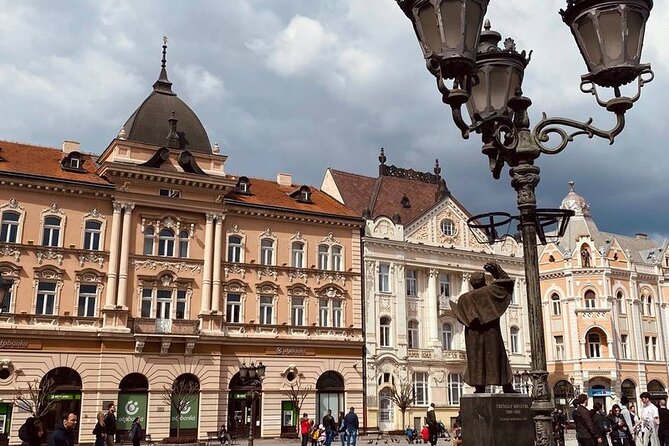
At City Hall, the guide explains the first Serbian mayor and the monument made by a noted Croatian sculptor. This is also where the tour addresses Novi Sad as a multinational city. That context matters because the city’s buildings and institutions make more sense when you understand the mix of communities that lived and worked here.
You then move along Zmaj Jovina Street, the main pedestrian route. The street is named for Jovan Jovanović Zmaj, one of Serbia’s best-known poets, and the tour includes a stop at his monument. Look beyond the main façades for courtyards and a notable Bauhaus-style building. The contrast between older ornament and modern design gives the walk some visual range.
Merchant mansions and the Matica Srpska quarter
Svetozara Miletića Street shifts the subject from public squares to private wealth and painful memory. The route passes a mansion connected with mass executions during World War II, then continues through one of Novi Sad’s most expensive areas.
You will see several significant buildings, including one of Serbia’s oldest banks, marked by a statue of Mercury on its roof. This part of the tour is useful for readers who care about architecture but do not want a simple façade-by-façade commentary. The guide links the buildings to commerce, status, and the city’s changing population.
At Grčkoškolska Street, the focus returns to wealthy merchants. The street once housed some of Novi Sad’s richest residents, and the tour points out a famous balcony belonging to a merchant who built the structure now associated with Matica Srpska.
Matica Srpska is one of Serbia’s major cultural institutions, and its library is another key stop. You spend about ten minutes here, learning why the institution matters to national culture. The street also carries an unusual personal connection to Albert Einstein and his Serbian wife, who spent several months there. The supplied information does not promise an interior visit, so treat this as an exterior and historical stop.
Orthodox Novi Sad at Saborna crkva and the Bishop’s Palace
Saborna crkva, the main Orthodox church in the city, is dedicated to Saint George. The visit provides a clear chance to compare Orthodox and Catholic traditions, while also considering how the Austro-Hungarian Empire influenced architecture in northern Serbia.
The interior may be visited optionally. Since the stop is scheduled for about ten minutes, you should not expect a long art or worship-focused visit. Still, the contrast between the Name of Mary Church and Saborna crkva gives the tour a useful structure: two religious buildings, two traditions, and one city shaped by both.
Nearby, the Bishop’s Palace offers a different architectural note. Its exterior has a more traditional Serbian appearance, with links to the country’s southern regions. From there, the route continues toward the oldest Turkish well, dated to 1720, and a mural showing important historical figures from Novi Sad.
This section makes the city’s layers easy to see. Central Novi Sad is not built in one style. Its buildings reflect local Serbian traditions, imperial rule, religious communities, and commercial growth.
A few more days out around Belgrade to weigh up
- Belgrade: 3-Hour Small Group Walking Tour
★ 5.0 · 180 reviews - Half-Day Sightseeing and Walking Tour of Belgrade City
★ 5.0 · 37 reviews - Belgrade Private Walking Tour with a Local
★ 5.0 · 19 reviews - Belgrade City Walk, Gathering and Sightseeing
★ 5.0 · 19 reviews
Fish Market, Dunavska Street, and a real local pause
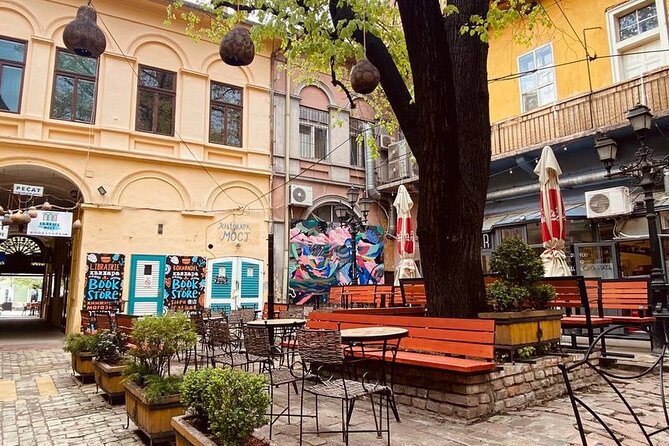
At the monument to King Peter I of Serbia, you get a short history lesson about his role. The route then moves to the Fish Market, a place used by locals and also associated with evening events.
This is not presented as a food tour, so do not book expecting tastings or a guided market lunch. The value is in seeing an ordinary part of city life and understanding its place in the urban center.
Dunavska Street is one of Novi Sad’s oldest streets and includes the tour’s short break. Coffee or lemonade is included, and the guide selects a non-smoking café. That detail is especially practical in Serbia, where non-smoking indoor cafés can be difficult to find.
The pause lasts about ten minutes. It is long enough to rest your feet and ask questions, but not long enough for a full meal or leisurely café session. I see this as a thoughtful touch on a fast walking route, particularly if you have already arrived from Belgrade by public transport.
Museums and Danube Park without rushed admissions
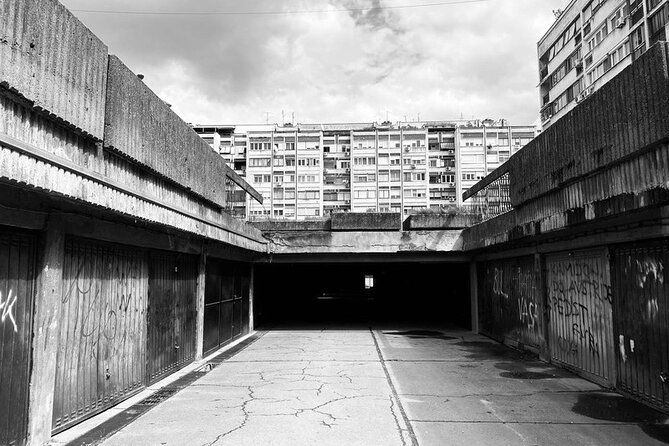
The next section is sometimes called the street of museums. You pass the Museum of Novi Sad, which holds a collection of European masters, the Museum of Vojvodina with archaeological exhibits, and the Museum of Contemporary Art, which presents temporary exhibitions.
The tour does not include museum admission or a dedicated interior visit. That limitation is worth noting. You get an introduction to the institutions and their place in the city, then can return later if one catches your interest.
The route also includes Danube Park, founded at the end of the nineteenth century. After a series of churches, mansions, and official buildings, the park gives you a change of pace. It is also a useful orientation point before the walk heads toward the river.
If you have only one day in Novi Sad, this overview helps you choose where to spend your independent time. You can decide if the Museum of Vojvodina, the Museum of Novi Sad, or the contemporary art gallery deserves a longer visit.
Petrovaradin Fortress from the Novi Sad side
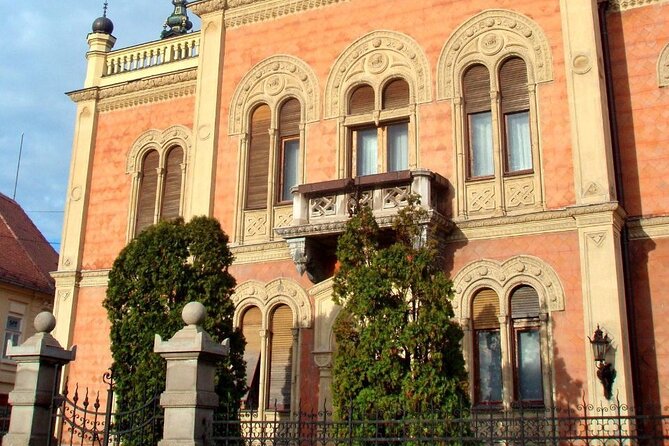
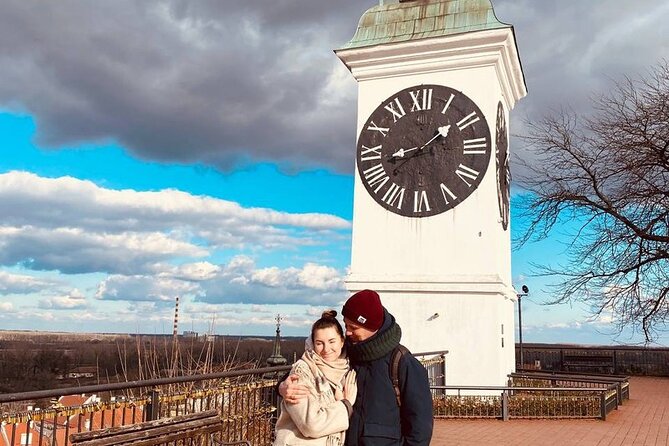
Petrovaradin Fortress appears across the Danube and is one of the city’s best-known symbols. The guide explains the fortress’s role in Novi Sad’s development while you view it from the opposite side of the river.
This is an important distinction: the tour gives you a fortress view and historical context, but it does not take you across the Danube for a fortress visit. If walking through Petrovaradin’s grounds is a must for you, plan extra time separately.
Still, the viewpoint fits well into a city-center walk. You get the broad connection between Novi Sad, the Danube, and the defensive stronghold without breaking the route into a separate excursion. Bring a camera, but keep your attention on the explanation too. The point is not only the view, but why the fortress mattered.
The Danube embankment and the Novi Sad massacre
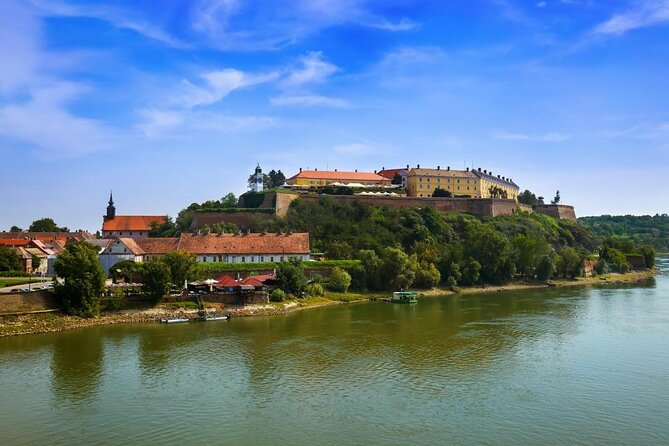
The walk reaches the river embankment and the Monument to the Victims of Fascism. This is one of the tour’s most serious stops. The monument relates to the Novi Sad massacre of 1942, and the guide discusses those events, Serbia’s role in World War II, and the creation of Socialist Yugoslavia.
The stop is listed at about five minutes, but the subject carries more weight than that time suggests. You may want to ask for clarification or pause afterward. This is a benefit of having a private guide, since the discussion can follow your interest instead of moving with a large group.
The route also passes the exterior of the City Assembly. The building is described as especially impressive given the decade in which it was built. Here, the focus turns to how Novi Sad is governed and why northern Serbia has such importance within the country.
That combination of monument and civic building gives the walk a strong political thread. You are not only looking at old architecture. You are also considering how the city remembers violence, organizes public life, and fits into Serbia as a whole.
Matica Srpska Gallery, the synagogue, and the National Theatre
The Gallery of Matica Srpska is presented as the leading gallery of Serbian art in the country. It shares the square with galleries of modern and contemporary art, making this a useful stop for anyone interested in painting and cultural institutions.
The gallery is treated as an exterior stop, and no entry is included. If art is central to your visit, note the name and return later for more time inside. The walking tour gives you the context, not a full gallery program.
The Novi Sad Synagogue is one of the most important sights on the route. It is no longer active as a synagogue and now serves as a concert hall. Its architect, Lipót Baumhorn, helped shape the building, which reflects the former importance of Novi Sad’s Jewish community.
The final stop is the Serbian National Theatre. The guide discusses the role of theatre in national identity, answers questions, and offers recommendations. The tour then returns to Trg slobode.
Ending at the original meeting point is convenient. You can continue to lunch, revisit a church or gallery, or make your way to the bus or train station without having to locate a new finish point.
Pace, group size, and getting there from Belgrade
The experience is described as a three-hour private walking tour, with an approximate duration of two hours and thirty minutes. The timetable includes many short stops, often five or ten minutes, plus a fifteen-minute fortress explanation. That tells you what to expect: steady movement, frequent commentary, and a wide range of sights rather than long periods at one place.
You need a moderate level of physical fitness. The tour is on foot and includes city streets, so comfortable shoes are sensible. The information does not promise seating at every stop, and only the café pause is specifically set aside for rest.
The tour does not provide private transportation. Novi Sad is easy to reach from Belgrade by bus or train, but you must arrange that journey yourself. Check the timing carefully because the walk begins at Trg slobode and ends there.
The private setup suits couples, families, and small groups who want to ask questions freely. Service animals are allowed, and the meeting area is near public transportation. Mobile tickets make the booking simple.
Cancellation is free up to 24 hours before the start time. Cancellations or changes made inside that period are not refunded or accepted. The experience requires good weather, so a weather cancellation brings either another date or a full refund.
Who should book this Novi Sad walk?
I would choose this tour if you want to understand why Novi Sad looks the way it does. The route brings together Serbian, Catholic, Orthodox, Jewish, imperial, commercial, artistic, and wartime stories in one compact circuit.
It is particularly suitable for:
- First-time visitors who want an overview before exploring alone
- Small private groups that value questions and an adjustable guiding style
- Architecture fans interested in Bauhaus, banks, mansions, churches, palaces, and Baumhorn’s synagogue
- Culture-focused visitors who want introductions to Matica Srpska, museums, galleries, and theatre
- History-minded visitors willing to engage with World War II and Socialist Yugoslavia
- Belgrade-based visitors who can arrange their own transport to Novi Sad
I would hesitate if you want a fortress interior visit, extended museum time, or a food-focused market experience. Those are not the main purpose here. The route is also dense, so anyone who prefers a slow photographic stroll may find the pace quick.
Guide Vadim is the name connected with the experience, and his approach combines history, art, humor, and flexibility. That matters on a private walk with this many subjects. A guide who can adjust the discussion may help you get more from the route than a fixed script would.
Should you book it?
Book this Novi Sad walking tour if you want a well-priced private introduction and are happy to arrange your own way from Belgrade. Its strongest feature is the range of subjects covered in a short time, from the Name of Mary Church and Zmaj Jovina Street to the Danube memorials and the synagogue.
The tour is less suitable for anyone seeking long interior visits or a dedicated Petrovaradin Fortress excursion. For most first visits, though, it provides a clear map of the city, serious historical context, a coffee break, and plenty of ideas for what to explore next.
FAQ
Where does the walking tour start?
The tour starts at Trg slobode in Novi Sad, Serbia.
Where does the tour finish?
The tour ends back at the original meeting point.
How long does the tour last?
The approximate duration is two hours and thirty minutes, although it is marketed as a three-hour private walking tour.
How much does the tour cost?
The price is $57.82 per group of up to four people.
Is transportation from Belgrade included?
No. Private transportation is not included. You arrange your own bus or train journey from Belgrade to Novi Sad.
Is this a private tour?
Yes. Only your group participates, with up to four people included in the group price.
Is coffee included?
Yes. Coffee or lemonade is included during a short break on Dunavska Street.
Are church interiors included?
The interiors of the Name of Mary Church and Saborna crkva may be visited optionally. The tour information does not list admission fees.
Does the tour enter the museums and galleries?
The museums and galleries are included as sightseeing stops, but the listed route describes the Gallery of Matica Srpska and other cultural sites mainly from the exterior. Museum admission is not included.
What happens if the weather is poor?
The experience requires good weather. If it is canceled because of poor weather, you will be offered another date or a full refund.
More 3-Hour Experiences in Belgrade
- 3-Hour Belgrade Zemun Neighborhood Tour
★ 5.0 · 8 reviews
Just added around Belgrade
- Private Walking Tour of Belgrade and Old Zemun★ 5.0 · 3 reviews
- From Belgrade: Danube Day Trip with Wine and Brandy Tasting★ 5.0 · 3 reviews
- Feel Belgrade Welcome tour★ 4.5 · 3 reviews
- Private Half Day Serbia Tour Novi Sad and Petrovaradin Fortress★ 5.0 · 3 reviews
- Private Wine Tasting by Party in Belgrade★ 5.0 · 3 reviews
- Belgrade: The White Emigration in Serbia in the Wake of the Russian Revolution★ 5.0 · 3 reviews
- Zica and Studenica monastery From Belgrade★ 5.0 · 3 reviews
- E-Scooter Serbian Food Tour★ 5.0 · 3 reviews
Novi Sad & Fruška Gora Day Trips, compared.
Northern Serbia: Sremski Karlovci and Novi Sad Full-Day Tour from Belgrade
Read our review →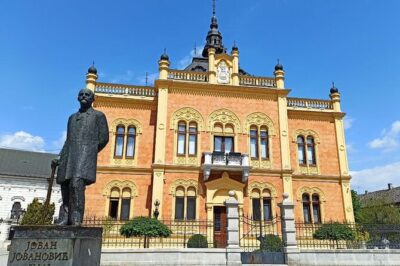
Private Day Tour to Fruska Gora Monasteries, Sremski Karlovci and Novi Sad
Read our review →
Private Novi Sad, Titanic wine tasting and Farmer’s House
Read our review →
Novi Sad and Fruska Gora wine region Full-Day Tour from Belgrade
Read our review →
Private Day Tour Discovering Hidden Gems of Novi Sad in Luxury
Read our review →
Northern Serbia: Sremski Karlovci, Petrovaradin Fort & Novi Sad
Read our review →Browse the lists this tour appears in