
Reviewed · CITY TOURS
Belgrade Private City Tour
Belgrade’s most useful introduction may be its mix of grand state buildings, Orthodox faith, royal power, and Yugoslav memory. This private tour connects all four in about four to five hours, moving by car between far-flung sights and walking through the old center.
I like the private format, which lets you ask questions and adjust the pace. I also like the range of stops: Tito’s House of Flowers gives you modern political history, while the Church of Saint Sava and Knez Mihailova Street show Belgrade’s spiritual and everyday sides.
The main consideration is time. You cover a lot of ground, but several visits are brief, and the Museum of Yugoslavia is closed on Mondays. At $137.57 per person, the tour makes the most sense for couples, families, or small groups who value a dedicated guide and door-to-door transport.
Key points to know before booking
- Tito’s House of Flowers adds unusual depth: You hear about Tito’s popularity, political control, and the contradictions of life in Yugoslavia.
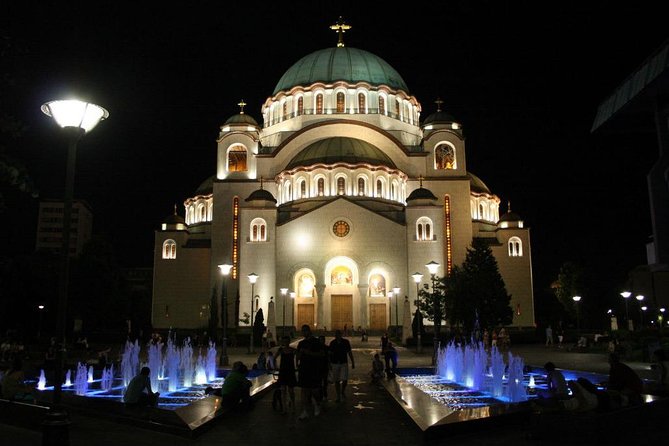
- The Church of Saint Sava is the visual centerpiece: Allow time to take in its immense interior and learn why Saint Sava matters to Serbian identity.
- You see Belgrade by car and on foot: Historic avenues, Dedinje, Republic Square, and Knez Mihailova Street all fit into one compact outing.
- The tour is genuinely private: Only your own group participates, with a driver-guide and hotel, apartment, or port pickup available.
- The ending has local character: The route finishes near St. Michael’s Cathedral and Kafana ?, one of Belgrade’s oldest restaurants.
- Plan around the museum schedule: The Museum of Yugoslavia is open Wednesday through Sunday and costs €7 per person.
Why this private Belgrade route works
Belgrade is not a city that reveals itself through one square or one famous monument. Its important sights are spread across the center, Dedinje, Vračar, and the area around the Sava and Danube rivers. Walking the whole route would take far longer than this tour allows.
That is where the private vehicle helps. You can see Pionirski Park, the National Assembly, the royal palaces, embassy-lined streets, Dedinje villas, and the White Palace without spending your limited sightseeing time on long urban walks. You then leave the vehicle for the places where walking matters most.
The English-speaking guide is the heart of the experience. Guides named in past bookings include Andrija, Andrew, Vladica, Vlada, Bojan, Dana, Andrej, and others. The strongest feedback centers on clear English, careful attention, and an ability to answer detailed questions about Serbia and Belgrade.
Since this is a private activity, your guide can spend more time on the subjects that interest you. You might focus on royal dynasties, Orthodox Christianity, Tito, twentieth-century politics, architecture, or daily life in modern Serbia. Families can also request a slower pace. One past booking included a two-year-old child and an adult with limited mobility, with the guide adjusting the pace and arrangements.
A few more days out around Belgrade to weigh up
- Northern Serbia: Sremski Karlovci and Novi Sad Full-Day Tour from Belgrade
★ 5.0 · 425 reviews - Day Trip from Belgrade: Gems of Eastern Serbia
★ 5.0 · 424 reviews - Belgrade Nightlife Bar Pub Club Crawl with Drinks
★ 5.0 · 277 reviews
Pionirski Park and the political center
The tour begins at 10 a.m., normally with pickup from your hotel, apartment, Airbnb, or Belgrade port. The first stop is Pionirski Park, a small green space surrounded by some of the capital’s most important institutions.
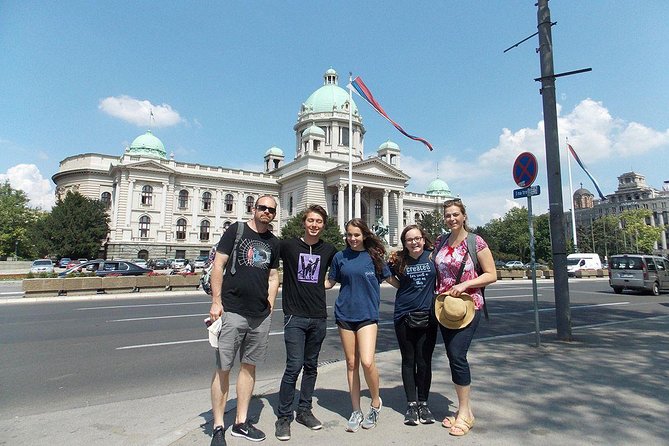
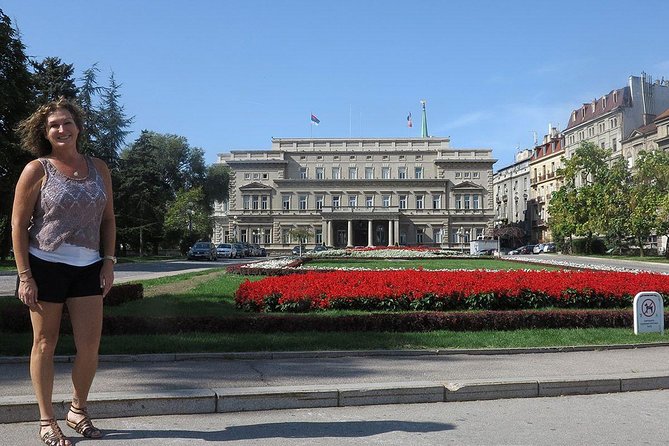
From here, you can see the National Assembly, the Old Palace, and the New Palace. These buildings are not just decorative backdrops. They help explain Belgrade as a capital shaped by monarchy, government, diplomatic pressure, and repeated political change.
I like this opening because it gives you a mental map before the tour turns to individual sights. Your guide can explain how the central district fits together and why Belgrade often feels like several historical periods occupying the same streets.
The stop lasts about 15 minutes and has no admission charge. It is mostly an orientation stop, so do not expect a long interior visit. Its value is in the explanation and the surrounding view.
Driving through Prince Miloš Street and Dedinje
After Pionirski Park, the route continues along Prince Miloš Obrenović Street. This is one of Belgrade’s important historic avenues, lined with ministries, embassies, and formal buildings connected with the city’s political role.
This section is viewed from the vehicle, which is useful for covering ground but gives you less time for photographs. If a particular building catches your eye, ask your guide about it. A private tour gives you a better chance of pausing for a question than a large coach trip.
The drive continues into Dedinje, an exclusive residential district known for refined villas and diplomatic residences. The atmosphere shifts quickly from central government buildings to quieter streets and large homes.
You also stop outside the White Palace. The visit is from the exterior, with your guide explaining the complex’s place in Serbia’s royal story. It is important to set expectations here: this is a short contextual stop, not an extended palace tour.
Still, the drive is useful. Without it, you would have to choose between central Belgrade and the Tito memorial area. The private car lets you see both.
House of Flowers and Tito’s complicated legacy
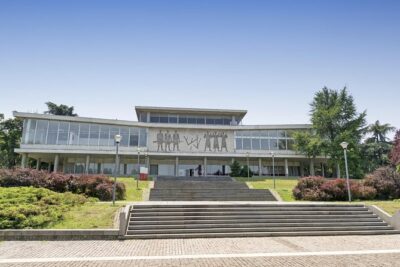
The Museum of Yugoslavia is the tour’s most distinctive stop. It sits in Dedinje, the former home area of Josip Broz Tito, who led Yugoslavia for decades. The House of Flowers contains Tito’s grave and serves as a memorial to a political figure who remains difficult to sum up.
Your guide’s role matters greatly here. Tito was not simply remembered as a dictator or a beloved statesman. His rule involved personal authority, political repression, international influence, and a system that many people associated with stability, social mobility, and a distinct Yugoslav identity.
The most useful explanations connect public memory with everyday life. You can ask how a leader could be both tightly controlling and widely admired, or how Yugoslavia differed from the Soviet bloc and from Western Europe. The guides highlighted in past bookings, including Vlad and Andrija, were especially appreciated for handling these questions with care and candor.
The visit lasts about 45 minutes. That is enough for a focused introduction, though not enough for every display in detail. If Tito and Yugoslav history are your main interests, you may want to arrange extra time at the museum separately.
The museum is closed on Mondays and currently operates Wednesday through Sunday. Admission is not included and costs €7 per person. Check the operating schedule before choosing your tour day, since this is the one major stop that cannot simply be substituted with an equivalent outdoor sight.
Same city, a completely different day out:
- Taxi to/from Belgrade Airport to/from Belgrade City Center
★ 5.0 · 241 reviews - Belgrade Big Tour: Top Attractions and Belgrade Neighborhoods
★ 5.0 · 232 reviews - From Belgrade: Golubac Fortress & Iron Gate Danube Gorge
★ 4.8 · 185 reviews - Along the Danube: Golubac Fortress & Iron Gate Gorge day trip from Belgrade
★ 4.5 · 185 reviews
Church of Saint Sava in Vračar
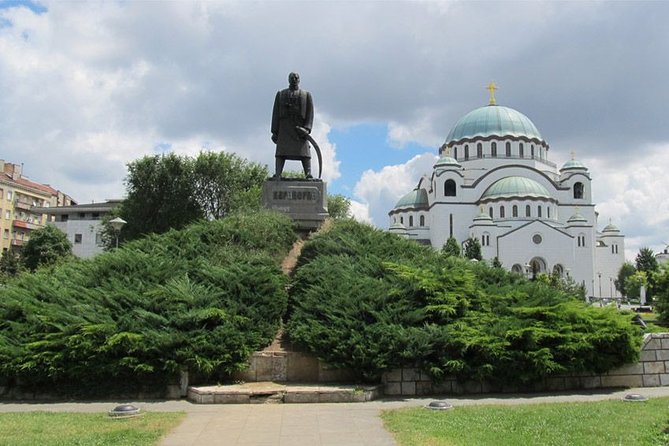
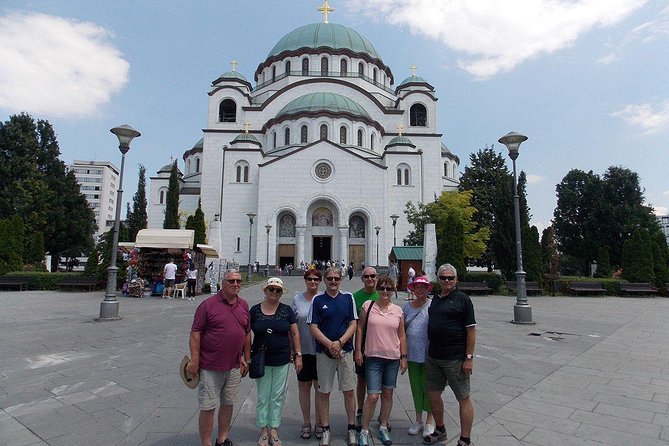
From Dedinje, the tour moves to the Church of Saint Sava, one of the largest Orthodox churches in the world. Its scale is immediately striking, but the guide’s explanation gives the building meaning beyond its size.
Saint Sava is the most important figure in the Serbian Orthodox Church. Learning about his role helps you understand why this church carries such weight in Serbian culture. The building is not only a place of worship. It also reflects national identity and the long importance of Orthodox Christianity in Serbian public life.
The interior is broad, bright, and heavily decorated, with a strong sense of scale. You get about 45 minutes here, enough to look upward, take photographs where permitted, and listen to the explanation without rushing through in a few minutes.
I would place this stop among the tour’s best photo opportunities, but the point is not only visual. Ask your guide to connect the church to Serbian culture and national memory. That context is what turns an impressive building into a meaningful stop.
Admission is listed as free. Wear comfortable shoes, since the tour later includes a substantial walk through the center.
Republic Square and Knez Mihailova Street
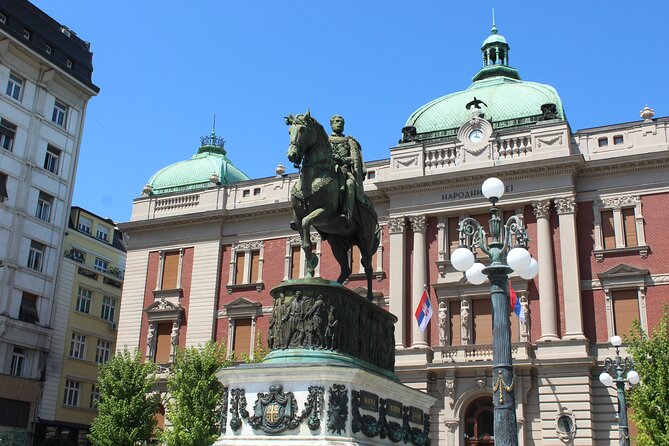
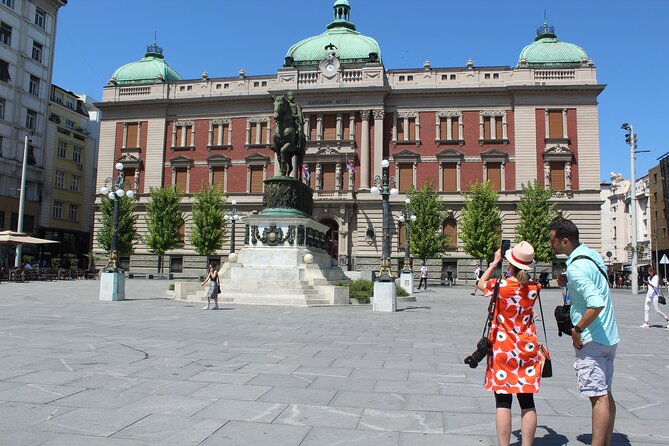
Republic Square is Belgrade’s main meeting point and one of the best places to see the city’s cultural center in one glance. The National Theatre, National Museum, and monument to Prince Mihailo Obrenović frame the square.
Your guide can explain how the square functions in daily life as well as its place in the city’s past. This is a good transition from formal monuments to ordinary Belgrade, since people gather here before heading into the pedestrian center.
From Republic Square, you walk along Knez Mihailova Street, the city’s main shopping avenue and pedestrian zone. The street mixes elegant architecture, shops, cafés, and the steady movement of people crossing the center.
This is not a guided shopping trip, and the schedule does not promise free time for browsing. Instead, you stroll with the guide while hearing stories, legends, and small details about the street. If you want to stop for a shop or take extra photographs, say so. The private setup gives you more control than a fixed group departure.
The walk lasts around 45 minutes. It is one of the most relaxed sections of the tour and gives you a feel for how Belgrade’s historic core is used today.
King Peter Street, St. Michael’s Cathedral, and Kafana ?
The final stop brings you to King Peter Street, one of Belgrade’s oldest and most atmospheric streets. This area feels more intimate than Republic Square, with older buildings and a quieter sense of place.
Nearby are St. Michael’s Cathedral, formally the Cathedral Church of St. Michael the Archangel, and Kafana ?. The cathedral is an important spiritual landmark, while Kafana ? is known as the city’s oldest restaurant.
The tour ends with about 30 minutes inside the restaurant, over a drink or light snack. Food and drinks are not included, so budget separately for anything you order. That small expense can be worthwhile because it gives the tour a human ending rather than closing with a final monument and a quick goodbye.
A kafana is part of Serbia’s social tradition, and this stop lets you experience that tradition in a historic setting. The exact drink or snack is up to you, and you should not expect a full meal as part of the tour.
What the $137.57 price buys you
At $137.57 per person, this is not the cheapest way to see Belgrade. The price needs to be judged against what is included: a private driver-guide, private vehicle transport during the route, pickup and drop-off, bottled water, and a flexible itinerary.
The value is strongest if you are short on time, arriving by cruise ship, traveling with family, or prefer not to arrange several separate taxi rides. Belgrade’s sights are spread out, so transport saves both time and planning effort.
The value is weaker if you are already comfortable using local transport and mainly want to walk the center. You could visit Republic Square, Knez Mihailova Street, and the cathedral area independently. The tour earns its price through the outlying stops, historical explanation, and private attention.
Remember to add the €7 Museum of Yugoslavia admission per person, plus any drink or snack at Kafana ?. Group discounts may be available, which could improve the cost for larger private parties.
Timing, pace, and practical details
The advertised duration is four to five hours. That includes driving, short exterior stops, museum time, the church visit, the old-town walk, and the restaurant finish. It is a full half-day rather than a quick panoramic drive.
Most people can take part, but the route includes walking at Knez Mihailova Street and around the old center. If mobility is a concern, tell the provider in advance. A past family booking worked well because the guide adjusted the pace for an adult who walked with difficulty.
The tour is offered in English and uses a mobile ticket. Pickup is available from listed hotels and from Belgrade port, where cruise ships dock. If you are staying in an Airbnb or private apartment, provide the exact location when booking.
The normal start time is 10 a.m. Confirmation is normally sent at booking, though bookings made within 20 hours of departure are confirmed as soon as possible, subject to availability. Free cancellation is available up to 24 hours before the start time. Changes or cancellations inside that window are not accepted for a refund.
Weather can affect comfort, especially during the outdoor parts. One cold and windy outing still covered the planned sights, but spring or summer should make the park, palace exteriors, and walking sections more pleasant.
Who should choose this tour
I would choose this tour if you have only one day in Belgrade and want a guide to explain the city rather than simply point at buildings. It is also a strong fit if Tito and Yugoslavia are high on your list, since the House of Flowers receives a dedicated stop.
Families and small groups should appreciate the private format. You can ask for pauses, adjust the pace, and shape the conversation around your interests. The tour also works well for cruise passengers because port pickup and drop-off are available.
I would think twice if you want long museum visits, extensive shopping time, or a slow architectural walk. The route is broad and efficient, so each attraction receives an introduction rather than exhaustive study.
Should you book the Belgrade Private City Tour?
Book it if you want a well-organized first look at Belgrade with personal attention, especially if your schedule is tight. The combination of royal landmarks, Dedinje, Tito’s memorial, Saint Sava, Republic Square, and the old center gives you a strong understanding of the capital’s competing identities.
Skip it if you prefer to explore entirely on foot or plan to spend a full day at the Museum of Yugoslavia. For most first-time visitors, though, the private vehicle and guide make the $137.57 cost easier to justify. Ask for extra time at the subjects you care about, and confirm the museum is open before you go.
FAQ
How long does the Belgrade Private City Tour last?
The tour lasts approximately four to five hours.
What time does the tour start?
The listed start time is 10 a.m.
Is hotel pickup included?
Yes. Hotel pickup and drop-off are included. Pickup can also be arranged from an Airbnb, apartment, or Belgrade port if you provide the location.
Is this a private tour?
Yes. Only your own group participates in the activity.
Is the tour offered in English?
Yes. The tour is offered in English.
Is admission to the Museum of Yugoslavia included?
No. Admission costs €7 per person and is paid separately.
When is the Museum of Yugoslavia closed?
The museum is currently open Wednesday through Sunday and closed on Mondays.
Can I cancel for a full refund?
Yes, if you cancel at least 24 hours before the experience start time. Cancellations or changes made less than 24 hours in advance are not refunded.
Just added around Belgrade
- Private Walking Tour of Belgrade and Old Zemun★ 5.0 · 3 reviews
- Feel Belgrade Welcome tour★ 4.5 · 3 reviews
- From Belgrade: Danube Day Trip with Wine and Brandy Tasting★ 5.0 · 3 reviews
- Private Half Day Serbia Tour Novi Sad and Petrovaradin Fortress★ 5.0 · 3 reviews
- Belgrade: The White Emigration in Serbia in the Wake of the Russian Revolution★ 5.0 · 3 reviews
- Private Wine Tasting by Party in Belgrade★ 5.0 · 3 reviews
- Zica and Studenica monastery From Belgrade★ 5.0 · 3 reviews
- Belgrade Fashion and Design Tour – Discover Local Designers★ 5.0 · 4 reviews
City Tours, compared.
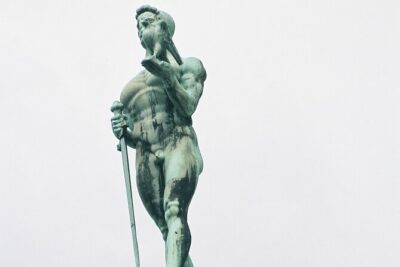
Half-Day Sightseeing and Walking Tour of Belgrade City
Read our review →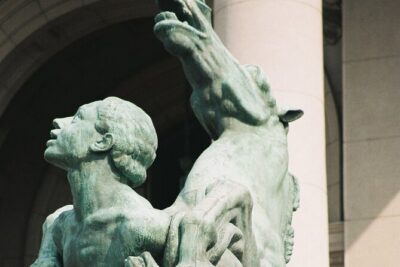
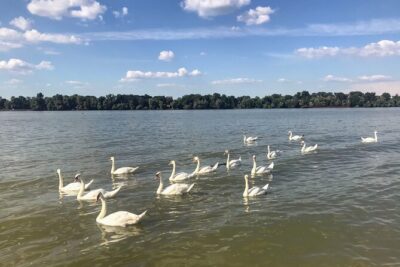
Your Own Belgrade: Unexpected Treasures of the City
Read our review →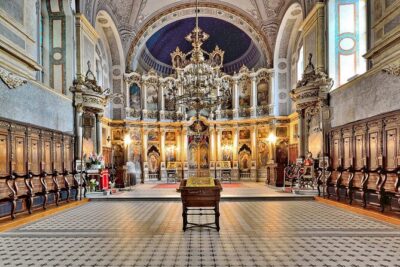
Belgrade Private City Tour – Metropolis Between East and West
Read our review →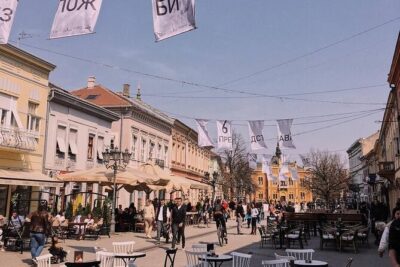
Browse the lists this tour appears in