
Reviewed · BELGRADE WALKING & SIGHTSEEING TOURS
Belgrade Sightseeing Half-Day Trip Old and New Belgrade
Belgrade’s story comes into focus when you see its Roman fortress, socialist apartment blocks, royal avenues, football grounds, and Orthodox churches in one short outing. This tour moves from the Danube and Sava confluence to New Belgrade’s concrete towers, then through Dedinje and the grand Temple of Saint Sava.
I like the private format, since your guide can adjust the pace, answer questions, and help if someone in your group has a bad knee or limited stamina. I also like the wide range of sights: the fortress and St. Sava Temple give you the city’s historic and religious heart, while New Belgrade and Tito’s memorial explain its 20th-century side.
The main catch is time. Three hours is enough for a useful first look, but not enough to explore every stop properly. One person found the tour closer to two hours, and several noted that some places are viewed from the vehicle rather than visited on foot.
Key points to know before booking
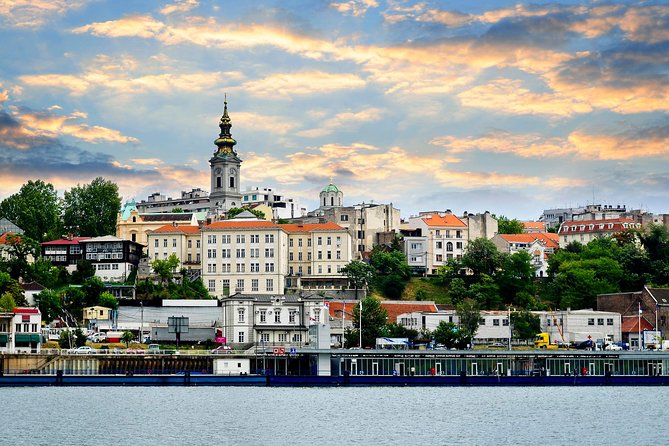
- Kalemegdan starts the tour with the best river view: Walk through Belgrade Fortress, old gates, Orthodox chapels, and the Upper Town above the meeting point of the Sava and Danube.
- New Belgrade adds a sharp change of mood: See socialist-era concrete buildings, the Genex Tower, Sava Center, Belgrade Arena, and newer business architecture.
- Dedinje brings royal and political history: Pass mansions, Red Star and Partizan stadiums, and the Museum of History of Yugoslavia with Tito’s House of Flowers.
- St. Sava Temple is the major interior stop: The vast Serbian Orthodox church is included, with its large dome, gilded cross, and decorated crypt.
- The private vehicle saves time: Pickup, fuel, parking, and hotel drop-off are included, with a sedan for one to three people or a minivan for four to seven.
- It suits a first day or short stay: It gives you a broad city overview before you decide where to return on your own.
A fast introduction to Belgrade’s many faces
This is not a slow walking tour of one district. It is a compact city circuit, using a vehicle to cover ground and short walks to explore the places that reward closer attention.
You begin at about 9:30 a.m. with pickup from your hotel, Airbnb, pension, or the Belgrade port. Free pickup applies within 5 kilometers of Republic Square. A location between 5 and 10 kilometers away costs an extra 10 EUR, and airport pickup costs 15 EUR.
The tour is private, so only your party takes part. That matters in Belgrade, where the most useful explanations often involve complicated changes of empire, monarchy, socialism, war, and modern Serbian life. You can ask your own questions instead of following a fixed script.
The English-speaking guides named in the tour information include Alexander, Aleksandar, Ivan, Stefan, Milosh, Vladimir, and Victor. Alexander is especially associated with detailed explanations, good communication, and care with older visitors or people who need shorter walks. Stefan has been praised for giving plenty of background without overloading the group, while Vladimir is comfortable discussing both history and local football and basketball.
The price is listed at $150.85 per person. That is not the cheapest way to see Belgrade, especially for a solo visitor. But it includes a private guide, private transport, hotel pickup and drop-off, parking, fuel, bottled water, and entry to St. Sava Temple. For two or more people, the cost becomes easier to justify because you are buying a private vehicle and guide rather than separate seats on a large bus.
More ways to see Belgrade on foot:
- Taxi to/from Belgrade Airport to/from Belgrade City Center
★ 5.0 · 241 reviews - Belgrade: Sightseeing Boat Cruise with Drinks
★ 5.0 · 103 reviews - Belgrade sightseeing by car
★ 5.0 · 40 reviews
Kalemegdan and Belgrade Fortress: Roman foundations and river views
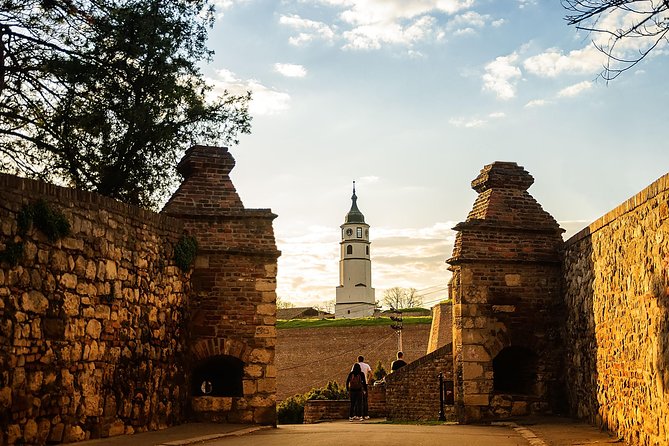
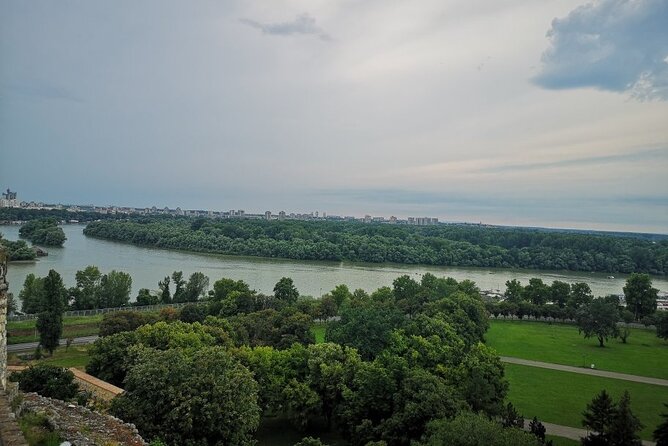
The first stop is the strongest part of the tour for many first-time visitors. Kalemegdan is Belgrade’s oldest and largest central park, and the fortress sits at its edge above the Sava and Danube.
The walk begins near Leopold’s Gate. From there, you pass remains linked to Singidunum, the Roman military settlement that occupied this strategic point. Later walls were built over earlier defenses, so the site reads like a history book made of stone.
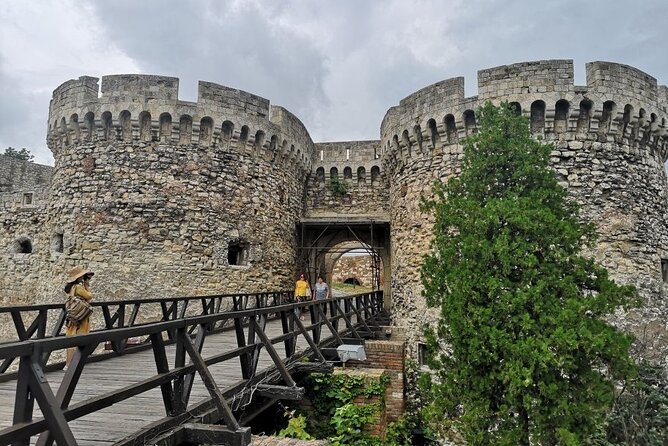
You see Zindan Gate, Despot’s Gate, and Jakšića Tower, all connected with the medieval fortress. The route also includes the Chapel of Saint Petka and Ružica Church, sometimes called the Church of the Virgin Mary. These small Orthodox churches offer a quieter contrast to the broad defensive walls and open park.
In the Upper Town, the payoff is the view. The Sava and Danube meet below, and the position explains why Belgrade has mattered to rulers and armies for centuries. Your guide can connect the geography to the city’s long military role without requiring you to memorize a parade of dates.
This section involves walking over fortress paths and through historic gates. The tour data calls for moderate physical fitness, though the private setup allows the guide to adapt the route. If you have a knee problem or tire easily, tell the guide at pickup. Alexander and Vladimir have adjusted the pace for people with mobility concerns, and the vehicle reduces the amount of walking between districts.
Pobednik and the Upper Town’s military symbols
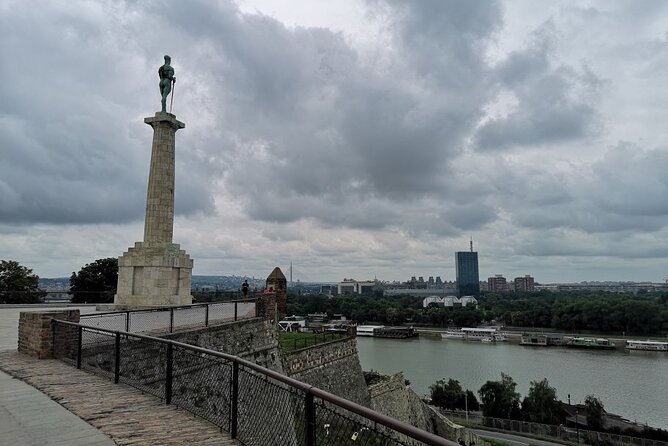
The walk continues to Pobednik, the Victor monument by sculptor Ivan Meštrović. It is one of Belgrade’s best-known symbols, positioned with a broad view toward the rivers and the northern side of the city.
Around it, you pass the Roman Well, King’s Gate, the Sava Promenade, the Damat Ali Pasha Tomb, and the Clock Gate and Clock Tower. The Military Museum adds context to the fortress, though this short visit is mainly about seeing the site and hearing its story rather than spending time inside museum galleries.
You leave through Istanbul Gate, also known as Stambol Gate, and return through Kalemegdan Park. Look for Meštrović’s Monument to Gratitude to France and the busts of Serbian writers and public figures.
This is an excellent place for photographs, but it is worth keeping expectations realistic. The tour includes many named features, yet the schedule allows only about half an hour at each fortress section. You will see the main points and get the orientation, but you will not have time to study every wall, church, or museum display.
After the fortress, you return to the vehicle. That change is important: Belgrade’s districts are spread out, and driving lets you cover areas that would be impractical on a three-hour walk.
New Belgrade: concrete utopia beside modern offices
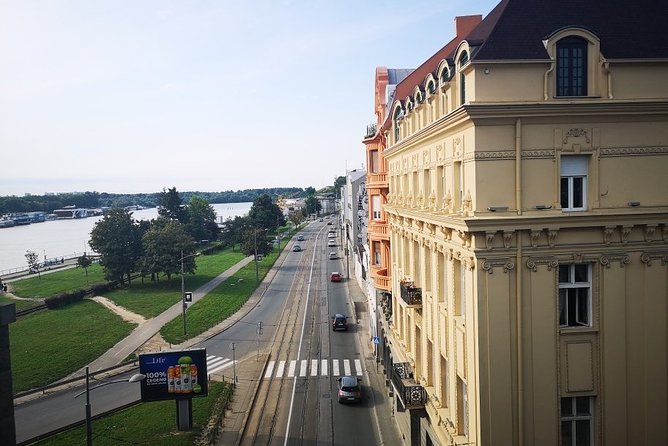
Across the river, New Belgrade shows you a very different city. It was built after World War II during Yugoslavia’s socialist period, with wide spaces and large concrete structures designed for a new political and social order.
The route passes the former Central Committee of the Communist Party and the Federal Executive Council, now known as the Palace of Federation. These buildings carry the scale and seriousness of the former Yugoslav state.
You also see the Genex Tower, or Western Gate of Belgrade, one of the city’s most recognizable examples of brutalist architecture. Its paired towers and elevated structure make it easy to spot, even if concrete modernism is not usually on your sightseeing list.
Sava Center is another major stop from the vehicle. It was built as one of the largest congress halls in this part of Europe, and New York’s Museum of Modern Art once gave New Belgrade’s architecture a special exhibition called Toward a Concrete Utopia. That detail helps explain why this district interests architecture fans far beyond Serbia.
The drive also passes the Belgrade Arena and the restaurant Novak, owned by Novak Đoković’s family. The arena is one of the region’s main sports venues, and the Novak connection offers a glimpse of the city’s current cultural life after the tour’s strong focus on history and politics.
You should think of this portion as a moving architectural tour. The buildings are seen from the vehicle, so you will not have much time to inspect details or enter them. Still, it gives you a useful contrast with the old fortress and helps explain Belgrade’s 20th-century identity.
A few more days out around Belgrade to weigh up
- Half-Day Sightseeing and Walking Tour of Belgrade City
★ 5.0 · 37 reviews - “Golden Standard” Private Half-Day Sightseeing Tour of Belgrade
★ 5.0 · 5 reviews
Dedinje, football rivalry, and Tito’s memorial
After crossing the Gazela Bridge, the vehicle heads toward Dedinje, one of Belgrade’s most luxurious residential areas. The neighborhood spreads across Topčider Hill, where large homes and greenery create a quieter setting than the central streets.
Your guide discusses the history of some properties and the events connected with them during Serbia’s turbulent 20th century. This is one of the places where a private guide adds real value, since the houses can look like attractive private residences unless you know who lived there and why they mattered.
Football fans get a local lesson here. Rajko Mitić Stadium is home to Red Star Belgrade, while Partizan Belgrade’s stadium sits across a small hill. Their rivalry has lasted more than 70 years. Red Star’s 1991 European Cup victory also gives the rivalry an important place in the history of football in Eastern and Southern Europe.
The route then includes the Museum of History of Yugoslavia and House of Flowers, the resting place of Josip Broz Tito, leader of the second Yugoslavia. The supplied tour details do not promise an extended museum visit, so treat this as an important exterior or passing stop unless your guide confirms otherwise.
For anyone interested in Yugoslavia, Dedinje is one of the most useful parts of the morning. It connects private wealth, political power, national sport, and Tito’s state in a small area. If you only want medieval sights, this section may feel less compelling, but it is vital for understanding why Belgrade cannot be reduced to its fortress and churches.
St. Sava Temple: Belgrade’s great interior visit
From Dedinje, you continue to Vračar and the Temple of Saint Sava. This is the tour’s biggest architectural moment and the main place where you step inside for a proper visit.
The church is one of the largest Orthodox churches in the world. Its dome rises 70 meters, and the gilded central cross adds another 12 meters, bringing the total height to 82 meters. The floor area is about 3,500 square meters, with another 1,500 square meters in three upper galleries.
The temple was begun in the 1930s on the site where Ottoman forces burned the relics of Saint Sava, who founded and became the first archbishop of the independent Serbian Orthodox Church. That background gives the building a meaning beyond its size. For many Serbians, Saint Sava is one of the central figures in national and church history.
The Serbian-Byzantine design is impressive from the outside, but the interior gives you a better sense of scale. Beneath the church are vaults and a decorated crypt dedicated to Saint Sava. Entry is included in the tour price, which is useful because this is the one major interior attraction specifically covered.
You get about 30 minutes here. That is enough to see the main spaces and hear the essential story, though anyone who wants to study the decoration slowly may want to return independently. The temple can also be a welcome pause from the vehicle and the open fortress paths, especially on a hot day.
Several guides have been praised for being considerate in difficult weather, encouraging water breaks, and choosing shaded places when possible. A bottle of water is supplied for each person, but you should still dress for the conditions and bring anything else you need.
Royal Belgrade from Nemanjina Street to Republic Square
After the temple, the route returns to the vehicle and passes through Slavija Square into Nemanjina Street. This street gathers many state institutions, including the Government Building, Ministry of Foreign Affairs, General Staff of the Serbian Army, Ministry of Railways, Ministry of Finance, and State Court.
The buildings reflect prewar architecture and give you a quick lesson in how central Belgrade presents its government district. Again, this is a drive-by section rather than a series of interior visits, but the guide’s explanation helps you read the façades as part of the city’s political story.
Kralja Milana Street brings you past the Old and New Royal Palaces. At Nikola Pasić Square, you see a monument to the first prime minister of the Kingdom of Yugoslavia. The guide also explains the two dynasties that ruled Serbia in the 19th and 20th centuries.
At Terazije Square, note the 19th-century white stone fountain and the Moskva Hotel, one of Belgrade’s most elegant historic buildings. The tour ends at Republic Square, the capital’s central meeting place and home to the National Museum and National Theatre.
The final 15 minutes focus on the square and the statue of Prince Mihailo, an important figure in modern Serbian history. Ending here is practical. Republic Square is central, so you can continue on foot to nearby sights, find lunch, or use the tour’s drop-off service if arranged.
What the private setup is really worth
The vehicle is not just a comfort feature. It is the reason this route can include the fortress, New Belgrade, Dedinje, Vračar, the government district, and Republic Square in one morning.
For one to three people, transport is by private sedan. Groups of four to seven use an air-conditioned minivan. Fuel and parking are included, and pickup and drop-off are free for addresses within 5 kilometers of Republic Square.
The private format also lets the guide respond to your interests. One guest had the route adjusted around a special interest, and another found the guide particularly helpful with a family that included children aged seven and ten. If you care about football, Yugoslavia, architecture, religion, royal history, or recent Serbian politics, say so early.
The tradeoff is that you sacrifice depth for coverage. You will see more of Belgrade than on a short walking tour, but some sights pass by the window. At $150.85 per person, I would book it for a couple, family, or small group that values time and a personal guide. I would think twice as a solo visitor unless you have a tight schedule or a layover.
The tour is frequently booked well ahead, with an average booking lead time of 51 days. That does not mean you must reserve that early, but it is sensible to arrange it before a busy visit, especially if you need a particular morning.
Who should book this Belgrade tour?
This is a strong choice if you are visiting Belgrade for the first time and want a clear overview before exploring on your own. It is also well suited to a short stay, a cruise stop, or a layover. One person with an overnight arrival and an afternoon flight found the half-day format a practical way to see the city without wasting the limited window.
Families and mixed-age groups should also consider it. You avoid long transfers on foot, and the guide can make the walking sections manageable. The private setup is especially useful when one person needs a slower pace.
Architecture fans will appreciate New Belgrade’s brutalist buildings, while history fans get a broad sweep from Roman Singidunum to Tito and modern Serbia. Sports followers get a quick but memorable look at the Red Star and Partizan rivalry.
You should choose another type of tour if you want long museum visits, extensive shopping time, or a slow photographic walk. The route is designed to show you the shape of Belgrade, not to give every landmark an hour.
Free cancellation is available up to 24 hours before the start time. Changes or cancellations inside that window are not accepted for a refund. Child pricing applies only when a child shares with two paying adults, and service animals are allowed.
Should you book it?
Book this tour if you want a personal, time-efficient introduction to Belgrade, especially if your stay is short. The fortress, river view, St. Sava Temple, and New Belgrade provide a useful first framework, while the guide fills in the difficult political and cultural context.
The best reason to choose it is the breadth of the route combined with a private guide. The main reason to hesitate is the pace. You will get a city-wide snapshot, not a leisurely inspection of each site.
If you book, ask the guide to confirm the walking pace, how much time you can spend inside St. Sava Temple, and whether the Dedinje and Tito stops are viewing stops or longer visits. With those expectations clear, this is a sensible first morning in Belgrade and a good way to decide where you want to return later.
FAQ
How long does the Belgrade sightseeing tour last?
The tour lasts approximately three hours, beginning at about 9:30 a.m.
Is this a private tour?
Yes. Only your group participates, with transport by private sedan for one to three people or an air-conditioned minivan for four to seven people.
What does the tour include?
It includes hotel pickup and drop-off, transport, an English-speaking professional guide, fuel, parking, a bottle of water per person, and entrance to St. Sava Temple.
Where can the tour pick me up for free?
Free pickup is available from any hotel, Airbnb, or pension within 5 kilometers of Republic Square, as well as from Belgrade port.
Is airport pickup available?
Yes. Airport pickup is available for a 15 EUR supplement.
Does the tour visit Belgrade Fortress?
Yes. You walk through Kalemegdan Park and Belgrade Fortress, including historic gates, fortress walls, two Orthodox churches, the Upper Town, and the Pobednik monument.
Will I visit New Belgrade and Dedinje?
Yes. The route passes New Belgrade’s major socialist and modern buildings, then continues through Dedinje, with views of the stadiums, mansions, and the Museum of History of Yugoslavia and House of Flowers.
What is the cancellation policy?
You can cancel up to 24 hours before the start time for a full refund. Cancellations or changes made less than 24 hours before the tour are not accepted for a refund.
More 1-Day Tours in Belgrade
- Day Trip from Belgrade: Gems of Eastern Serbia
★ 5.0 · 424 reviews - Along the Danube: Golubac Fortress & Iron Gate Gorge day trip from Belgrade
★ 4.5 · 185 reviews - Šargan Eight Railway, Wooden Town & House on Drina river day trip from Belgrade
★ 5.0 · 107 reviews - Full-Day Trip from Belgrade: Tara National Park & The Drina River Valley
★ 5.0 · 87 reviews
Just added around Belgrade
- Private Walking Tour of Belgrade and Old Zemun★ 5.0 · 3 reviews
- Feel Belgrade Welcome tour★ 4.5 · 3 reviews
- From Belgrade: Danube Day Trip with Wine and Brandy Tasting★ 5.0 · 3 reviews
- Private Half Day Serbia Tour Novi Sad and Petrovaradin Fortress★ 5.0 · 3 reviews
- Private Wine Tasting by Party in Belgrade★ 5.0 · 3 reviews
- Belgrade: The White Emigration in Serbia in the Wake of the Russian Revolution★ 5.0 · 3 reviews
- Zica and Studenica monastery From Belgrade★ 5.0 · 3 reviews
- E-Scooter Serbian Food Tour★ 5.0 · 3 reviews
Belgrade Walking & Sightseeing Tours, compared.
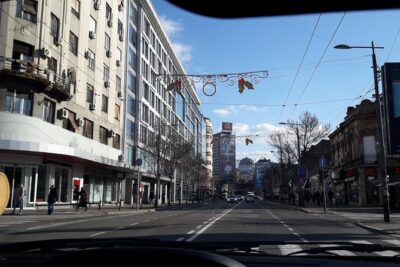
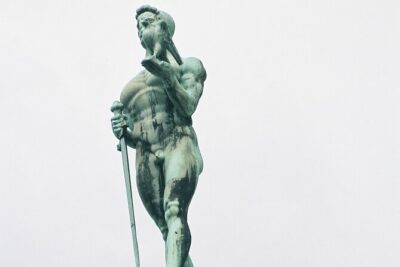
Half-Day Sightseeing and Walking Tour of Belgrade City
Read our review →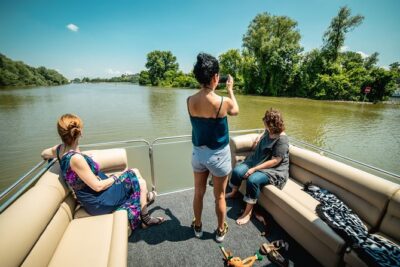
2 hours / Sightseeing Boat cruise Drinks Included
Read our review →

Browse the lists this tour appears in