
Reviewed · WALKING TOURS
Belgrade Walking Tour in French
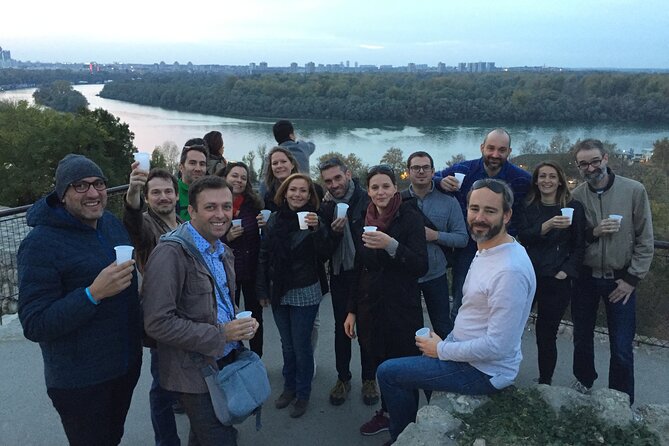
Belgrade reveals itself best through its contradictions, and this French-language walk with journalist Nenad is built around exactly that. You move from Republic Square and the bohemian lanes of Skadarlija to Dorćol, the old fortress, and the meeting point of the Sava and Danube. Along the way, Nenad mixes Serbian history with present-day life, personal journalism anecdotes, and stories you are unlikely to find in a standard guidebook.
I like two things in particular: the small maximum of eight people, which should make questions and conversation easy, and the unusual French connection threaded through the route. You begin near France Street, pass the French Embassy, see the Monument of Gratitude to France, and finish near Paris Street. The main consideration is time: three and a half hours on foot is a serious morning, and the tour is more about streets, buildings, viewpoints, and explanation than extended indoor visits.
Key points to know before booking
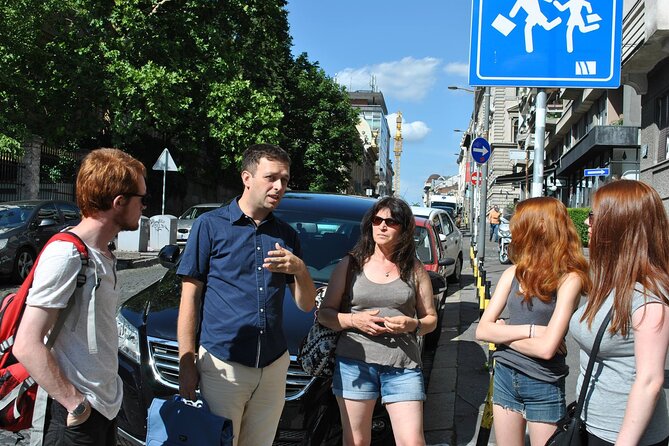
- French-speaking guide Nenad: A journalist who explains Serbia through history, culture, politics, daily life, and personal anecdotes.
- A route with a clear French connection: France Street, the French Embassy, the Monument of Gratitude to France, and the final area near Paris Street all fit into the story.
- Belgrade’s old quarters and fortress: You see Skadarlija, Dorćol, Ružica Church, Kalemegdan Park, and Belgrade Fortress.
- A useful first look at Serbian culture: The walk includes Ottoman influence, Cyrillic signs, architecture, religion, and the story of Serbian and Yugoslav identity.
- Small group format: The maximum is eight people, a good size for a walking tour built around questions and conversation.
- Straightforward timing: The tour begins at 9:30 a.m. at Republic Square and ends near the crossroads of Kneza Mihaila and Kralja Petra.
Why this French tour gives Belgrade a sharper edge
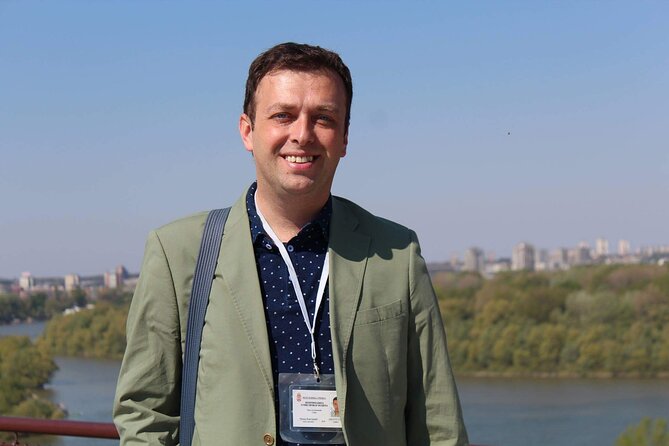
Many city walks give you dates, monuments, and a few memorized stories. This one takes a broader approach. Nenad is a French-speaking Serbian journalist, so the tour is designed to connect official history with the less polished side of Belgrade, including what the description calls the city’s underside.
That matters in Belgrade. The capital has passed through Roman, Byzantine, Ottoman, Habsburg, Yugoslav, and modern Serbian periods, and those layers do not always sit neatly apart. A mosque, an Orthodox church, a military building, a French diplomatic building, and a modern café district can all appear within the same morning.
Nenad also brings current Serbian life into the conversation. That is useful if you want more than a monument checklist. You can ask about the meaning of places, the way the city is changing, or how Serbian and Yugoslav memories still shape daily life. The French language makes this especially attractive for visitors who would rather discuss complex subjects in French than manage them in English.
The route is also carefully framed by French references. Starting near France Street and ending not far from Paris Street gives the morning a sense of shape. The French connection is not a single isolated stop. It appears in monuments, architecture, diplomacy, royal history, and the long relationship between France and Serbia.
A few more days out around Belgrade to weigh up
- Belgrade: 3-Hour Small Group Walking Tour
★ 5.0 · 180 reviews - Half-Day Sightseeing and Walking Tour of Belgrade City
★ 5.0 · 37 reviews - Belgrade Private Walking Tour with a Local
★ 5.0 · 19 reviews
Republic Square sets the stage
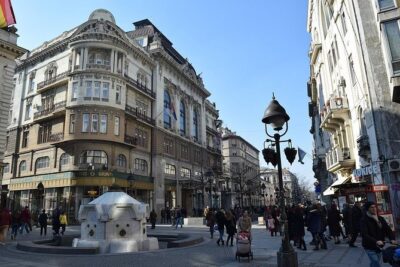
The walk begins at Trg Republike, or Republic Square, at 9:30 a.m. The meeting point is Republic Square 3. This is a practical place to begin because the square gathers several major landmarks in one setting: the monument to Prince Mihailo, the National Theatre, and the National Museum.
Nenad uses these buildings to introduce Belgrade and Serbia. The opening section is scheduled for about 15 minutes, so it is not meant to be a full museum visit or a long architectural lecture. Instead, you get the basic orientation needed to understand the city center before setting off.
The monument to Prince Mihailo is a useful starting point for Serbian national history, while the theatre and museum help explain the cultural importance of the square. If you are new to Belgrade, this first stop should help you get your bearings fast without spending the entire morning in one place.
Because the tour uses a mobile ticket and meets in a central public square, keep your phone ready and allow enough time to find the exact meeting point. The tour does not include a museum entry in the stated plan, so expect to see and discuss these landmarks from the outside.
Skadarlija, Belgrade’s bohemian street
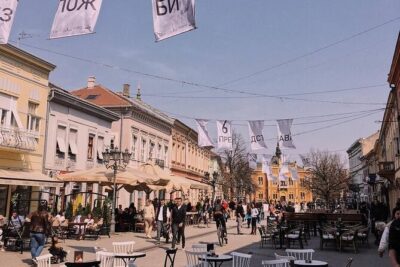
From Republic Square, the walk continues toward Skadarlija, the old bohemian quarter. Skadarska Street is often compared with Montmartre in Paris, and the connection is more specific than a casual nickname: it is described as the only street twinned with Montmartre.
The scheduled stop here is about 10 minutes. That is short, but the point is to give you the character of the quarter and explain why it matters rather than pause for a full meal or extended café visit. Skadarlija is associated with 19th-century bohemian life, so this part of the walk adds a social and artistic side to the political history introduced at Republic Square.
I would not book this tour expecting a long restaurant stop. You will pass through the district and hear about its place in Belgrade’s culture. If you want to return later for food or music, the morning walk can help you decide which streets deserve another look.
The French framing continues here through the nearby reference to France Street. It is a smart way to keep the central theme alive without forcing every stop into a formal diplomatic story.
Dorćol and the clues hidden in plain sight
The walk then reaches Dorćol, one of old Belgrade’s central districts. This is where the tour appears most useful for readers who want to understand how the city’s past remains visible in everyday streets.
Dorćol contains an unusual mix of architectural styles. Rather than treating the neighborhood as a single historic zone, Nenad points out how different periods and influences meet on the same streets. Pay attention to building fronts, signs, and plaques. The tour specifically encourages you to learn how to read the Cyrillic alphabet, a practical skill that can make the rest of your time in Serbia easier.
You will also visit the only mosque in Belgrade. This stop gives the Ottoman period a physical presence in the city rather than leaving it as an abstract chapter in a timeline. The tour links Ottoman rule with its influence on Serbian culture, so you get context for why religious buildings, words, food traditions, and urban patterns may feel different from those in Western Europe.
Dorćol is also a good place for Nenad’s journalistic style. The stated aim is to show unusual addresses and less obvious parts of the capital, not simply the sights printed in every guidebook. Since the group is capped at eight, you should have a reasonable chance to ask about a particular building or neighborhood detail as you walk.
Same city, a completely different day out:
- Northern Serbia: Sremski Karlovci and Novi Sad Full-Day Tour from Belgrade
★ 5.0 · 425 reviews - Day Trip from Belgrade: Gems of Eastern Serbia
★ 5.0 · 424 reviews - Belgrade Nightlife Bar Pub Club Crawl with Drinks
★ 5.0 · 277 reviews - Taxi to/from Belgrade Airport to/from Belgrade City Center
★ 5.0 · 241 reviews
Ružica Church and Belgrade’s fortress
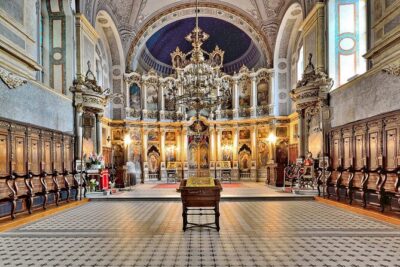
Inside the citadel area, Ružica Church offers one of the tour’s more unusual stories. The building once served as a gunpowder warehouse before being converted into a military church between 1867 and 1869.
That change of use says a lot about Belgrade. The fortress was not simply a scenic monument. It was a working military site, shaped by conflict and by the shifting control of the city. Ružica Church gives Nenad a compact way to explain how practical military spaces were later given religious and civic roles.
The scheduled stop is about 10 minutes. Again, this is a quick guided look, not an extended church visit. The value comes from hearing the building’s past and seeing it in its fortress setting. If you prefer slow photography or quiet time inside historic buildings, the pace may feel brisk.
Kalemegdan Park and the Sava-Danube view
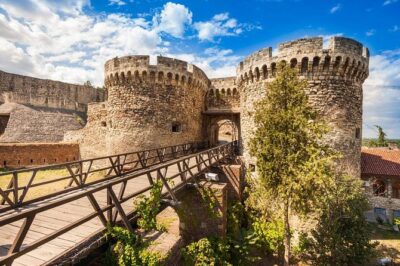
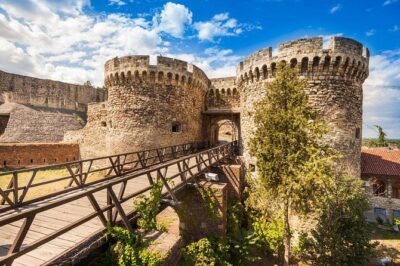
The largest visual payoff comes at Kalemegdan Park and Belgrade Fortress. From here, you can look toward the confluence of the Sava and Danube, one of Belgrade’s defining views.
The stop is planned for about 15 minutes. That gives you time to take in the panorama while Nenad explains the fortress, the Ottoman era, and the role of Ottoman influence in Serbian culture. The combination of viewpoint and explanation is important. The rivers are impressive on their own, but the guide helps place the fortress within the long military and political story of the city.
Kalemegdan is also where the walking route’s variety comes together. You have moved through a central square, a bohemian street, an old mixed-style neighborhood, a mosque, and a former gunpowder storehouse. The fortress then provides the broad setting that ties those pieces together.
Do not assume this is a quiet park stroll from start to finish. The experience is a detailed guided walk, and the fortress area includes historical discussion as well as views. Wear shoes suitable for several hours of city walking, and keep your attention on the route rather than planning a long independent break here.
The Monument of Gratitude to France
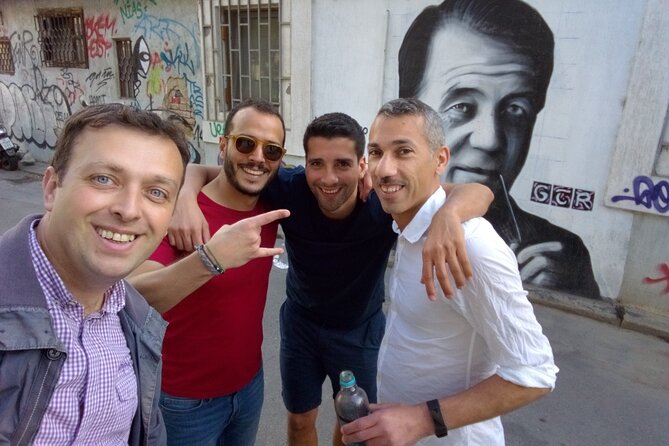
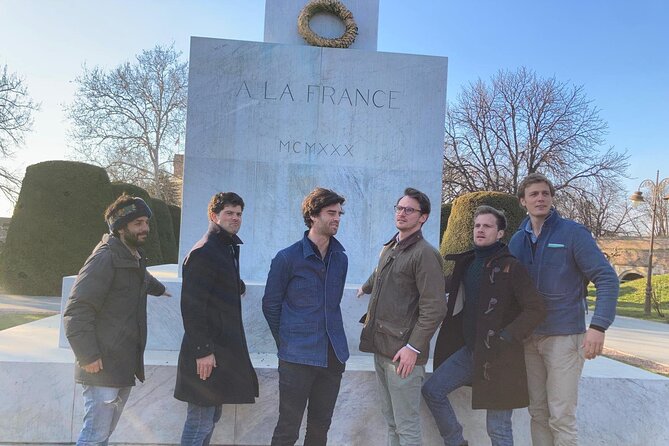
Before the final stretch, the tour visits the Monument of Gratitude to France. This stop focuses on Franco-Serbian friendship since the Great War.
For a French-speaking audience, this is more than a convenient theme. It gives the tour a personal and national connection that runs beyond architecture. The story links Serbia and France through wartime memory and diplomacy, helping explain why French names and references appear in the route.
The monument stop lasts about 10 minutes. It is long enough for the background and key stories, but not a full seminar on European diplomacy. If your interest in the French-Serbian relationship is strong, this is a good point to ask questions. Nenad’s journalistic background should be especially useful when the subject moves from formal history to the way those relationships are remembered today.
The French Embassy and King Peter Street
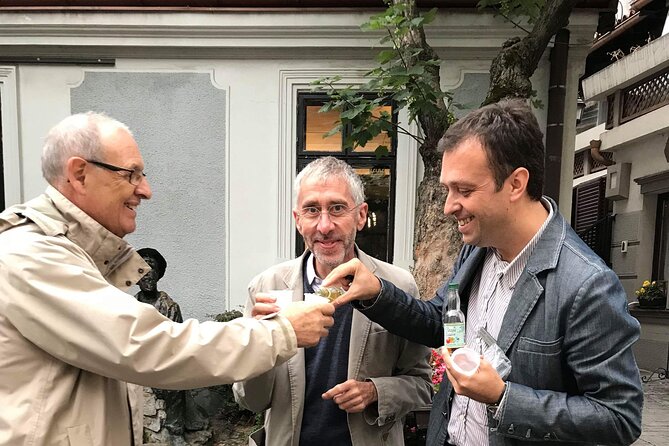
The walk continues past the French Embassy, whose interwar design is described as monumental classicism with carefully detailed sculpture. You will hear stories and anecdotes connected with the building rather than enter it.
This is one of the route’s best architecture stops because it links appearance with political history. The embassy is not just a handsome building. Its form reflects the interwar period, when monumental public architecture carried a strong message about order, state power, and international presence.
Near the end, the group passes along King Peter I Street. The street is tied to a French-speaking Serbian king and includes some of the oldest and most notable buildings in central Belgrade, including the city’s oldest restaurant and Princess Ljubica’s mansion.
The final section brings the tour back to smaller-scale details. You are no longer only looking at grand public monuments. You are seeing the street where royal history, old dining traditions, and residential architecture sit close together.
The tour ends at Kneza Mihaila 49, near the crossroads of Kneza Mihaila and Kralja Petra streets. This is a useful finish in the central city, and it leaves you near an area you may want to explore on your own afterward.
What $43.94 buys you
At $43.94 per person, the price is reasonable if you want a focused introduction in French and value interpretation over independent wandering. The experience lasts about three and a half hours, and the group has a maximum of eight people. That means you are paying for time with a guide who can cover several districts and connect them with a single story.
The value is strongest for French-speaking visitors who want more than basic sightseeing. Nenad covers Serbian and Yugoslav history, current life, Ottoman influence, architecture, the Cyrillic alphabet, the French connection, and less obvious city addresses. Recreating that range alone would take time and several separate sources.
The value is less clear if you want entry to museums, a meal, or a relaxed stop at every attraction. The stated route includes free admission at the listed stops, so the price is for the guided experience rather than tickets. You should also account for the physical cost of a 3.5-hour walk and the fact that some stops last only 10 or 15 minutes.
Past feedback about Nenad is especially strong on his storytelling, personal attention, and ability to show places people might miss when using standard books. One person used his services for two days, and another described him as a reference for French speakers in Serbia. Those comments suggest the tour may be particularly useful as a first meeting with the guide, even if you later want more time for surrounding areas.
Who should book this Belgrade walk
I would recommend it to:
- French-speaking visitors who want a city introduction without switching languages.
- First-time visitors who want context before exploring Belgrade alone.
- People interested in the links between Serbian, Ottoman, Yugoslav, and French history.
- Anyone who prefers anecdotes and conversation to a fixed list of dates.
- Small groups and solo visitors who value a maximum group size of eight.
- Readers curious about neighborhoods and addresses that may not appear in a standard guide.
It may be less suitable if you want a museum-heavy program, a food tour, or a slow photography walk. The pace covers a lot of ground, and the listed stops are generally brief. You should also be comfortable walking for several hours.
Most people can participate, and the meeting area is near public transportation. The experience uses a mobile ticket, confirmation is provided at booking, and free cancellation is available until 24 hours before the 9:30 a.m. start time. Cancellations or changes made later are not accepted for a refund.
My call: book it for French-language context
Book this tour if you want Belgrade explained by a French-speaking local journalist who can connect monuments with Serbian culture, present-day life, and personal anecdotes. The route is broad, the group is small, and the French-Serbian theme gives the morning a clear identity instead of making it feel like a random circuit of sights.
I would skip it only if your priority is long indoor visits or unstructured time. For everyone else, $43.94 buys a strong first look at Belgrade, especially if you want help reading the city’s complicated past without reducing it to a simple timeline.
FAQ
What language is the tour conducted in?
The tour is conducted in French by Nenad, a French-speaking journalist.
How long does the Belgrade walking tour last?
The tour lasts approximately three hours and 30 minutes.
Where does the tour begin?
It begins at Republic Square, Trg republike 3, in Belgrade.
Where does the tour end?
It ends at Kneza Mihaila 49, near the crossroads of Kneza Mihaila and Kralja Petra streets.
What places are visited?
The route includes Republic Square, Skadarlija, Dorćol, Ružica Church, Kalemegdan Park, Belgrade Fortress, the Monument of Gratitude to France, the French Embassy area, and King Peter I Street.
How many people can join the tour?
The tour has a maximum of eight participants.
Just added around Belgrade
- Private Walking Tour of Belgrade and Old Zemun★ 5.0 · 3 reviews
- From Belgrade: Danube Day Trip with Wine and Brandy Tasting★ 5.0 · 3 reviews
- Feel Belgrade Welcome tour★ 4.5 · 3 reviews
- Private Half Day Serbia Tour Novi Sad and Petrovaradin Fortress★ 5.0 · 3 reviews
- Private Wine Tasting by Party in Belgrade★ 5.0 · 3 reviews
- Belgrade: The White Emigration in Serbia in the Wake of the Russian Revolution★ 5.0 · 3 reviews
- Zica and Studenica monastery From Belgrade★ 5.0 · 3 reviews
- E-Scooter Serbian Food Tour★ 5.0 · 3 reviews
Walking Tours, compared.
Half-Day Sightseeing and Walking Tour of Belgrade City
Read our review →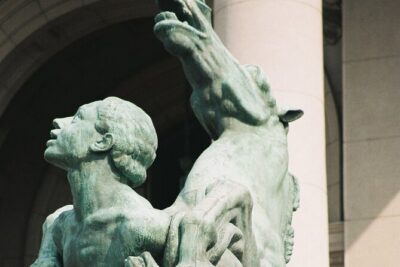
Browse the lists this tour appears in