
Reviewed · BELGRADE WALKING & SIGHTSEEING TOURS
Private Walking Tour of Belgrade and Old Zemun
Zemun is the part of Belgrade that feels like it slipped in from another country. Its paved streets, vine-covered houses, Danube waterfront, and hilltop tower reveal layers of Serbian, Hungarian, Jewish, Ottoman, and Austro-Hungarian influence in a short walk. The tour also digs into darker stories, including war, political change, and the Serbian roots of the word vampire.
I like the private format, since your guide can adjust the pace and spend more time on the odd details that make Zemun memorable. I also like the mix of places: the restored Air Force Command Building, churches and old markers in City Park, a former synagogue now used as a Serbian restaurant, and a mural on one of the oldest houses.
The main consideration is cost. At $145.45 per person, this is a serious price for a tour lasting about two hours, especially since the ticket for the memorial tower is not included. It makes the most sense for couples, families, or small groups who value a personal guide and want context they would likely miss alone.
Key points about this private Zemun walk
- Old Zemun feels distinct from central Belgrade, with low tiled houses, paved lanes, courtyards, and a Danube-side finish.
- The Air Force Command Building offers a sharp look at interwar Yugoslav architecture and the damage caused by NATO air strikes.
- Zemun City Park combines Orthodox and Catholic churches with a Roman sarcophagus, an Armenian khachkar, and the site of a former quarantine hospital.
- The former Ashkenazi synagogue connects Zemun to Rabbi Alkalai, an early voice in modern Zionism, and now contains a traditional Serbian restaurant.
- Local stories add flavor, from vampire folklore and Serbian food to legends, secrets, and the city’s darker political past.
- Gardoš Tower is the payoff, but its admission ticket costs extra and the listed itinerary does not specify how long the stop lasts.
Why Zemun deserves its own walking tour
Belgrade can feel like a large, layered capital, with major sights spread across broad streets and busy districts. Zemun is different. It has its own shape and mood, even though it is now part of Belgrade.
That separate identity is the point of this walk. You move through an old town of narrow paved streets and vine-covered houses, then finish beside the Danube. The route is not just a list of buildings. It uses Zemun to explain how Serbia and this corner of Europe changed over time.
I find that especially useful if you have already taken a general sightseeing tour of Belgrade. This experience is recommended after seeing the main city, and that order makes sense. Once you know something about Belgrade, Zemun becomes a second chapter rather than a confusing detour.
The tour is private, so only your group participates. That matters during a short walk. You can ask about a strange detail, pause for photos, or spend more time on a story without waiting for a large group to catch up. The guide can also help connect the visible streets with events that are harder to understand from a map.
The advertised duration is about two hours. That is enough for a focused introduction, but not enough for a slow exploration of every lane, church, courtyard, and restaurant. Think of this as a guided orientation with stories, not a full day in Zemun.
More ways to see Belgrade on foot:
- Taxi to/from Belgrade Airport to/from Belgrade City Center
★ 5.0 · 241 reviews - Belgrade: Sightseeing Boat Cruise with Drinks
★ 5.0 · 103 reviews - Belgrade Sightseeing Half-Day Trip Old and New Belgrade
★ 4.5 · 71 reviews
Starting at the Air Force Command Building
The walk begins at Glavna 8, near the Air Force Command Building. This is a strong opening because it gives you an immediate architectural landmark rather than starting with a vague stroll through residential streets.
The building is described as a masterpiece of interwar Yugoslav architecture. That phrase points to an important period, when the new Yugoslav state was expressing its identity through public buildings and modern design. Your guide also discusses the damage caused by NATO air strikes, giving the structure a direct link to more recent conflict.
You spend about 15 minutes here, with no admission ticket required. That short stop should give you the basic context without turning the tour into an architecture lecture. Look closely at the building before moving on. Its value is not only in its formal design, but also in the visible reminder that major political events can leave marks on ordinary city streets.
This is one of the more serious portions of the walk. Zemun is charming, but the tour does not treat it as a pretty backdrop. The building introduces the idea that this district has been caught up in events far beyond its borders.
Zemun City Park and its unusual collection of markers
The next stop is Zemun City Park, where you spend about 30 minutes. This is the longest listed stop, and it brings several different traditions into one compact space.
The park contains Orthodox and Catholic churches, a Roman sarcophagus, and an Armenian khachkar. A khachkar is a carved Armenian cross-stone, so even visitors who are not focused on religious architecture will find the combination unusual. The Roman sarcophagus adds another layer, reaching back far before modern Zemun.
The park also occupies the site of a former quarantine hospital. That detail changes how you read the space. It was not simply laid out as a pleasant public park. Its earlier purpose reflects Zemun’s position on important routes and the need to control disease and movement.
I like this stop because it gives you several visual anchors in one place. You can see how religious communities, ancient remains, public health, and urban life overlap. A short explanation from a guide is useful here, since the individual objects may not explain their connection by themselves.
If you prefer a fast-moving tour, 30 minutes in one park may feel long. If you enjoy small historical clues, it is likely the most rewarding stop. Ask your guide to point out the differences between the Orthodox and Catholic buildings, and take time to look at the older stone pieces rather than treating them as background decoration.
The former synagogue on Rabina Alkalaja 5
At Rabina Alkalaja 5, the route reaches a former Ashkenazi synagogue. The building dates from the 19th century, and Rabbi Alkalai served here. He is presented as a precursor of modern Zionism, which gives this stop significance beyond the building itself.
Today, the structure contains a traditional Serbian restaurant. That change of use is worth noting. Historic buildings often survive by taking on new functions, and here the former religious space has become part of the local food scene.
The stop lasts about 15 minutes. You should not expect a long interior visit or a full museum presentation, since no admission is listed and the building now operates as a restaurant. Instead, the guide helps you understand what the site was, who used it, and how its role changed.
This is also one of the places where you can ask about local food. One guide, Elvira, has been praised for including local food and helping with photographs, and the tour has been associated with the idea of a Serbian second breakfast. That phrase alone is a useful reminder that food customs can be as revealing as monuments. Do not assume a meal is included, though. Coffee, tea, and snacks are specifically not included.
A few more days out around Belgrade to weigh up
- Belgrade: 3-Hour Small Group Walking Tour
★ 5.0 · 180 reviews - Half-Day Sightseeing and Walking Tour of Belgrade City
★ 5.0 · 37 reviews - Belgrade Private Walking Tour with a Local
★ 5.0 · 19 reviews - Belgrade City Walk, Gathering and Sightseeing
★ 5.0 · 19 reviews
The mural at Gospodska 6
The stop at Gospodska 6 is brief, about 15 minutes, but it gives the walk a lighter visual break. Here you see a mural showing the main sights of Zemun, painted on the restored wall of one of the area’s oldest houses.
A mural like this works as a street-level map. After hearing about churches, old buildings, the park, and the tower, you can see how the district presents itself in one image. It is also a reminder that restoration is not only about preserving facades. A wall can become a public guide to the neighborhood.
This stop should appeal to anyone who enjoys photography. The mural, old house, and surrounding street create a simple photo opportunity without requiring an extra ticket or a long detour. Guides Olga and Elvira have both been associated with making the walk personal, and a private group can usually pause for pictures without holding up strangers.
The drawback is that 15 minutes goes quickly. If you want detailed architectural study or lots of posed photographs, you may need to choose your priorities. The value here is the quick connection between Zemun’s past and the way residents represent it today.
Ending by the Danube and the climb to Gardoš Tower
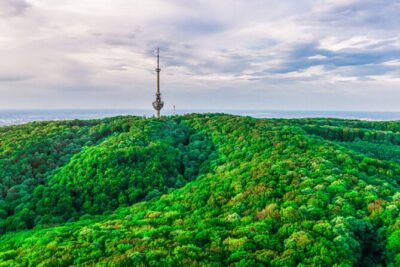
The walk ends at Zemunski Kej on the Danube, after passing the memorial tower, usually known as Gardoš Tower. The tower was built to celebrate 1,000 years of Hungarian settlement in the Pannonian Plain and is described as the best viewpoint in Zemun.
That historical purpose is important. The tower is not simply an old lookout point. It reflects the Hungarian connection to the region and the political symbols that were used to mark a major anniversary. From the top, you get the visual reward for the walk: a view over Zemun and the Danube.
The tower ticket is not included, so check the admission cost before booking if reaching the top is essential to you. The supplied details do not give a tower ticket price or a separate visit duration. That lack of detail means you should confirm the practical arrangements with the provider, Snurk.Travel, before setting out.
The Danube finish gives the route a natural ending. You can feed the swans, take riverside photographs, and let the compact old-town streets open into a broader waterfront. The tour does not include snacks or drinks, but ending near the river gives you a sensible place to continue on your own.
The stories that give the walk its character
The strongest part of this experience is not any one building. It is the tone of the storytelling. Zemun is presented as a place with a bright side and a darker side, and the guide connects local events to the fate of Serbia and Europe.
That may include legends, secrets, funny stories, political turning points, and folklore. One memorable detail from the tour’s subject matter is that vampire is a Serbian word. The walk also brings up Dracula and Serbian vampire stories, which gives the folklore a local angle instead of treating it as a generic spooky tale.
This balance matters. A tour built only around charming houses and river views would be pleasant but thin. A tour built only around wars and politics could feel heavy. Zemun works because the two sides sit close together: a pretty street may be only minutes from a building marked by conflict or a site tied to forced quarantine.
The guide names connected with this experience include Olga and Elvira. The specific guide assigned to your booking may differ, so do not book expecting one particular person unless the provider confirms it. Still, those names give you a sense of the style available: conversation, unusual facts, local food suggestions, photographs, and a willingness to point out places you might pass without noticing.
Price, pace, and private-tour value
The listed price is $145.45 per person. For a two-hour walk, that is expensive compared with a large public group tour or a self-guided visit. The price becomes easier to justify if your group wants a private guide, flexible conversation, and a focused route through a district that is easy to skim over without context.
Group discounts are available, which may improve the value for families or a larger party. Since only your group participates, the cost may work better when shared across several people than for one solo visitor.
You should also budget separately for the Gardoš Tower ticket and any coffee, tea, or snacks. Local food may be discussed or suggested, but the listed inclusions cover only the guide. A mobile ticket is available, and confirmation is provided at booking.
The tour is near public transportation, and most people can participate. No special physical requirements are stated, but this is a walking experience through old streets and includes a tower viewpoint. If stairs or uneven paving are a concern, ask the provider before booking.
Free cancellation is allowed up to 24 hours before the start time for a full refund. Cancellations or changes made within 24 hours are not refunded or accepted, based on local time.
Who should book this Zemun experience
I would choose this tour if you have already seen central Belgrade and want a smaller district with a strong local identity. It suits people who enjoy architecture, urban history, religious sites, folklore, and short conversations with a guide.
It is also a good match for couples or families who do not want to follow a fixed large-group pace. The private setup lets you ask about the Serbian word for vampire, the synagogue’s later use, the NATO damage, or the reason the tower was built.
You may want a different option if you dislike paying a premium for a short tour, want a full meal included, or prefer to explore without a guide. Two hours will introduce Zemun, but it will not cover every street at a relaxed pace.
Should you book the private Zemun walk?
Book it if you want context and local stories, not just a checklist of sights. The route combines unusual details that are hard to assemble alone: the former quarantine hospital, Roman remains, an Armenian khachkar, a synagogue turned restaurant, interwar architecture, Serbian vampire folklore, and a Danube viewpoint.
Skip it if the price feels too high for two hours or if you plan to visit only the tower and waterfront. For everyone else, especially visitors adding Zemun after a Belgrade sightseeing tour, this is a practical way to understand why the district feels like its own city inside the capital.
FAQ
Where does the private walking tour begin?
The tour begins at Glavna 8, Beograd 11080, Serbia.
Where does the tour end?
The tour ends at Zemunski Kej on the Danube in Belgrade, Serbia.
How long does the tour last?
The walking tour lasts approximately two hours.
Is the tour private?
Yes. Only your group participates in the activity.
Is the Gardoš Tower ticket included?
No. Tickets to the tower are not included in the tour price.
Are food and drinks included?
No. Coffee, tea, and snacks are not included.
What is the cancellation policy?
You can cancel at least 24 hours before the start time for a full refund. Cancellations or changes made less than 24 hours before the start time are not accepted, and the amount paid is not refunded.
Just added around Belgrade
- Feel Belgrade Welcome tour★ 4.5 · 3 reviews
- From Belgrade: Danube Day Trip with Wine and Brandy Tasting★ 5.0 · 3 reviews
- Private Half Day Serbia Tour Novi Sad and Petrovaradin Fortress★ 5.0 · 3 reviews
- Private Wine Tasting by Party in Belgrade★ 5.0 · 3 reviews
- Belgrade: The White Emigration in Serbia in the Wake of the Russian Revolution★ 5.0 · 3 reviews
- Zica and Studenica monastery From Belgrade★ 5.0 · 3 reviews
- E-Scooter Serbian Food Tour★ 5.0 · 3 reviews
- Belgrade Fashion and Design Tour – Discover Local Designers★ 5.0 · 4 reviews
Belgrade Walking & Sightseeing Tours, compared.

Belgrade Sightseeing Half-Day Trip Old and New Belgrade
Read our review →
Half-Day Sightseeing and Walking Tour of Belgrade City
Read our review →
2 hours / Sightseeing Boat cruise Drinks Included
Read our review →
Browse the lists this tour appears in